
- 80-person trial: Statistically significant improvements in well-being, energy, and sexual health for both men and women.
- 45% improvement in mood and 37% reduction in vaginal dryness for women.
- No statistically significant changes in key semen analysis biomarkers for men.
Experts would likely conclude that while WeNatal's supplements show promising subjective benefits for well-being and sexual health, the lack of objective improvements in male fertility metrics and the study's methodological limitations warrant further rigorous research.
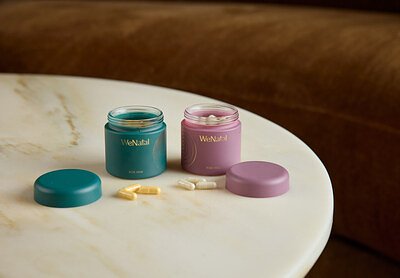
WeNatal’s Fertility Study: A Win for Wellness, A Question for Science
LOS ANGELES, CA – June 02, 2026 – WeNatal, a company aiming to reframe fertility as a shared responsibility, today released findings from two clinical studies for its 'For Her' and 'For Him' prenatal supplements. The results, derived from an 80-person trial, highlight statistically significant improvements in well-being, energy, and sexual health for both men and women. While the data provides a compelling narrative for a market hungry for innovation, a critical assessment reveals a more complex picture—one where validated customer experience and rigorous clinical proof are not yet the same thing.
Founded by Ronit Menashe and Vida Delrahim after their own experiences with pregnancy loss, WeNatal has built its brand on the premise that men are an equal part of the fertility equation, a fact often overlooked in a market historically focused on women. "Fertility has traditionally been treated as a women's issue, even though healthy sperm is part of the equation in approximately half of all infertility cases," stated Menashe, Co-Founder and CEO. The new studies, conducted by independent research organization Citruslabs, were designed to lend scientific credence to this philosophy. But as business leaders know, the devil is in the details of execution, and the execution of this science warrants a closer look.
Deconstructing the Data
The top-line results are undeniably impressive from a consumer standpoint. The 'For Her' study, which tracked 40 women over three months, found statistically significant improvements across all eight measured well-being parameters. Participants reported a nearly 45% improvement in mood, a 37% reduction in the frequency of vaginal dryness, and a 33% decrease in bloating by the third cycle. Furthermore, 75% of women reported increased energy and less fatigue. Objectively, the study also confirmed a significant increase in blood levels of Vitamin D and D3, crucial nutrients for reproductive health and immune function.
The 'For Him' study yielded similarly positive subjective results. Among the 40 male participants, self-reported satisfaction with their sex life improved by nearly 47%, libido scores rose by over 41%, and muscular strength scores increased by 18%. These are tangible, quality-of-life improvements that any couple on a stressful conception journey would welcome.
However, the most critical objective endpoint for a male fertility supplement delivered a null result. According to the study's own transparently reported limitations, there were no statistically significant changes in key semen analysis biomarkers. Semen volume, concentration, count, motility, and morphology—the core metrics of sperm health—remained statistically unchanged. This finding creates a significant disconnect between the product's implied purpose and its demonstrated objective impact on male fertility metrics.
A Question of Methodology
This discrepancy brings the study's design into sharp focus. The trials were structured as single-group, open-label studies. In practical terms, this means all 80 participants received the WeNatal supplements, and no one received a placebo. Without a control group, it is scientifically impossible to definitively attribute the reported gains solely to the product. The placebo effect, where a person's belief in a treatment can cause real physiological changes, is a powerful and well-documented phenomenon in clinical research.
Furthermore, the small sample size of 40 participants per group makes the findings preliminary at best. As one independent clinical research expert noted, "Single-arm studies on small cohorts are excellent for generating hypotheses and gathering initial user feedback, but they are not a substitute for the gold standard: a large-scale, randomized, placebo-controlled trial." Such a trial is the only way to isolate the supplement's effect from psychological factors and natural fluctuations in health.
The research was conducted by Citruslabs, a contract research organization (CRO) that specializes in running studies for wellness brands to generate marketing-ready claims. While they adhere to ethical guidelines, the choice of a less rigorous (and less expensive) study design over a more robust randomized controlled trial (RCT) is a business decision. For WeNatal, the investment yielded compelling claims about well-being and sexual health, which are potent marketing assets, even if the direct evidence for improving objective fertility markers is not yet established.
Redefining the Market, Not Just the Science
Despite the scientific limitations, WeNatal's strategy is a masterclass in market alignment. The company has tapped directly into a significant cultural shift: the move toward viewing preconception health as a team sport. By creating a 'For Him' and 'For Her' system, they provide a tangible product that embodies this shared journey. For couples navigating the emotional and physical challenges of trying to conceive, a protocol that involves both partners can foster a sense of teamwork and shared agency.
WeNatal’s formulation strategy also hits the right notes for today’s discerning consumer. The company emphasizes its use of clean, bioavailable ingredients like methylated folate over synthetic folic acid, and chelated iron for better absorption. The 'For Him' formula includes science-backed ingredients like CoQ10, NAC, and L-Carnitine, known to support sperm health by combating oxidative stress. This commitment to quality, combined with third-party testing for purity, builds a foundation of trust that is critical in the loosely regulated supplement industry.
The study results, therefore, serve a powerful commercial purpose. While an endocrinologist might focus on the unchanged semen parameters, a couple is likely to be swayed by the promise of more energy, better moods, and a more satisfying sex life. These benefits address the immediate, experiential pain points of the conception journey. In this context, WeNatal is not just selling a fertility supplement; it is selling a holistic wellness and relationship enhancement tool for aspiring parents. The strategy is to win the customer on well-being, with the hope that improved fertility follows. For many, that may be a compelling enough proposition.