
- Tampa Bay spans 400 square miles, supporting 200+ fish species and critical habitats like seagrass meadows and mangrove forests.
- Nitrogen pollution reductions have led to seagrass recovery to 1950s levels, demonstrating successful ecosystem restoration.
- The bay faces threats from microplastics, climate change, and urban development, requiring ongoing stewardship.
Experts would likely conclude that Tampa Bay's ecosystem is a vital economic and environmental asset, requiring proactive management to mitigate modern threats and sustain long-term resilience.
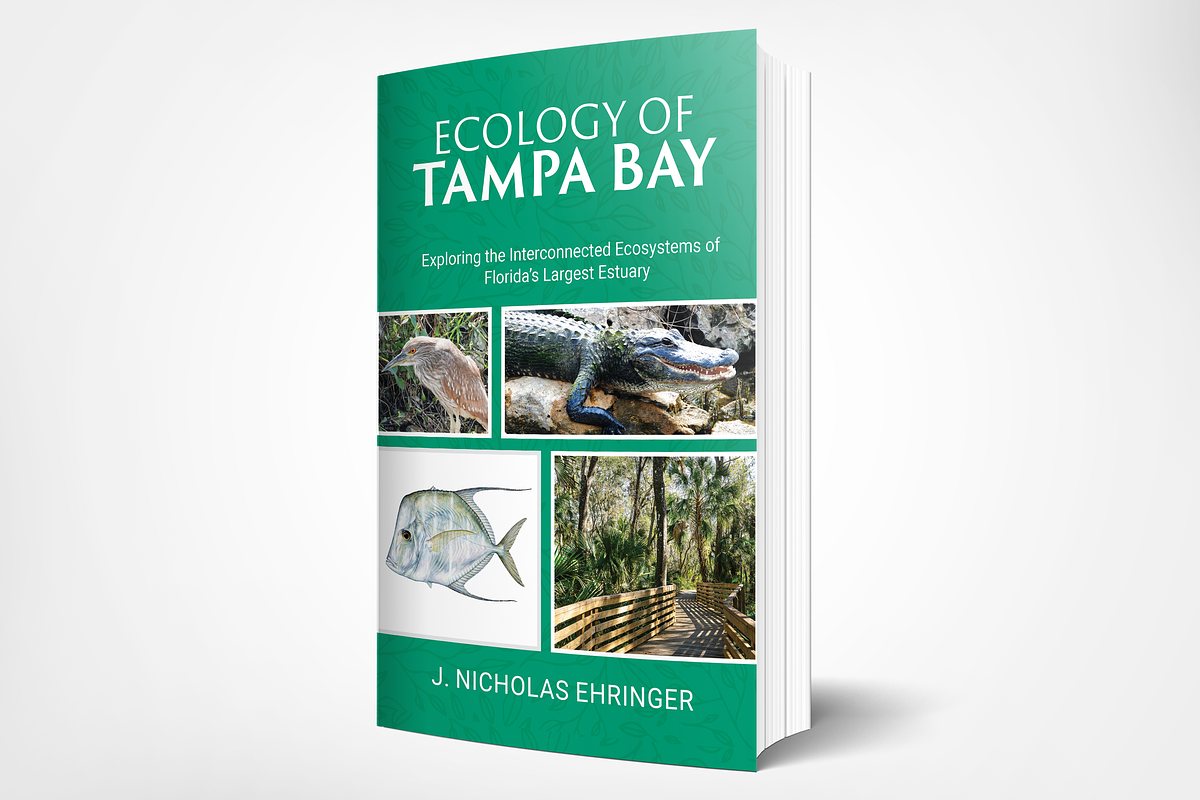
Tampa Bay's Hidden Value: A New Blueprint for Ecosystem Resilience
CHARLESTON, SC – June 05, 2026 – In an era defined by volatility, identifying the sources of durable value has become a paramount concern. While this search often focuses on markets and companies, a new book from Palmetto Publishing, Ecology of Tampa Bay, urges us to look at a different kind of asset: the vast, complex, and surprisingly resilient ecosystem of Florida's largest estuary. Authored by veteran ecologist Dr. J. Nicholas Ehringer, the book is more than a natural history guide; it is a detailed accounting of a living system's performance under pressure, offering critical lessons in permanence and stewardship.
The work arrives at a pivotal moment. Florida's coasts are engines of economic growth, but they are also on the front lines of environmental change. Dr. Ehringer’s book dissects the intricate machinery of Tampa Bay, arguing that its long-term health is not a peripheral "green" issue but a core component of the region's future prosperity and stability. It is a story of geological deep time, biological ingenuity, and the profound impact of human hands—for better and for worse.
A System Beneath the Surface
Spanning over 400 square miles, Tampa Bay is a place where freshwater from inland rivers mixes with the salt of the Gulf of Mexico, creating one of the most productive biological zones in the southeastern United States. Dr. Ehringer’s narrative peels back the layers of this system, revealing the foundational architecture that enables its vibrant life. He begins millions of years in the past, with the ancient carbonate bedrock and Ice Age shorelines that sculpted the bay's shallow geography.
From this geological foundation, the book explores the interconnected habitats that function like organs in a single body. Seagrass meadows act as nurseries for over two hundred fish species; mangrove forests serve as coastal armor against storm surges; and oyster reefs work tirelessly as natural water filtration plants. It is a portrait of a high-performance system, one that supports resident bottlenose dolphins, manatees, and sea turtles. Dr. Ehringer’s central thesis is that to appreciate the bay, one must understand how it functions. As he states in the book's announcement, "People live near Tampa Bay, visit its shores, and marvel at its wildlife, yet so much of what makes this ecosystem thrive remains invisible. I wrote this book so readers could understand not just what the bay looks like, but how and why it works."
This look beneath the surface reveals a delicate balance. The book details how limestone deposits and phosphate accumulation created the conditions for life, but also how modern pressures—urbanization, water quality challenges, and habitat disruption—threaten to unravel it.
The Scholar of Resilience
The authority of the book is anchored in the author's remarkable career. Dr. J. Nicholas Ehringer is not a newcomer to complex systems. A certified Senior Ecologist with a doctorate from Florida Atlantic University, his fieldwork has spanned every major Florida ecosystem, from the coral reefs of the Keys to the wetlands of the Panhandle. His perspective is uniquely broad, grounded in decades of direct observation and rigorous research.
Perhaps the most telling detail of his career is his early work on a pioneering NASA project. In 1994, Dr. Ehringer was a key contributor to an experiment that sent Japanese Medaka fish eggs to space aboard the Space Shuttle Columbia. The project studied how aquatic life developed and oriented itself in microgravity, offering a profound lesson in how organisms adapt to extreme environmental stress. This experience—of analyzing life's resilience at its most fundamental level—provides a compelling throughline to his current work on Tampa Bay, another ecosystem facing its own set of intense pressures.
His transition from academic researcher to public science communicator grew from years of teaching and mentoring. This commitment to accessibility is the book's defining feature. It is written not for fellow scientists, but for nature enthusiasts, Florida residents, and students—anyone seeking to understand the mechanics of the world around them without a specialist's background.
The Ledger of a Living Asset
While the book celebrates the bay’s natural wonder, it also serves as a sober ledger of its vulnerabilities and the value at stake. For the strategist and the policymaker, this is where the text is most essential. The health of Tampa Bay is directly tied to the economic and social well-being of the millions who live around it. Its mangroves and salt marshes are not just scenery; they are critical infrastructure, buffering coastal communities from storms and filtering water for surrounding populations.
The book documents a powerful story of resilience in action. In the latter half of the 20th century, the bay was severely degraded by pollution. However, thanks to concerted efforts led by organizations like the Tampa Bay Estuary Program (TBEP), significant progress has been made. Reductions in nitrogen pollution, for instance, have led to clearer water and a remarkable recovery of seagrass beds to levels not seen since the 1950s. This success demonstrates that decline is not inevitable and that strategic, science-based intervention can produce tangible returns.
Yet, as the book makes clear, past performance is no guarantee of future results. The bay faces a new generation of threats, from microplastics and emerging contaminants to the overarching challenges of climate change, including sea-level rise and warming waters. Continuous urban development along its shores adds constant pressure. "A book like this is essential," a Florida-based environmental scientist noted. "Public will is the most critical resource for conservation, and that will is built on understanding."
Bridging the Knowledge Gap
Ecology of Tampa Bay sits on the shelf alongside regional field guides, but its purpose is different. It aims to create not just spotters of wildlife, but stewards of a system. Published by Charleston-based Palmetto Publishing, which utilizes a hybrid model to bring specialized non-fiction to market, the book represents a growing understanding that deep, localized knowledge is a valuable commodity.
By translating complex science into an accessible narrative, Dr. Ehringer provides a tool for what has become a key driver of modern conservation: public engagement. The book empowers residents, visitors, and leaders to see the bay not as a static resource to be consumed, but as a dynamic asset to be managed and protected. It makes the invisible visible, revealing the powerful forces of performance and permanence at work in one of America’s great estuaries.