
- AI in Animal Health Market Growth: Projected to surge from $2.1 billion in 2025 to $8.5 billion by 2034.
- Veterinary Burnout Crisis: High rates of burnout and suicide due to long hours and administrative workloads.
- Marketing Transformation: Cebron Walker's handbook introduces a seven-step framework to systematize veterinary practice marketing.
Experts would likely conclude that the integration of AI and strategic marketing frameworks is essential for the survival and growth of independent veterinary practices in an increasingly competitive and technologically advanced industry.
AI and the Vet: A New Playbook for an Overlooked Economic Engine
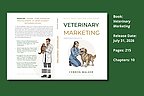
CLEARWATER, FL – June 12, 2026 – This July, a book will be released that, on the surface, is a marketing handbook for veterinarians. But look closer, and the release of Cebron Walker’s Veterinary Marketing: Handbook for Practice Growth in an AI Era is a critical signal of a profound industrial transformation happening within specialized, high-skill service sectors. The story here isn’t just about attracting more pet owners; it’s about the formalization of strategy and the aggressive integration of technology into an industry long defined more by passion than by process.
For decades, the local veterinary clinic has operated as a quintessential small business, driven by the medical expertise and personal touch of its practitioners. Yet, as the industry swells with increased pet ownership and fierce competition from corporate consolidators, that model is showing its age. Walker, a strategist with over 35 years in the trenches, is bottling a solution that addresses the sector's most glaring vulnerability: a systemic gap between clinical excellence and business acumen. This handbook represents more than just advice; it signifies a market shift where survival will depend on moving from practitioner to strategist.
Beyond the Stethoscope: Systemizing a Fragmented Market
The core problem plaguing independent veterinary practices is a paradox of success. Most are founded by brilliant clinicians who excel at diagnostics and treatment but were never taught how to build a predictable client pipeline, manage a brand, or calculate customer acquisition cost. The result is a landscape of businesses running on guesswork, vulnerable to market fluctuations and the sophisticated marketing engines of larger competitors.
"This is not a theory book," says Cebron Walker in his press release. "Every practice I've ever worked with had the same problem — they had great medicine but no marketing strategy or system. They had tried many tactics but were frustrated with lackluster results." This statement gets to the heart of the matter. The frustration isn't from a lack of effort but from a lack of a coherent, repeatable system. The market is saturated with individual tactics—a Facebook ad here, a website refresh there—but devoid of an overarching framework connecting them.
Walker’s proposed seven-step framework, which begins with the foundational steps of defining a precise target audience and crafting magnetic messaging, reflects a discipline common in the Fortune 500 world but revolutionary for many main-street businesses. The idea that a vet clinic shouldn't target "anyone with a pet" but should instead identify its ideal client—be it the owner of high-performance sporting dogs or the urban dweller with exotic pets—is a fundamental pivot from a reactive to a proactive business model. This systematization is the first step in building a defensible moat around a practice, making it less susceptible to price wars and more resilient to economic headwinds.
The AI Injection: Reshaping Practice and Profit
While systemizing marketing is a significant leap, the book’s emphasis on the "AI Era" is where the truly disruptive transformation lies. Artificial intelligence is not merely a new tool for marketing; it is a foundational technology poised to rewire the entire operational structure of veterinary medicine. The global AI in animal health market, valued at $2.1 billion in 2025, is projected to surge to $8.5 billion by 2034. This isn't speculative—it's an economic inevitability.
Walker’s handbook wisely positions AI as an accessible advantage rather than an intimidating threat. For a practice owner, this could mean leveraging AI-powered tools to automate social media content creation, optimize ad spend, and manage online reviews. However, the impact of AI extends far deeper into the practice, creating efficiencies that directly impact the bottom line. AI-powered scribes are already helping to generate SOAP (Subjective, Objective, Assessment, and Plan) notes in real-time, drastically reducing the administrative burden on doctors. AI-driven diagnostic tools are assisting in the interpretation of radiographs and lab results, improving accuracy and speed.
On the client-facing side, AI chatbots can handle appointment scheduling and answer routine questions 24/7, freeing up front-desk staff to manage more complex client needs. This dual-pronged advance—automating administrative tasks while enhancing client service—is the key to unlocking new levels of productivity. A handbook that introduces these concepts in the digestible context of marketing serves as a crucial gateway, encouraging practitioners to embrace a technology that will soon be as indispensable as the stethoscope. Those who fail to integrate these tools will find themselves outmaneuvered, out-marketed, and ultimately, out-competed.
Curing Burnout with Business Acumen
The most compelling argument for this strategic and technological evolution may not be financial, but human. The veterinary profession is grappling with alarmingly high rates of burnout and suicide, driven by long hours, high stress, and immense administrative workloads. The pressure of running a business often overshadows the passion for animal care that drew these professionals to the field in the first place.
This is where the adoption of a robust business system, supercharged by AI, becomes a matter of personal and professional sustainability. By automating marketing, streamlining client communication, and simplifying record-keeping, these systems give veterinarians back their most valuable asset: time. Time to focus on complex medical cases, time to mentor junior staff, and time to disconnect from the relentless demands of business ownership. A predictable flow of new clients, generated by an automated marketing engine, reduces the constant anxiety of making payroll and allows for more strategic, long-term planning.
The shift in mindset from a generalist practitioner to a focused strategist is not just a business tactic; it is a wellness strategy. By clearly defining the services a practice excels at and the clients it is best equipped to serve, owners can build a more efficient, profitable, and fulfilling operation. The frameworks being introduced to the market, like the one detailed in Walker's upcoming book, are providing the necessary blueprints for this change. They offer a path for veterinarians to not only grow their practice but also to reclaim the professional satisfaction that has been eroding for far too long.