
- 640 independent parallel nozzles in the PrepALL-pP8G system for rapid single-cell proteomics processing
- 48-sample parallel processing in the GenSIRO48 system for clinical automation
- 25% year-over-year revenue growth for MGI Tech in Q1 2026
Experts would likely conclude that MGI Tech's new automation suite represents a significant advancement in laboratory workflow efficiency, particularly in proteomics and clinical sequencing, though regulatory and integration challenges may impact its immediate adoption.
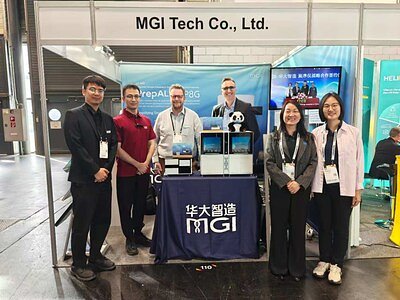
MGI Tech Aims to Overhaul Lab Workflows with New Automation Suite
VIENNA, AUSTRIA – May 21, 2026 – Life sciences innovator MGI Tech Co., Ltd. has unveiled a suite of next-generation laboratory automation and multi-omics solutions, signaling a strategic push to transform complex research and clinical workflows. Presented at the SLAS 2026 conference in Vienna, the new platforms are designed to tackle critical bottlenecks in single-cell proteomics, spatial analysis, and clinical sequencing, moving laboratories closer to a future of fully integrated, intelligent automation.
The announcement featured three cornerstone systems: the PrepALL-pP8G for single-cell proteomics, the GenSIRO48 for clinical automation, and the VisiOmics (PMIF-20RS) for spatial proteomics. These products represent MGI's ambition to shift laboratory work from a series of disjointed manual steps to a seamless, unattended process, a move the company frames as a leap from "isolated manual operations" to "full-chain intelligent automation."
A Leap in Proteomics and Spatial Analysis
At the forefront of MGI's showcase is the PrepALL-pP8G, a system designed to automate the notoriously complex and delicate process of single-cell proteomics sample preparation. As an extension of the company's flexible PrepALL platform, the new system employs thermal inkjet printing technology combined with high-precision, ultra-low volume dispensing. Featuring 640 independent parallel nozzles and guided by advanced AI-assisted camera vision, the PrepALL-pP8G can process a 384-well plate in minutes, a significant acceleration over traditional methods.
Crucially, the system's gentle, electrical-deflection-free sorting preserves cell viability and protein integrity, making it suitable for a wide range of sensitive applications. Researchers studying tumor heterogeneity, rare cells, and organoids stand to benefit from its ability to support label-free, labeled, and conventional proteomics workflows. The platform's European launch is anticipated in the second half of this year.
Complementing the cellular focus is the VisiOmics (PMIF-20RS), a fully automated staining and imaging system making its European debut. This platform leverages multiplex immunofluorescence (mIF) to capture precise spatial protein expression data directly from tissue sections. By integrating with an AI-powered analysis platform for cell segmentation and phenotyping, VisiOmics provides a complete workflow for translational medicine. Its applications in tumor classification, prognosis evaluation, and microenvironment analysis could provide researchers and clinicians with deeper insights into disease pathology. Like the PrepALL-pP8G, it is slated for a European launch later in 2026.
"SLAS provides an excellent platform to demonstrate how intelligent automation is transforming life science research and clinical laboratory operations," said a spokesperson for MGI Tech. "Our latest solutions are designed to help laboratories overcome workflow complexity, improve scalability, and accelerate scientific discovery across rapidly evolving research areas such as single-cell proteomics and organoid biology."
Streamlining the Path to Clinical Insights
Perhaps the most ambitious of the new offerings is the GenSIRO48, an advanced, fully automated sample processing system making its first international appearance. Engineered to deliver a true "Sample In, Report Out" solution, the system aims to radically simplify sequencing library preparation for clinical applications. It integrates nucleic acid purification, fragmentation, adapter ligation, PCR amplification, and library quality control into a single, unattended workflow.
By enabling high-throughput parallel processing of up to 48 samples, the GenSIRO48 directly addresses the growing demand in clinical molecular diagnosis and public health. In a field where speed and accuracy are paramount, automating these steps minimizes human error, enhances reproducibility, and frees highly skilled personnel to focus on data analysis and interpretation. This aligns with a broader industry trend toward high-throughput screening and the increasing need to manage large volumes of samples driven by the rise of personalized medicine.
A Strategic Move in a Competitive Arena
The launch of these platforms is more than a technological update; it is a calculated strategic move within the highly competitive laboratory automation market, a sector projected to grow from approximately $6.6 billion in 2026 to over $8.6 billion by 2031. MGI is positioning itself against established industry giants like Thermo Fisher Scientific, Danaher, and PerkinElmer by offering what it describes as a "full-stack" product portfolio spanning sequencing, intelligent automation, and multi-omics.
Founded in 2016, MGI has rapidly expanded its global footprint, now serving customers in over 100 countries. Its ability to independently develop and mass-produce clinical-grade gene sequencers is a key differentiator. The company's recent financial reports reflect this momentum, with operating revenue in the first quarter of 2026 increasing nearly 25% year-over-year. This new suite of automation tools reinforces its strategy of providing comprehensive, integrated solutions that address the entire workflow, from raw sample to actionable data.
However, the path to widespread adoption in Europe is not without its challenges. The new systems, particularly the clinically-focused GenSIRO48, will need to navigate the European Union's stringent In Vitro Diagnostic Regulation (IVDR). This rigorous framework requires extensive technical documentation and certification from a limited number of Notified Bodies, a known bottleneck that can delay market entry. Beyond regulatory hurdles, potential customers face high initial investment costs, the complexity of integrating new platforms with legacy systems, and the need for significant staff retraining. Despite these obstacles, the push for greater efficiency, improved diagnostic accuracy, and solutions to persistent labor shortages continues to drive the demand for the very innovations MGI is bringing to the forefront.