
- 27 minutes: AI scribes could save clinicians over 27 minutes of documentation time per day (JAMA study).
- 18% to 8.6%: Nursing vacancy rate dropped at Reid Health after Abridge deployment.
- $100,000: Cost to retrain a single nurse, highlighting Abridge's financial impact.
Experts would likely conclude that Abridge's AI-native platform offers a promising, multi-faceted solution to clinician burnout and healthcare inefficiencies, with potential to transform care delivery, payment systems, and research recruitment.
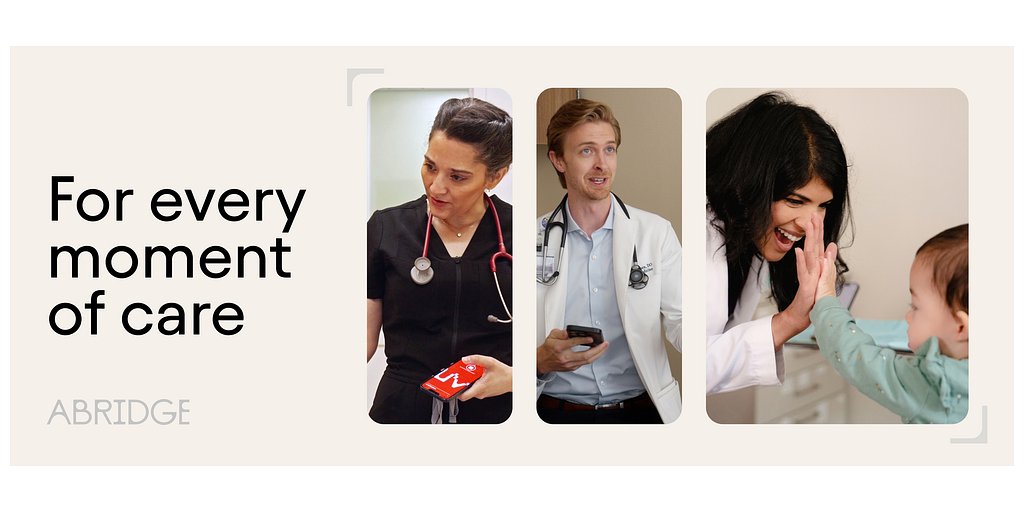
Beyond the Burnout: Abridge's Plan to Rewire Healthcare's Core
NEW YORK, NY – June 11, 2026 – For decades, the American healthcare system has presented a frustrating paradox: a world leader in medical innovation yet notoriously fragmented, inefficient, and crippling for the very clinicians who sustain it. This fragmentation has fueled an epidemic of burnout, with physicians and nurses buried under administrative tasks that pull them away from patient care. Today, in a keynote address that felt more like a strategic blueprint for a new healthcare infrastructure, Abridge unveiled an AI-native platform that aims to do more than just ease documentation—it seeks to rewire the fundamental connections between care delivery, payment, and evidence-based medicine.
Dr. Shiv Rao, the company's CEO and co-founder, framed the mission in stark terms. "We started Abridge to save time, save money, and save lives," he stated, articulating a vision that moves AI from a passive transcription tool to an active intelligence layer woven into the fabric of every clinical moment.
A Prescription for Clinician Burnout
The most immediate and tangible promise of Abridge's platform is relief for an exhausted workforce. With nearly half of U.S. physicians reporting burnout symptoms, the administrative burden of the electronic health record (EHR) is a well-documented culprit. Abridge tackles this head-on by using ambient AI to listen to and process clinical conversations, automating the creation of notes, summaries, and structured data.
Evidence suggests this is more than just a marginal time-saver. A multi-site study published in JAMA found that consistent use of AI scribes could save clinicians over 27 minutes of documentation time per day. For a doctor seeing 20 patients, that's time regained for patient focus, collaboration, or simply a moment to breathe. The impact is profound. At Reid Health, a system in Indiana that has deployed Abridge enterprise-wide, the results are striking. "Abridge gives our nurses something invaluable back—their presence," said Misti Foust-Cofield, Vice President & Chief Nursing Officer. She reported that the health system's nursing vacancy rate plummeted from 18% to 8.6% and incidental overtime was cut by 70% on teams using the technology. Given that retraining a single nurse can cost nearly $100,000, the bottom-line implications are clear.
The platform is now expanding beyond physicians to support the entire care team, with specific workflows designed for nurses. By capturing nurse-patient conversations at the bedside, Abridge can draft documentation that flows into the shared clinical record, ensuring critical context is carried forward across handoffs—a notorious point of failure in inpatient care. This enterprise-wide adoption, now underway at major systems like Northwestern Medicine, signals a strategic shift. "By easing documentation demands with Abridge, our clinicians are able to be more present with their patients, resulting in more meaningful interactions and a stronger care experience," said Doug King, Chief Information Officer at Northwestern Medicine.
Weaving a Connected Healthcare Fabric
While tackling burnout is a critical entry point, Abridge's ambition extends far beyond the exam room. The company is positioning its platform as the connective tissue for a disjointed ecosystem, linking the clinical encounter to payment systems and evidence-based guidelines in real time.
This begins with intelligence that supports clinicians before, during, and after the visit. Before an encounter, the platform can generate pre-charted notes and summaries from a patient's longitudinal record. During the visit, it evolves from a passive scribe to an active assistant, suggesting evidence-based questions based on the conversation and surfacing care gaps. This is supercharged by new content collaborations with the American Diabetes Association®, American Academy of Family Physicians, and others, adding to an already robust library anchored by sources like Wolters Kluwer’s UpToDate. "When the latest evidence is available at the point of care... it can save time, reduce variability, and support better outcomes for patients," noted Dr. Mariell Jessup, Chief Science and Medical Officer of the American Heart Association, a new partner.
Perhaps most disruptively, Abridge is taking aim at the adversarial and sluggish reimbursement cycle. Billions of dollars in care go unrecognized annually due to incomplete documentation, and the administrative friction between providers and payers is immense. Abridge proposes a shared foundation where documentation, billing codes, and claims are grounded in the same auditable clinical conversation. At the keynote, leaders from Emory Healthcare and Cigna, as well as Johns Hopkins and Aetna, took the stage to discuss this future. "The future cannot be providers and insurers using increasingly sophisticated tools to argue over the record after care has already been delivered," declared Dr. Joon Lee, CEO of Emory Healthcare. "We need shared, trusted infrastructure that helps both sides determine the right payment in real time." To bolster this, Abridge announced a partnership with AHIMA, the leading association for medical coding, to ensure its AI-generated codes meet the highest standards of quality and auditability.
The Engine Room: A Foundational AI for Medicine
Powering this expansive vision is a significant technological leap. Abridge announced a landmark collaboration with NVIDIA to build a first-of-its-kind foundation model for clinical conversations. This is not about retrofitting a general-purpose large language model; it's about building a specialized intelligence from the ground up. Leveraging NVIDIA's next-generation Blackwell AI infrastructure and its Nemotron open model family, Abridge will train the model on vast amounts of de-identified clinical data. The goal is to create an AI that reasons clinically from its core, understanding the nuances, context, and complexities of medicine across dozens of specialties.
"Nemotron is the open frontier model created exactly for this moment, giving Abridge the foundation to break new ground across the entire healthcare ecosystem,” said Kimberly Powell, Vice President of Healthcare at NVIDIA. This domain-specific approach promises to enhance the accuracy, reliability, and auditability of every workflow on the platform, from a simple note to complex clinical reasoning.
This deep-seated clinical intelligence is crucial for building trust. With patient data privacy being paramount, Abridge emphasizes its "Linked Evidence" feature, which allows clinicians to click on any part of a generated summary and see the exact segment of the source conversation it came from, providing an instant and auditable verification layer.
From Smart Rooms to Clinical Trials
The platform's intelligence is designed to permeate every corner of the care environment. Smart room integrations with partners like Artisight and hellocare.ai will allow Abridge to work quietly in the background of inpatient settings, automating tasks and creating a seamless flow of information from patient interactions to the EHR. As Dr. Richard Zane, UCHealth's Chief Medical and Innovation Officer, explained, this model is expected to "streamline workflows, reduce cognitive and administrative burden, improve safety and quality, and free nurses and clinicians to focus more of their time on direct patient care."
Beyond operational efficiency, Abridge is connecting the clinical encounter to the frontier of medical research. The platform can analyze conversations in real time, comparing them against the patient record and trusted clinical guidance. For conditions like Alzheimer's, where early indicators are crucial, the system can identify elevated risk and suggest to the clinician that trial screening may be appropriate. This has the potential to dramatically accelerate patient recruitment for clinical trials, bridging the gap between cutting-edge research and the patients who stand to benefit most.