
- S$1 billion invested in Singapore's National AI Strategy 2.0 (NAIS 2.0) to drive ethical AI development.
- 11 finalist projects in the AI Ready ASEAN Youth Challenge, with Brunei's ΣHAI winning for an AI-powered dementia care platform.
- 3.3 million medical images used to train MerMED-FM, an AI model for detecting tuberculosis and cancer.
Experts agree that Singapore's ATxSummit 2026 highlights the nation's leadership in fostering ethical AI innovation, with a balanced approach to governance, talent development, and public-good applications.
Singapore's ATxSummit Forges a Collaborative AI Future for Public Good
SINGAPORE – May 19, 2026 – As global technology leaders, policymakers, and academics converge in Singapore for ATxSummit 2026, a clear and ambitious regional vision is taking shape: harnessing the transformative power of artificial intelligence for the public good. Hosted by the Infocomm Media Development Authority of Singapore (IMDA), the summit opened with President Tharman Shanmugaratnam as the Guest-of-Honour, setting a collaborative tone for an event that draws luminaries from OpenAI, Amazon, NVIDIA, and top universities alongside government delegations from Asia, the Middle East, and the United States.
The summit is more than a forum for discussion; it serves as a powerful demonstration of Singapore's strategy to position itself as the central hub for ethical and impactful AI development in Southeast Asia. This strategy is built on a foundation of robust governance, fostering next-generation talent, and driving tangible solutions to the region's most pressing challenges, particularly in healthcare and social inclusion.
A Framework for Trustworthy AI
Underpinning the discussions at ATxSummit is Singapore's deliberate and pragmatic approach to AI governance. The nation's National AI Strategy 2.0 (NAIS 2.0), backed by over S$1 billion in funding, champions the twin goals of "AI for Public Good" and "AI for Growth." This strategy avoids a heavy-handed regulatory approach, instead favoring innovation-friendly frameworks that build trust and encourage responsible development.
Key to this is the Model AI Governance Framework, first introduced by IMDA in 2019, which provides organizations with actionable guidance on deploying AI ethically, emphasizing principles like transparency, fairness, and human-centricity. This is complemented by practical tools like AI Verify, an open-source testing toolkit that allows developers to validate their systems against international governance standards.
This national framework aligns with broader regional efforts, such as the ASEAN Guide on AI Governance and Ethics, which aims to create interoperable standards across Southeast Asia. By championing a principles-based approach, Singapore is fostering an environment where AI innovation can flourish while ensuring that the technology remains accountable and serves human interests, a message that resonates strongly with the international partners gathered at the summit.
Youth at the Forefront of Social Innovation
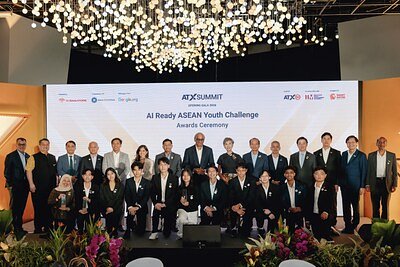
A highlight of the summit's opening gala was the inaugural AI Ready ASEAN Youth Challenge, which vividly illustrated how the region's next generation is not just consuming technology but actively creating it to solve community-level problems. From over 600 submissions, 11 finalist projects showcased practical AI solutions in healthcare, education, and agriculture, reflecting a groundswell of grassroots innovation.
President Tharman presented the top awards to teams from Brunei, Cambodia, and Myanmar. The overall winner, Brunei's ΣHAI, developed an AI-powered dementia care platform named Sahabat-Care. It uses speech, language, and video analysis to aid in earlier detection and provide personalized guidance to caregivers, addressing a growing challenge in an aging Southeast Asia. "Through Sahabat-Care, we wanted to address the growing challenge of dementia detection and caregiver support," the ΣHAI team stated. "This platform has helped us explore how AI can support caregivers with more timely insights, personalised guidance and better decision-making for elderly care."
Other winners included Cambodia's Voha.ai, which uses real-time speech recognition to help hearing-impaired children improve pronunciation, and Myanmar's Future Flux, an offline AI education platform that uses edge computing to bring digital learning to rural students without reliable internet access.
The challenge is a core component of the wider AI Ready ASEAN initiative, an ambitious program supported by Google.org that aims to equip 5.5 million people with foundational AI literacy by 2026. "This is the kind of impact we hope to see from our AI Ready ASEAN effort – our future generations not just knowing how AI works, but knowing where it matters, where it should be used, and how it can improve lives," said Koo Sengmeng, Director of Talent & Ecosystem at AI Singapore.
Advancing Healthcare with AI-Powered Precision
The summit also served as the backdrop for significant advancements in healthcare AI, with two key Memoranda of Understanding (MoU) signed at the SingHealth AI in Health Symposium. These partnerships aim to accelerate the development and deployment of AI solutions to tackle regional health issues like aging populations, chronic diseases, and unequal access to care.
The first MoU, between SingHealth and Bhutan's Gyalpozhing College of Information Technology, focuses on bringing specialist-level diagnostics to remote areas. The collaboration centers on an AI-assisted chest radiograph model built on MerMED-FM, a powerful foundation model developed by SingHealth and A*STAR. Published in The Lancet Digital Health, MerMED-FM was trained on over 3.3 million medical images and has shown high accuracy in detecting conditions like tuberculosis and cancer. By training this model on Bhutanese data, the partnership aims to deploy specialist-level diagnostic capabilities in Bhutan's Gelephu Mindfulness City hospitals by 2027, overcoming geographical barriers and shortages of radiological expertise.
The second MoU partners Singapore General Hospital (SGH) with A*STAR's Diagnostics Development Hub (DxD Hub) to fast-track commercially scalable diagnostic tools. This collaboration is already yielding results, including an AI-powered test kit (iACT) to combat antibiotic-resistant infections and a digital drawing app (PENSIEVE-AI) for early detection of memory loss in seniors. These initiatives represent a concerted effort to move AI from the research lab to the clinic, creating investable health-tech solutions that can deliver both health and economic benefits to Singapore and the wider region.
Cultivating a Comprehensive AI Ecosystem
The initiatives showcased at ATxSummit are part of a broader, multi-pronged strategy to cultivate a world-class AI ecosystem in Singapore. This national effort is steered by the newly formed National AI Council (NAIC), chaired by Prime Minister Lawrence Wong, which provides strategic direction to deepen AI capabilities across the economy. The government's vision extends beyond high-level policy to include crucial investments in infrastructure and talent.
Major partnerships with global tech giants are central to this plan. A national AI partnership with Google aims to build an "AI-ready workforce" and bolster enterprise innovation, while NVIDIA is establishing a new AI research lab in Singapore to focus on advanced areas like embodied AI. These collaborations ensure that Singapore remains at the cutting edge of AI research and development.
Simultaneously, the government is focused on democratizing AI access. A plan to support 10,000 small and medium-sized enterprises (SMEs) over the next three years will help integrate AI into their core operations, broadening the economic base of the digital economy. Combined with talent development programs like the AI Ready ASEAN initiative and specialized certifications in AI ethics, Singapore is methodically building a pipeline of skilled professionals and a society prepared for an AI-driven future. This holistic approach, from global diplomacy and ethical governance to grassroots innovation and industry-wide adoption, solidifies Singapore's role as a key architect of the region's technological advancement.