
- Market Growth: AI-generated photo editing market valued at $4.8 billion in 2025, projected to reach $21.6 billion by 2034.
- Venture Capital Funding: Over $1 billion invested in 2024 alone.
- User Base: Relight feature targets over 1 billion smartphone users seeking professional lighting effects.
Experts would likely conclude that Pixocial's Relight feature represents a significant step in democratizing professional-grade photo editing, leveraging AI to bridge the gap between amateur and professional photography while raising questions about the evolving definition of authenticity in digital imagery.
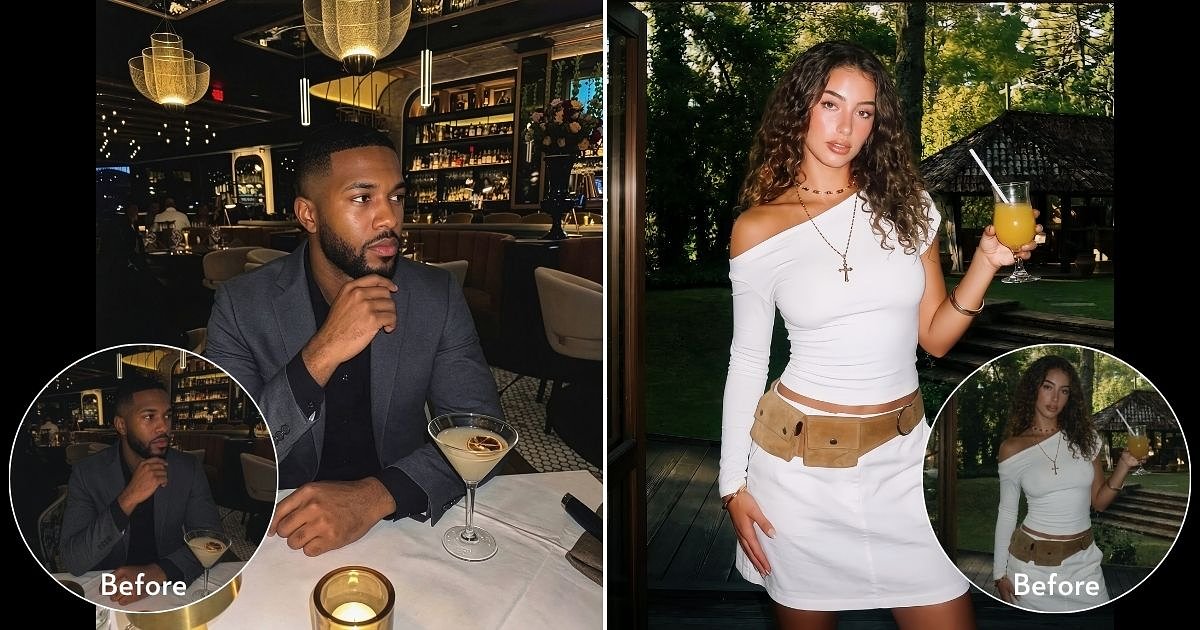
The End of Bad Lighting? AI Reimagines the Mobile Photograph
SINGAPORE – June 03, 2026 – In the relentless churn of the digital attention economy, the humble photograph remains king. But the tools shaping its reign are undergoing a radical transformation. Pixocial, the company behind the popular Airbrush photo editor, today unveiled 'Relight,' an AI-powered feature promising to bring the sophisticated nuance of professional lighting to the everyday smartphone user. This isn't just another filter; it's a strategic bet on a market rapidly moving beyond superficial touch-ups and towards AI-driven authenticity.
The Democratization of the 'Perfect Shot'
For years, achieving a specific photographic 'look'—the warm glow of 'Golden Hour' or the moody shadows of cinematic lighting—required expensive equipment, precise timing, and considerable skill. Pixocial's new feature aims to render that barrier obsolete. The Relight tool, integrated into the Airbrush mobile app, allows users to apply complex lighting effects with a single tap. These aren't generic brightness sliders; they are AI models trained to replicate specific, popular aesthetics, from the nostalgic flash of a G7X Digicam to the soft, even light of a professional studio.
“Relight was created to make professional-looking lighting effects more accessible to everyday users,” said Lyllian Lai, Product Lead of Airbrush App, in a statement accompanying the launch. “Many people love the look of photos taken with cameras... but not everyone has the equipment, timing, or editing experience to recreate those effects.”
This move speaks to a powerful market force: the democratization of creativity. By leveraging generative AI, companies like Pixocial are effectively packaging the expertise of a professional photographer into a software algorithm. The focus, as the company emphasizes, is on changing how a photo feels, not altering the subject's appearance. A flatly lit selfie can become editorial, a drab city street can feel cinematic. It’s a compelling proposition in a world where one's social feed is a visual resume.
A Crowded Market Bathed in AI Light
Pixocial is not innovating in a vacuum. The launch of Relight is a calculated volley in an increasingly competitive and lucrative arena. The AI-generated photo editing market, valued at a substantial $4.8 billion in 2025, is projected to explode to $21.6 billion by 2034. This staggering growth, fueled by over a billion dollars in venture capital funding in 2024 alone, has attracted a host of powerful players.
Established competitors are already deeply entrenched in the AI arms race. VSCO, long a favorite of discerning creators, recently launched its 'AI Lab,' featuring a 'Prompt' tool that allows users to describe desired edits in plain English—including mimicking the look of a '90s point-and-shoot camera.' Adobe, the industry titan, has integrated its powerful 'Generative Remove' and AI-driven 'Adaptive Presets' into its Lightroom Mobile app. Even Facetune, once synonymous with aggressive facial retouching, offers its own 'Relight' features and a suite of AI-powered appearance modifiers.
In this crowded field, Airbrush's strategy appears to be one of hyper-specific, trend-focused execution. By explicitly naming effects like 'G7X Digicam flash,' it directly targets aesthetics currently dominating platforms like TikTok and Instagram, offering a frictionless path for users to replicate the viral looks they see on their feeds.
From Filters to Feelings: The Quest for AI-Powered Authenticity
A decade ago, mobile photo editing was defined by the heavy-handed, one-size-fits-all filters of early Instagram. Today, user sentiment has shifted. There's a growing fatigue with overly processed, inauthentic images. The market is now rewarding a new kind of enhancement—one that feels expressive and personal, yet natural. This is the nuanced space where AI is proving most disruptive.
Airbrush's claim that Relight focuses on 'how a photo feels' is a direct appeal to this new sensibility. The underlying technology is immensely complex, involving AI models that analyze a 2D image to understand its depth, identify subjects, and simulate the physics of light. Yet the goal is to produce an emotional, rather than a purely technical, result. Alongside Relight, the company also announced an AI Auto Color Correction tool for its web editor, designed to fix the unnatural color casts from concert or club lighting—another pain point for those seeking to capture authentic moments in challenging environments.
This raises a fascinating question about the nature of authenticity itself. When an AI can flawlessly add the warmth of a sunset that never happened or the dramatic flair of a studio light that was never present, is the resulting image more authentic or simply a more sophisticated illusion? The answer likely lies in the user's intent: not to deceive, but to better express the feeling of a moment that the original, technically limited phone snapshot failed to capture.
The TikTok Effect: How Viral Aesthetics Drive Innovation
The most telling aspect of Airbrush's new feature is its direct lineage from social media trends. The inclusion of an effect mimicking the Canon G7X, a point-and-shoot camera beloved by vloggers for its harsh, direct flash, is no accident. This 'digicam' aesthetic has become a viral sensation, a nostalgic throwback that has creators scouring secondhand markets for old cameras. Pixocial's innovation is recognizing that the demand is not for the camera itself, but for the specific look it produces.
This symbiotic relationship between user-generated trends and corporate R&D is defining the modern app economy. Companies are no longer just creating tools and waiting for users to find creative applications. Instead, they are actively monitoring the visual language of platforms like TikTok, Instagram, and Pinterest, and then racing to build features that codify and commodify those aesthetics. It is a user-driven product design cycle operating at unprecedented speed.
By offering the 'G7X' look as a simple, one-tap option, Airbrush is not just providing a tool; it's selling participation in a cultural moment. This strategy short-circuits the need for expensive hardware or technical skill, positioning the app as an essential conduit for staying visually relevant. As AI continues to evolve, this cycle will only accelerate, further blurring the lines between capturing a moment and creating it from scratch, pixel by perfect, AI-lit pixel.