
- 7th consecutive year on Newsweek's Most Responsible Companies list
- No. 2 spot in Retail and Consumer Goods industry
- 30+ KPIs analyzed for ESG ranking, blending 70% quantitative data and 30% public perception
Experts would likely conclude that General Mills' sustained top ESG ranking reflects its strategic integration of responsibility into core business operations, demonstrating leadership in sustainability, ethical sourcing, and workforce equity.
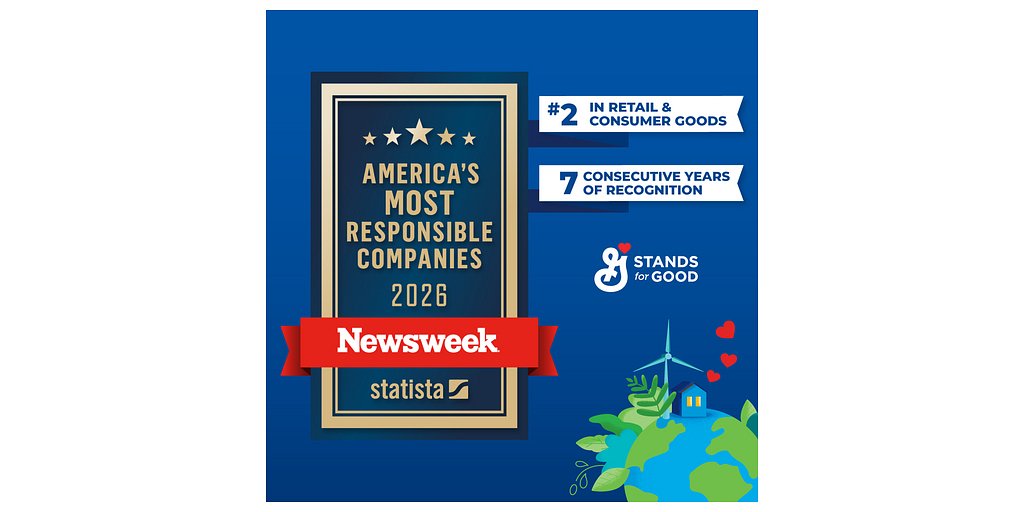
General Mills' Recipe for Responsibility: A Deeper Look at Its Top ESG Rank
MINNEAPOLIS, MN – February 11, 2026 – General Mills, the global food giant behind household staples like Cheerios and Pillsbury, has once again solidified its reputation as a leader in corporate citizenship. The company was named to Newsweek's list of America's Most Responsible Companies for 2026, marking its seventh consecutive year of inclusion and securing the No. 2 spot in the competitive Retail and Consumer Goods industry.
This consistent recognition goes beyond a simple accolade; it highlights a deep-seated commitment to environmental, social, and governance (ESG) principles at a time when consumers and investors are demanding greater accountability from the world’s largest corporations. For General Mills, this achievement is a public validation of its long-term "Accelerate" strategy, which explicitly includes a mandate to "stand for good."
The Science of a Good Company
Newsweek’s prestigious ranking is not a subjective measure but the result of a rigorous, multi-layered analysis conducted in partnership with the global data research firm Statista Inc. Understanding this methodology reveals the substance behind General Mills' high placement. The process is designed to holistically assess a company's true impact and commitment to responsible practices.
The foundation of the ranking is a detailed review of publicly available data. Researchers scrutinize corporate social responsibility (CSR) and sustainability reports, examining over 30 key performance indicators (KPIs). These metrics span the full spectrum of ESG: environmental data on emissions and resource usage, social data on employee relations and community engagement, and governance data on corporate transparency and board structure. To ensure a comprehensive view, the analysis also incorporates information from financial reports and screens for involvement in significant lawsuits or inclusion on top polluter indexes.
However, quantitative data tells only part of the story. The second critical component of the evaluation is a massive independent survey of approximately 18,000 U.S. residents. This survey gauges public perception of a company’s social and environmental efforts, essentially serving as a reputational reality check. The final score for each ESG dimension is a blend of these two perspectives, with the KPI research weighted at 70% and the public survey at 30%. This dual approach ensures that the companies on the final list of 600 have not only robust, data-backed programs but have also earned the public's trust.
A Recipe for Consistent Responsibility
Securing a top spot on this list for seven straight years is no accident; it is the outcome of a sustained and strategic focus on core responsibility pillars. General Mills' performance was driven by its demonstrated progress in sustainability, community philanthropy, and its commitment to being an employer of choice. These are not isolated initiatives but are woven into the fabric of the company’s operational strategy.
In sustainability, the maker of Nature Valley bars has long focused on reducing its environmental footprint across its vast supply chain. This includes ambitious goals related to greenhouse gas emissions, water stewardship in high-risk watersheds, and the promotion of regenerative agriculture practices for sourcing key ingredients like wheat and oats. By investing in these areas, the company aims to build resilience against climate change while protecting the natural resources upon which its business depends.
Socially, the company's efforts extend from its factory floors to the communities it serves. Its philanthropic work, often focused on alleviating food insecurity, involves substantial food donations and partnerships with non-profit organizations. Internally, the "employer of choice" designation reflects a focus on creating an inclusive and equitable workplace culture, investing in employee development, and promoting diversity from the production line to the boardroom. These efforts contribute directly to the "Social" score in Newsweek's ranking and build a stronger, more engaged workforce.
Beyond the Cereal Box: Impact for Consumers and Investors
For the average consumer, the term "corporate social responsibility" can feel abstract. However, General Mills' high ranking has tangible implications that reach the pantry. It signifies that the company is actively managing its environmental impact in the production of everyday foods, from Cheerios to Old El Paso. It suggests a commitment to ethical sourcing and treating its global workforce fairly. In an era where shoppers are increasingly "voting with their wallets," this recognition provides a clear signal for those looking to support businesses that align with their values.
This signal is just as powerful for the financial community. Investors are increasingly viewing strong ESG performance as a proxy for savvy, long-term management. As one analyst covering the consumer goods sector noted, ESG metrics are now used "like a checklist for long-term health." Strong performance, like that of General Mills, suggests lower future costs related to regulatory compliance, reduced risk of reputational damage from environmental or social missteps, and a greater capacity for innovation.
This appeal attracts capital from a growing pool of ESG-focused funds, which can lower a company's cost of capital and enhance its market valuation. By consistently demonstrating its commitment to responsibility, General Mills is not just polishing its brand image; it is building a more resilient and financially sound business for the future.
Navigating a Competitive and Conscientious Market
General Mills' No. 2 ranking in the Retail and Consumer Goods category places it near the apex of an intensely competitive industry. This sector, which touches billions of lives daily, is under increasing scrutiny from consumers, activists, and regulators to address its significant environmental and social footprint. The company's sustained leadership in this context is particularly noteworthy, setting a high bar for its peers.
The consistent high marks demonstrate an ability to integrate ESG principles into core business functions, rather than treating them as a peripheral communications exercise. This integration is becoming a critical differentiator in a marketplace where transparency is paramount and brand loyalty is increasingly tied to corporate ethics. As expectations for corporate accountability continue to rise, companies that can prove their commitment with verifiable data and positive public perception will be best positioned for sustained success.
For General Mills, this seventh consecutive year of recognition from Newsweek is more than just an award. It is an affirmation of a long-term strategy that balances profit with purpose, reinforcing its identity not only as a maker of "food the world loves" but as a company striving to be a force for good in its creation. This deep-rooted commitment is a powerful asset as it navigates the complex challenges and opportunities of the global food system.
Topics & Related
DEI
Related Company Pulse