
- Labor force participation rate for persons with disabilities in Indonesia: 20% (early 2025) vs. 70% for those without disabilities.
- Over one million resellers in Evermos's network, majority women from underserved communities.
- Program has impacted more than 230 beneficiaries since 2023.
Experts would likely conclude that this public-private partnership effectively leverages digital tools to reduce economic barriers for vulnerable groups, offering a scalable model for inclusive workforce development.
Forging Digital Lifelines for Indonesia’s Underserved Workforce
BANDUNG, Indonesia – June 19, 2026 – In a nation grappling with significant employment disparities, a novel partnership is leveraging technology to build economic bridges for some of Indonesia's most vulnerable citizens. Social commerce platform Evermos and the International Labour Organisation (ILO) have joined forces to deliver digital entrepreneurship training, aiming to close a stark gap in the workforce. According to Statistics Indonesia (BPS), the labor force participation rate for persons with disabilities stood at a mere 20% in early 2025, a fraction of the nearly 70% rate for those without disabilities. This initiative offers a new pathway to financial independence, requiring little more than a mobile phone and an entrepreneurial spirit.
A Digital Bridge Over Economic Barriers
The traditional barriers to starting a business—significant capital for inventory, the need for a physical storefront, and complex logistics—have long excluded individuals with limited mobility or financial resources. The collaboration between Evermos and the ILO directly confronts these challenges by leveraging a reseller-based social commerce model. This approach eliminates the need for upfront investment, as resellers use the Evermos platform to market and sell products from local MSMEs without ever holding stock themselves.
"We see digital business as a bridge to lower the barriers to economic access for persons with disabilities and returning migrant workers," said Iqbal Muslimin, Chief of Sustainability at Evermos. "No significant capital, no need for a physical location, a mobile phone is enough. This business model opens up the opportunity for them to build an independent and sustainable source of income."
Founded in 2018, Evermos has built a network of over one million resellers, the majority of whom are women from underserved communities. By providing access to a curated catalog of halal products, a robust distribution network, and ongoing mentorship, the platform has created a powerful engine for micro-enterprise. This infrastructure is now being specifically tailored to empower groups who have been systematically left behind.
A Blueprint for Public-Private Impact
The initiative operates under the ILO’s “Promise II Impact” project, a multi-year program funded by the Swiss State Secretariat for Economic Affairs (SECO) designed to improve MSMEs' access to financial services. This strategic alliance combines the agility and market-driven innovation of a tech company with the structured, rights-based framework of a global development agency. Evermos provides the digital ecosystem and hands-on business training, while the ILO contributes modules on financial literacy and its globally recognized Decent Work framework, ensuring participants build their businesses on a sound and sustainable footing.
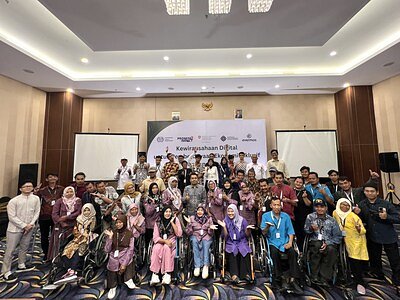
Since its inception in 2023, the collaboration has already impacted more than 230 beneficiaries. In March 2026, training sessions were held for returning migrant workers in Cirebon and for persons with disabilities in the Special Region of Yogyakarta, in partnership with local organizations like the Indonesian Association of Women with Disabilities (HWDI).
"The partnership between the ILO and Evermos is an example of how collaboration can help bring about more inclusive economic growth that leaves no one behind," stated Djauhari Sitorus, Project Manager for Promise II Impact. He emphasized that the project's conclusion marks not an end, but a beginning for the new entrepreneurs. "Three years of experience have shown that when vulnerable groups gain access to the right skills, technology, and mentoring, they are able to create economic opportunities for themselves."
From Training to Tangible Enterprise
The training curriculum is intensely practical. Participants are guided through the Evermos app to select products, learn digital marketing techniques using accessible tools like WhatsApp Business, and cultivate an entrepreneurial mindset. The goal is to transform their skills and savings into long-term, productive assets. The ILO's financial literacy component complements this by teaching participants to manage cash flow, budget effectively, and plan for future growth, crucial skills for any new business owner.
This hands-on approach directly supports Indonesia's national agenda to improve digital literacy, particularly for groups at risk of being excluded from the burgeoning digital economy. By focusing on practical application, the program moves beyond theoretical knowledge to foster genuine economic empowerment.
"For us, digital transformation also becomes meaningful when it reaches vulnerable groups, those furthest from the information they need to empower themselves economically," explained Arip Tirta, President of Evermos. "Through Evermos, a person with a disability or a migrant worker returning to their hometown can start a business with nothing more than a smartphone, without significant capital — and that is what truly inclusive empowerment looks like."
Scaling Social Commerce for Sustainable Change
The potential for this model to scale is significant. Evermos has demonstrated impressive growth, backed by a $39 million Series C funding round in 2023 led by the International Finance Corporation (IFC), the World Bank's private sector arm. This financial stability and expansive network provide a solid foundation for expanding the program to more regions across the archipelago.
The company’s numerous accolades, including the UN Women 2024 Indonesian Women's Empowerment Principles (WEPs) award and the Seal Business Sustainability Award 2025, underscore a deep-seated commitment to social impact that is integrated into its core business strategy. By proving that profitability and social good can be mutually reinforcing, Evermos and the ILO are crafting a powerful, replicable blueprint. The collaboration serves as a compelling case study for how public-private partnerships can harness technology to create a more equitable economy, ensuring that the benefits of digital innovation are accessible to all.