
- 300+ patents held by Lleida.net in over 60 countries, creating a strong IP moat.
- 5 Spanish Provincial Courts recognized Lleida.net's registered electronic mail as legally valid under Organic Law 1/2025.
- eIDAS-compliant digital identity and electronic signature solutions for secure, compliant onboarding.
Experts would likely conclude that Lleida.net is strategically positioning itself as a leader in digital trust by combining robust legal compliance, extensive patent protection, and innovative solutions for secure digital identity and communications.
Beyond the Booth: How Lleida.net Is Engineering the Future of Digital Trust
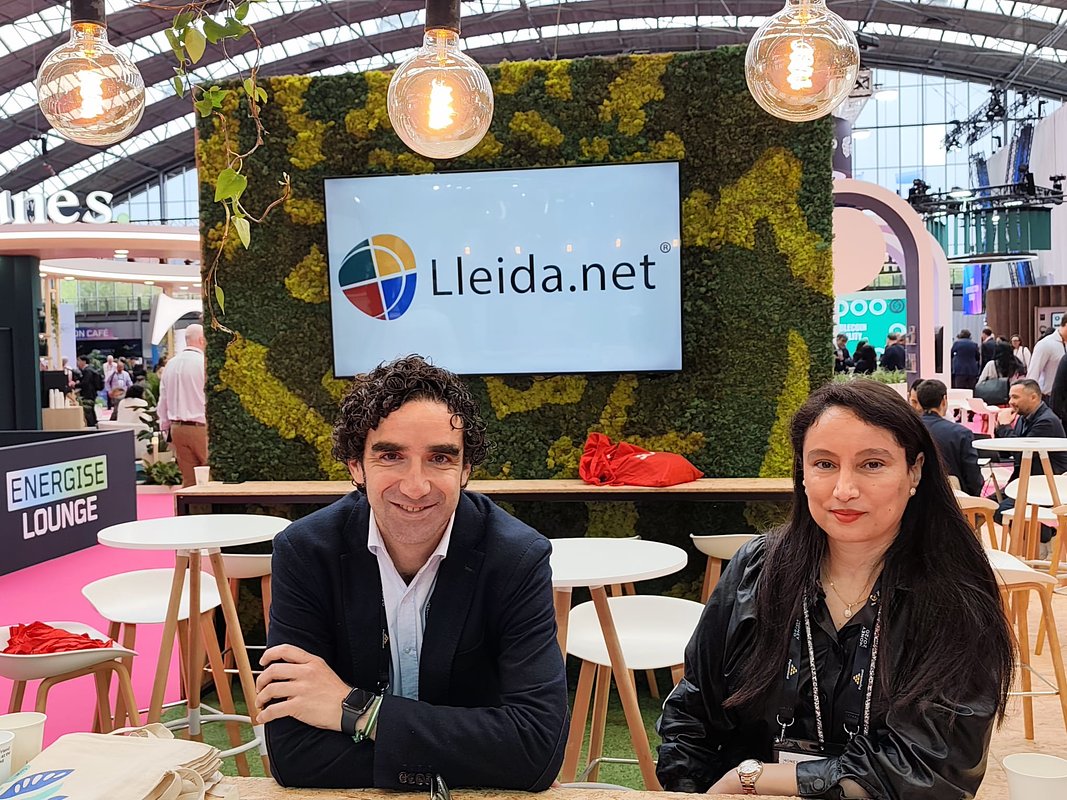
AMSTERDAM, NL – June 04, 2026 – The halls of Money20/20 Europe are a dizzying spectacle of ambition, where buzzwords like AI and embedded finance ricochet off every surface. But amid the clamor for the next big disruption, a more fundamental currency is being traded: trust. For leaders navigating the future of work, the critical question isn't just what technology can do, but what it can prove. This week, Spanish technology operator Lleida.net offered a compelling answer, using the fintech world’s biggest stage not just to showcase its products, but to demonstrate how digital trust is evolving from a regulatory burden into a defensible, strategic asset.
While many exhibitors focused on futuristic interfaces and AI-driven predictions, the team from Lleida.net, participating within the ICEX Spain Trade and Investment stand, brought a message grounded in the unglamorous but essential mechanics of legal and technological certainty. Their focus on digital identity, eIDAS-compliant electronic signatures, and certified digital communications speaks to a deeper industry need—one that underpins every transaction and customer relationship in the digital economy.
The New Currency of Fintech: Verifiable Trust
The dominant conversations at Money20/20 often revolve around growth at all costs and frictionless user experiences. Yet, as one industry analyst noted anonymously, “The friction that fintechs are so desperate to eliminate is often the very thing that ensures security and compliance.” This is the tightrope that financial institutions must walk. The challenge is to build processes that are both seamless for the customer and ironclad for the regulator. This is where the concept of 'digital trust services' moves from the back office to center stage.
Lleida.net’s showcase of digital identity and wallet solutions addresses the most painful part of the customer journey: onboarding. In a landscape where customer acquisition costs are soaring, a slow or cumbersome verification process is a death knell. By offering tools that are compliant with the EU’s stringent eIDAS (electronic IDentification, Authentication and trust Services) regulation, the company provides a pathway to faster, more secure onboarding. These aren't just features; they are foundational elements for building a scalable and compliant business in Europe. For leaders, the implication is clear: investing in compliant identity infrastructure is no longer an IT expenditure but a direct investment in market access and customer retention.
Furthermore, the growing emphasis on B2B fintech solutions at the conference highlights a market maturation. Businesses are now the primary customers for sophisticated digital tools, and their purchasing decisions are driven by risk mitigation and operational efficiency. Centralized electronic signatures and the validation of digital certificates, as presented by Lleida.net, are precisely the kinds of services that enable businesses to digitize workflows securely, from sales contracts to supply chain agreements, with the assurance that these digital interactions are legally sound across the European Single Market.
From Regulation to Reality: The Power of Legal Precedent
For any company operating in the trust services space, claiming regulatory compliance is standard practice. Proving it in a court of law is another matter entirely. This is where Lleida.net’s story takes a pivotal turn. On April 16th of this year, a seemingly technical development in Spain provided the firm with its most powerful marketing tool: legal precedent.
Five separate Spanish Provincial Courts explicitly recognized the company's registered electronic mail as a valid and sufficient means of proving compliance with a new procedural requirement. This requirement stems from Organic Law 1/2025, which mandates the use of “Medios Adecuados de Solución de Controversias” (MASC), or Adequate Means of Dispute Resolution, in an effort to make the public justice system more efficient. In essence, parties are now required to show they’ve tried to resolve disputes before escalating to a formal court case.
The courts’ recognition of Lleida.net's digital service as legally reliable proof is a landmark moment. It elevates a digital communication tool to the same level of legal validity as traditional registered post, but with the speed and efficiency of the internet. For businesses, this transforms risk management. A simple, digitally-certified email can now serve as irrefutable evidence in legal proceedings, drastically reducing ambiguity and potential litigation costs. It’s a tangible demonstration of how technology, when properly certified and legally recognized, can streamline interactions not just with customers, but with the justice system itself. This provides a powerful layer of operational resilience for any organization that adopts it.
Building a Moat with Patents and Protocols
The digital trust market is fiercely competitive, populated by global giants like DocuSign and Adobe, as well as a host of specialized identity verification players like Onfido and Veriff. In this environment, differentiation is key to survival and growth. Lleida.net’s strategy appears to be twofold: rigorous adherence to regional legal frameworks and the construction of a formidable intellectual property moat.
The company holds over 300 patents in more than 60 countries. This is not merely a vanity metric. This extensive patent portfolio protects the specific methods and technologies that underpin its services, from ensuring the integrity of a registered communication to the processes that make its electronic signatures legally binding. For leaders choosing a technology partner, this IP portfolio serves as an indicator of deep domain expertise and a commitment to innovation that goes beyond assembling off-the-shelf components. It creates a barrier to entry for competitors and ensures that its clients are using technology that is both unique and defensible.
This combination of global patent protection and deep regional compliance—certified not only under eIDAS but by equivalent bodies in Latin America, Morocco, and the UAE—gives the company a unique strategic posture. It can offer globally-protected technology that is locally compliant, a crucial advantage for multinational corporations seeking a standardized yet adaptable solution for digital trust across their operations. This approach turns the complex patchwork of international regulations from a liability into a competitive advantage.
The Future of Identity is Seamless and Secure
Looking ahead, the conversation around digital identity is shifting towards a more user-centric model. The rise of digital wallets and the concept of self-sovereign identity (SSI) promise a future where individuals control their own verifiable credentials, sharing them securely and selectively with businesses and service providers. Lleida.net’s focus on digital identity and wallet solutions at Money20/20 shows it is not just solving today's problems but is also building for this emerging paradigm.
For businesses, this future presents both an opportunity and a challenge. The opportunity lies in creating truly seamless customer experiences where identity can be verified instantly and securely. The challenge lies in integrating with these new systems in a way that is both trustworthy and compliant. Companies that rely on proprietary, siloed identity systems may find themselves at a disadvantage. By contrast, those like Lleida.net, which build on interoperable standards and provide the secure, certified rails for these interactions, are positioning themselves as essential infrastructure for the next generation of the digital economy. For any leader planning their organization's digital roadmap, understanding this shift is not just prudent; it is essential for future-proofing their business.