
- 30x efficiency gain: AI platform reduces 4-hour manual video production to 10 minutes
- 21% fewer errors: Platform achieves 21% decrease in factual errors vs. general models
- 93% usable content: High-quality output rate remains stable at over 93%
Experts would likely conclude that this AI-driven marketing platform represents a significant advancement in automotive sales efficiency, though its long-term success will depend on addressing ethical concerns around data privacy and bias.
AI Revs Up Auto Sales: Aimotion & Google Cloud Tackle Marketing Gridlock
SINGAPORE – May 22, 2026 – A new collaboration between AI marketing firm Aimotion and tech giant Google Cloud is poised to overhaul how cars are sold, leveraging artificial intelligence to solve one of the automotive industry's most persistent problems: converting social media buzz into showroom visits.
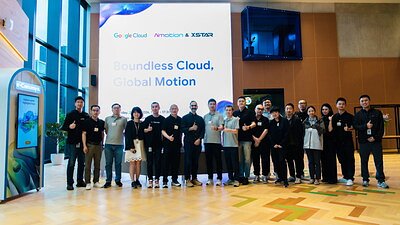
Announced at an executive roundtable at Google's Asia-Pacific Headquarters, the partnership introduces a sophisticated AI-driven platform designed to automate the entire marketing funnel for automakers. It aims to dismantle the silos that currently separate online traffic acquisition from lead generation, a disconnect that has long plagued an industry grappling with fragmented audiences and complex, cross-cultural sales cycles.
For global automakers, the digital landscape is a double-edged sword. While social media offers unprecedented reach, the sheer volume of platforms and cultural nuances makes effective, localized marketing a monumental task. Leads generated from this broad-net approach often get lost in a leaky funnel, with poor attribution and operational inefficiencies hampering customer acquisition.
This collaboration seeks to provide a direct solution, creating what the companies call a "full-funnel commercial best practice" for AI-powered lead generation on social media.
The Engine Under the Hood: A Multi-Agent AI System
At the heart of the new platform is a multi-agent AI system, a departure from reliance on single, general-purpose AI models. This system is built upon Google Cloud's powerful computing infrastructure but is fueled by Aimotion's deep, industry-specific data.
"To truly operationalize AI in enterprise environments, relying solely on general foundation models is not enough; possessing industry-specific vertical data is imperative," stated Hongyu Zhang, CEO of Aimotion, in the announcement. Zhang explained that Aimotion's proprietary assets—including millions of car buyer personas, an exclusive automotive knowledge graph, and tens of thousands of visual assets—are integrated directly into the workflow. This, he argues, enables the AI to deliver measurable value.
The system deploys three distinct but collaborative AI agents:
- The Creative Production Agent: This agent tackles the content bottleneck, enabling the scalable production of high-quality marketing materials. It can generate social media creatives, short-form videos, and even assist with AI-driven livestreaming content, allowing brands to maintain a constant, engaging presence across multiple platforms.
- The Growth Agent: Once content is distributed, this agent takes over customer engagement. It automates real-time interactions through messaging channels, engaging with high-intent prospects, slashing lead response times, and ultimately aiming to increase showroom appointment conversions.
- The Data Intelligence Agent: Working in the background, this agent acts as the system's brain, monitoring core metrics in real time. It analyzes global data to continuously optimize the conversion funnel, providing automakers with the insights needed to make smarter, data-driven commercial decisions.
From Hours to Minutes: Quantifying the AI Impact
Beyond theoretical promise, the collaboration is delivering startling efficiency gains that could fundamentally change the economics of automotive marketing. The companies report that the platform can condense a standard four-hour manual video production process down to just 10 minutes—an operational efficiency increase of over 30 times. For local dealerships and global marketing teams alike, this represents a radical acceleration of their content capabilities.
Crucially, the partnership also addresses one of the biggest enterprise fears surrounding AI: reliability and brand safety. By leveraging the logical reasoning and multimodal understanding of Google Cloud's models, Aimotion has built an automated quality inspection system. This system performs millisecond-level checks on content across languages and formats.
The results are significant. The platform has reportedly achieved a 21% decrease in factual errors and AI "hallucinations" compared to general models. This has led to a high-quality, usable content output rate that remains stable at over 93%, transforming AI from a risky experiment into a dependable, production-ready enterprise solution.
Google's Strategic Drive into Vertical AI
This partnership is more than an isolated deal; it's a key piece in Google Cloud's broader strategy to dominate the vertical AI market, particularly within the lucrative automotive sector. The tech giant has already made significant inroads by embedding its AI into the vehicle itself, with partnerships like the one with Mercedes-Benz to power its in-car virtual assistant. It has also focused on optimizing manufacturing and R&D with data analytics tools.
The collaboration with Aimotion extends Google's reach into the critical sales and marketing segment of the automotive value chain. While competitors like Salesforce and Adobe offer their own AI-powered marketing clouds, Aimotion's deep specialization in automotive social media, combined with its proprietary vertical data, offers a uniquely tailored solution. By providing the powerful, scalable infrastructure, Google Cloud enables this specialized model to operate on a global scale, creating a symbiotic relationship that challenges more generalized enterprise software providers.
Navigating the Ethical Roadblocks
While the technological and commercial benefits are compelling, the platform's reliance on "millions of car buyer personas" raises important ethical and data privacy questions. In an era of heightened scrutiny over data usage, the creation and application of such detailed consumer profiles will need to navigate a complex web of regulations, including Europe's GDPR and various state-level laws in the U.S.
The line between effective personalization and unwelcome manipulation is particularly fine in high-ticket, long-decision-cycle industries like automotive. The use of automated agents to engage customers requires a high degree of transparency and a robust ethical framework to prevent bias and ensure fairness. AI models trained on historical data can inadvertently perpetuate existing biases, potentially leading to discriminatory marketing practices.
The success of this ambitious AI blueprint will ultimately depend on more than just its technical prowess and efficiency gains. It will hinge on the ability of Aimotion and Google Cloud to build and maintain consumer trust by demonstrating a firm commitment to data privacy and ethical AI practices as they scale their powerful new marketing engine across the global automotive landscape.