
- 2.7 million automated interactions analyzed to develop the Engagement Velocity Framework.
- 96,705 subscribers using ProflUp's services to manipulate Instagram's algorithm.
- 60-second detection speed identified as critical for triggering Instagram's content distribution signals.
Experts acknowledge the plausibility of ProflUp's framework, noting that early engagement signals are a well-documented factor in social media algorithms, but caution that such practices undermine platform integrity and authenticity.
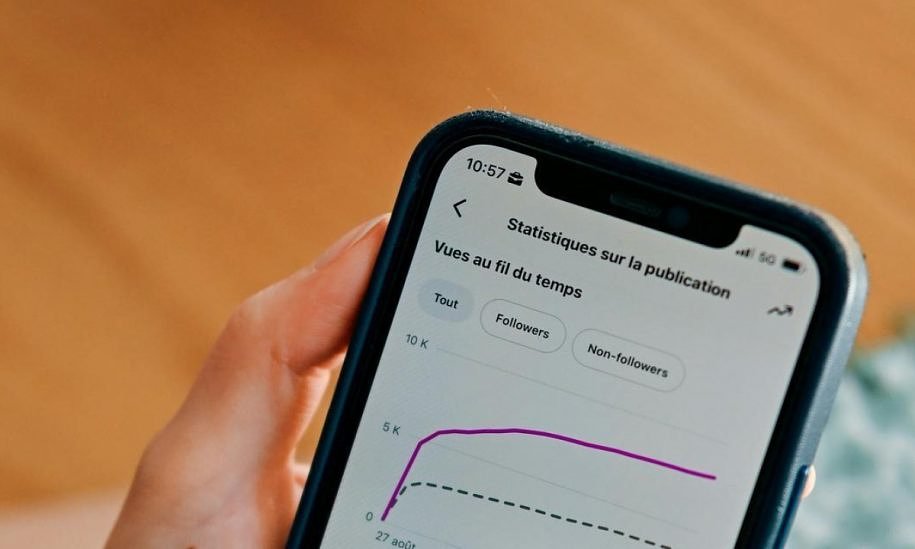
The Algorithm Whisperers: A Shadow Industry Surfaces its Instagram Playbook
NEW YORK, NY – June 18, 2026 – In a bold move to reframe a controversial practice, an Instagram engagement service has stepped out from the shadows, publishing a technical-sounding framework that codifies 13 years of operational data on how to influence the platform’s content distribution. ProflUp, a company providing automated likes to nearly 100,000 subscribers, has formalized its methods under the name “Engagement Velocity Framework,” based on an analysis of over 2.7 million automated interactions.
The announcement offers a rare, data-backed glimpse into the sophisticated and persistent shadow economy of algorithmic manipulation. While services that sell likes and follows have long been a part of the social media underbelly, ProflUp is attempting to legitimize its operations by positioning them as a data-driven science. The company’s report details how the timing and pacing of engagement in the first few moments of a post’s life can be engineered to trigger Instagram’s distribution signals, a practice it has been honing since 2013.
The Framework for Influence
At the heart of ProflUp's announcement is a methodology it claims is derived from operational observation, not theory. The Engagement Velocity Framework codifies three core principles designed to mimic organic virality and curry favor with Instagram's algorithm.
First is Detection Speed. The company's infrastructure reportedly detects a client’s new post within 60 seconds of publication, initiating the engagement process. The framework asserts that likes arriving within this critical "initial evaluation window" have a disproportionate impact on subsequent distribution, while engagement delivered later is far less effective.
Second is Delivery Pacing. Instead of dumping a block of simultaneous likes—a hallmark of crude bot activity—the system delivers them on a gradual curve. This method is designed to mirror the natural accumulation of engagement from an organic audience, a sophisticated tactic to avoid tripping the platform's anti-spam systems.
Finally, the framework emphasizes the Cumulative Effect. The dataset suggests that consistent, early-window engagement applied repeatedly across an account’s posts generates more reliable “account-level signal adjustments” than a one-off boost. In algorithmic terms, it’s about training the platform to see an account as a consistent producer of popular content.
"Thirteen years of operation produces patterns you can't see from the outside," said Yiannis Marcou, ProflUp's chief executive officer, in the company's press release. "The Engagement Velocity Framework is not a marketing document - it is a technical record of what the data shows."
While the company has not released its raw data for independent review, data scientists specializing in social media algorithms note that the principles are plausible. "The concept of an 'early engagement window' is widely accepted," commented one researcher, who asked not to be named due to their university's policy. "Platforms need to quickly sort through billions of pieces of content, and strong initial signals are a key heuristic. A system designed to exploit that specific mechanism is, from a technical standpoint, logical."
A Thirteen-Year Cat-and-Mouse Game
ProflUp’s 13-year dataset is more than just a foundation for its framework; it’s a historical record of the ongoing war between platforms and the services that seek to game them. The company’s journey began in 2013 as AutolikesIG.com, a name that left little doubt about its function. It has since navigated a sea of change, surviving multiple algorithmic shifts and enforcement waves that have sunk countless competitors.
The company's operational history documents two major infrastructure rebuilds. The first, in 2018, was a pivotal moment. As Instagram moved away from a simple chronological feed to a complex algorithmic one, the value of raw engagement volume diminished. Timing and pacing became paramount. AutolikesIG.com rebuilt its architecture to shift from volume-centric delivery to the more nuanced, time-sensitive models that now form the basis of its framework.
The second major shift came in 2024 with the rebrand to ProflUp. While retaining its user base and underlying infrastructure, the company shed its transactional-sounding name and began formalizing its methodology. This rebranding appears to be a strategic attempt to present a more mature, technically sophisticated front in an industry often associated with low-quality bots. However, historical reviews of its predecessor, AutolikesIG, suggest the "real accounts" it uses for engagement may not always have appeared authentic to outside observers, a challenge that continues to plague the industry.
This evolution highlights the resilience of the automated engagement market. As Instagram introduced the Explore page, elevated Reels to a dominant format, and cracked down on inauthentic networks, services like ProflUp have adapted rather than disappeared, continuously refining their methods to stay one step ahead of detection.
The Creator's Dilemma and a Question of Authenticity
The existence and success of a service with 96,705 registered users raises a critical question: why is there such a significant market for artificial engagement? The answer lies in the immense pressure creators, agencies, and e-commerce brands face to achieve visibility in Instagram’s hyper-competitive digital arena. When organic reach feels unpredictable and slow, the promise of a guaranteed algorithmic boost becomes a powerful temptation—a creator's Faustian bargain.
For a monthly subscription, clients can ensure their posts receive an immediate injection of likes, potentially kickstarting the journey to the coveted Explore page. This shortcut, however, comes at a cost to the ecosystem's integrity. It creates an uneven playing field where content's visibility may be tied more to a creator's marketing budget than its intrinsic quality or organic appeal.
Furthermore, it devalues the very metrics that the creator economy is built on. When brands can't distinguish between genuine and purchased engagement, it erodes trust and makes it harder to assess an influencer's true reach. "It poisons the well," a social media marketing consultant explained. "If the numbers are fake, the entire model of influencer marketing is compromised. You're buying ghost engagement from a ghost audience."
Walking a Policy Tightrope
Despite its polished, data-driven framing, ProflUp and its clients are operating in direct violation of Instagram's policies. The platform’s Terms of Use explicitly forbid any attempt to "artificially collect likes" and state that users must not "buy, sell, or transfer any aspect of your account." Instagram's parent company, Meta, invests heavily in machine learning systems and enforcement teams dedicated to identifying and removing this exact type of inauthentic activity.
This places the company and its users in a precarious position. The entire business model hinges on its ability to evade detection from a platform that is actively hunting for it. ProflUp itself tacitly acknowledges this reality, with its own website noting that "risk exists with any engagement service." Users risk having the artificial likes removed, receiving warnings, or even having their accounts suspended.
By publishing its framework, ProflUp is making a calculated bet: that by framing its service in the language of data science and technical optimization, it can attract new customers and carve out a perception of legitimacy. Yet, it remains locked in an arms race with a platform determined to protect the authenticity of its ecosystem, leaving its nearly 100,000 clients walking a fine line between algorithmic favor and platform penalty.