
- Masterwork Years: A new life stage defined by peak contribution and influence, not retirement. - AI Impact: AI devalues decades of technical skill in months, shifting value to human wisdom and experience. - Enhavim: A unified purpose and mission led by vision, key to the Masterwork Years.
Experts would likely conclude that as AI advances, the unique human traits of wisdom, discernment, and lived experience become increasingly valuable, redefining the peak contribution years of experienced professionals.
The AI Antidote: Why Your 'Masterwork Years' Are Your Most Valuable Asset
SAN DIEGO, CA – June 15, 2026 – In boardrooms and across trading floors, the conversation is dominated by one force: Artificial Intelligence. We see its power in automating complex analytics, drafting legal contracts, and writing code—tasks that once formed the bedrock of professional expertise. As an investor and a former executive, I've watched AI devalue decades of accumulated technical skill in mere months. This creates a profound and unsettling question for seasoned leaders: if our hard-won expertise can be replicated, what is our enduring value?
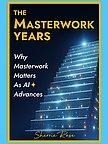
Author and advisor Sherrie Rose offers a compelling answer in her new book, The Masterwork Years: Why Masterwork Matters As AI Advances. She posits that as AI handles the 'what,' the value of experienced professionals pivots to the 'why' and 'how'—realms governed by wisdom, discernment, and lived experience. Rose introduces and names a distinct life stage, 'The Masterwork Years,' framing it not as a prelude to retirement, but as a period of peak contribution and influence. It’s a concept that doesn't just challenge the fear of obsolescence; it suggests that for many, their most valuable era is just beginning.
A Stage, Not an Age: Redefining Peak Performance
Rose is adamant that the Masterwork Years are defined by readiness, not a birthday. "It's about converging expertise, perspective, and natural selectivity with the wisdom to take action," she states. This isn't a passive phase of reflection but an active period of legacy-building. It’s a compelling argument that builds on decades of developmental psychology, bringing established theories into the context of our AI-driven world.
Her work echoes the ideas of thinkers like Gail Sheehy, who mapped the predictable passages of adult life, and Erik Erikson, whose stages of psychosocial development identified 'generativity'—the drive to contribute to future generations—as a central task of mid-life. Rose’s framework provides a modern lens for this drive, suggesting that in a world saturated with data, the most vital contribution is wisdom. She argues that this stage is characterized by enhanced future visibility and an expansion of 'crystallized intelligence'—the ability to use learned knowledge and experience.
At the heart of her concept is 'enhavim,' a term she coined to describe a unified purpose and mission led by vision. For the executive or investor, this translates to a powerful filter. Instead of chasing every opportunity, the leader in their Masterwork Years focuses on initiatives that align with their core purpose, creating an indelible imprint. This isn't about the next promotion; it's about defining what one's life's work will ultimately mean. As one developmental psychologist noted, "While many theories address aging, Rose’s work is unique in framing this later stage as a strategic response to a specific technological shift, which is precisely what professionals are grappling with now."
The AI Paradox: Devaluing Skills, Elevating Humanity
The central paradox of the AI revolution is that the more capable technology becomes, the more valuable uniquely human traits become. AI can synthesize data, but as Rose points out, it "cannot do is sit across from another human being and bring thirty years of lived experience to make an important decision." This is the crux of the investment thesis for human capital in the 21st century.
My experience in global e-commerce confirms this. The best algorithms can optimize a supply chain, but they can't negotiate a fraught partnership, mentor a future CEO, or intuit a market shift that isn't yet visible in the data. These actions require what Daniel Goleman popularized as emotional intelligence (EI). Experts in the field argue that as AI automates routine cognitive tasks, competencies like empathy, self-awareness, and social skill become the key differentiators for leadership and organizational health. Rose’s 'Masterwork Years' can be seen as the apotheosis of EI, where decades of navigating complex human systems culminates in profound discernment.
From an investment perspective, this means re-evaluating where value lies within a company. It's no longer just about the brilliance of the engineering team; it's about the wisdom in the boardroom. Companies that recognize, retain, and empower leaders in their Masterwork Years may build a sustainable competitive advantage that can't be coded. These are the leaders who can wisely direct AI, using it as a tool to amplify their judgment rather than being replaced by it. They provide the ethical and strategic guardrails that technology inherently lacks.
Averting the 'Wisdom Half-Life': From Livelihood to Legacy
Perhaps the most urgent call to action in Rose’s work is the concept of a 'wisdom half-life.' She argues that the lived experience powering our judgment decays if not captured, contextualized, and transmitted. "When the runway ahead grows shorter, contribution becomes the measure," reads the foreword by Hillary Greene-Pae. This idea should resonate deeply with high-achievers who, as Rose notes, often don't detect this critical stage until it's already behind them.
This presents a practical challenge: how does one consciously enter their Masterwork Years and begin transmitting this value? Rose is launching her book via a Kickstarter campaign that goes beyond simple publication. It’s a platform for building a community around the concept, offering live online sessions, in-person experiences like 'Xperium Day,' and membership in 'Masterwork360,' her advisory program for legacy-focused leaders. This model itself is an example of monetizing wisdom—transforming intangible experience into structured, high-value guidance.
For the executive investor, this signals a shift in personal portfolio management—from solely accumulating financial assets to actively curating and deploying one's intellectual and experiential capital. It means seeking roles—as board members, mentors, advisors, or entrepreneurs—where wisdom is the primary currency. It’s about intentionally designing the final, most impactful chapters of a career. In a world racing toward automation, the ultimate competitive advantage may not be what you can do, but the wisdom you have become.