
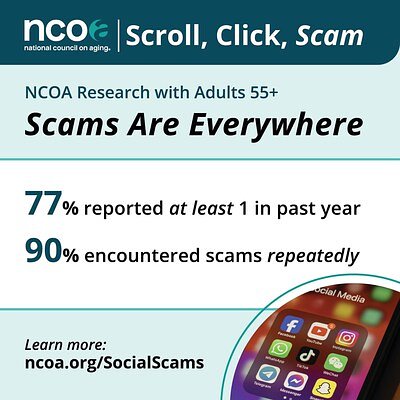
- 90% of older adults surveyed reported encountering scams repeatedly.
- $2.4 billion lost by older adults aged 60+ to fraud in 2024 (4x increase since 2020).
- 91% of older adults believe social media platforms can and should do more to reduce scam ads.
Experts agree that social media platforms must take greater responsibility for preventing fraudulent ads, as current self-regulation and business models prioritize revenue over user safety, leaving older adults disproportionately vulnerable to financial and emotional harm.
Silent Scourge: Older Adults Demand Big Tech Answer for Scam Epidemic
ARLINGTON, VA – March 31, 2026 – A groundbreaking report reveals that older Americans are facing a relentless barrage of scams on social media, and they are increasingly pointing the finger not at themselves, but at the platforms profiting from the fraud. Research from the National Council on Aging (NCOA) shows a dramatic shift in perception, with a vast majority of older adults demanding that social media giants like Meta take responsibility for the fraudulent ads that litter their feeds.
The NCOA report, titled "Scroll, Click, Scam," found that experience with online scams is nearly universal for those over 55. A staggering 90% of older adults surveyed reported encountering scams repeatedly. While many initially blamed themselves or the criminals, their views changed significantly upon learning that platforms earn revenue from these deceptive ads. Once informed, two-thirds (67%) of respondents said social media platforms are responsible for the scams they host.
"It's shocking to see how universal and devastating scams are among older adults," said Ramsey Alwin, President and CEO of NCOA, in a statement accompanying the release. "While we must educate people on how to recognize scams and protect themselves, individual responsibility only goes so far. Social media platforms must rein in scam ads instead of profiting from them, as they do now."
The Billion-Dollar Toll on a Generation
The scale of the problem is far greater than previously understood, largely because the crimes are vastly underreported. While the NCOA survey found that 37% of scammed individuals contacted their bank, only 18% reported the incident to law enforcement. This reporting gap masks a devastating financial and emotional reality.
Data from the Federal Trade Commission (FTC) paints a grim picture of the financial carnage. In 2024, older adults aged 60 and over reported losing approximately $2.4 billion to fraud, a fourfold increase from 2020. Social media has emerged as the single most profitable method for scammers, accounting for $2.1 billion in consumer losses in 2025. While older adults may be less likely to fall for a scam, when they do, the financial hit is significantly higher. The median reported loss for a victim in their 70s was over twice that of someone in their 20s.
These are not minor losses. They often represent life savings, retirement funds, and the financial security of an entire generation. The scams range from fraudulent investment schemes promising impossible returns on cryptocurrency to fake online storefronts and heartbreaking romance scams. Beyond the monetary cost, the emotional toll is immense, leading to anxiety, isolation, and a profound loss of trust.
A Business Model Under Fire
At the heart of the issue is the business model of social media platforms, which critics and legal filings allege prioritizes advertising revenue over user safety. While companies like Meta publicly state they prohibit fraudulent ads and invest heavily in detection, a growing body of evidence suggests they knowingly profit from the very scams they claim to fight.
Recent lawsuits, including a civil enforcement action filed by California's Santa Clara County, allege that Meta is not just a passive host but an active participant that facilitates and profits from fraudulent advertising. The lawsuits claim the company's powerful AI systems are used to optimize and target scam ads, and that internal warnings about the scale of the problem have been ignored or downplayed when they threatened revenue streams.
This reality is often hidden from users. The NCOA study found that over half of older adults were initially unaware that platforms like Meta profit from misleading ads. The revelation was a turning point, transforming feelings of personal failure into a demand for corporate accountability. An overwhelming 91% of those surveyed believe platforms can and should do more to reduce scam ads.
A Rising Chorus for Reform
Frustration with platform inaction has boiled over into a bipartisan push for federal legislation. In February, lawmakers introduced the Safeguarding Consumers from Advertising Misconduct (SCAM) Act in both the House and Senate. The bill seeks to tear down the wall of immunity that has long protected tech companies.
If passed, the SCAM Act would make social media platforms legally responsible for taking "reasonable steps" to prevent fraudulent advertising. It would mandate that platforms verify the identity of advertisers, a reform supported by 54% of older adults in the NCOA survey. It would also empower the FTC and state attorneys general to take enforcement action against non-compliant platforms.
This federal effort is mirrored by action at the state level, with bills like New York's Fraudulent Social Media Advertising Prevention Act aiming to impose similar verification and accountability standards. Proponents argue that such laws are necessary to shift the financial burden of fraud prevention from the consumer back onto the multi-trillion-dollar companies that enable it. The debate increasingly challenges the broad protections of Section 230 of the Communications Decency Act, with legal experts arguing that paid commercial advertising should not receive the same liability shield as user-generated content.
As scammers' tactics evolve, using AI-generated deepfakes and hyper-targeted campaigns, the call for systemic change grows louder. The consensus among consumer advocates, lawmakers, and a growing portion of the public is clear: education is not enough. As the financial and emotional costs continue to climb, the debate is no longer about if platforms should act, but how decisively they will be forced to.