
- 200-qubit quantum computer: Saudi Arabia's first quantum computer, operational in Dhahran.
- QCaaS platform: Middle East's first commercial Quantum Computing as a Service platform.
- Vision 2030 alignment: Part of Saudi Arabia's strategy to diversify its economy beyond oil.
Experts view this as a strategic leap for Saudi Arabia, positioning it as a leader in quantum technology and industrial innovation in the Middle East, with potential global implications for energy and logistics sectors.
Saudi Arabia's Quantum Leap: Aramco Ignites Middle East Tech Race
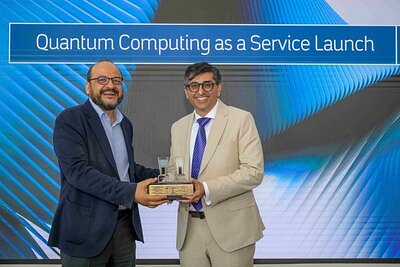
DHAHRAN, SAUDI ARABIA – May 18, 2026 – In a move that catapults Saudi Arabia to the forefront of the global technology stage, energy giant Aramco, in partnership with French quantum leader Pasqal, has officially inaugurated the Kingdom's first quantum computer. The launch also unveiled the Middle East's first commercial Quantum Computing as a Service (QCaaS) platform, signaling a new era of industrial innovation for the region.
Located within a secure Aramco data center in Dhahran, the powerful 200-qubit machine is now operational and accessible via the cloud. This milestone is not merely a technological achievement but a strategic pillar in Saudi Arabia's ambitious Vision 2030, which aims to diversify the nation's economy beyond oil and establish it as a hub for advanced technology and knowledge-based industries.
"This quantum milestone belongs to our Saudi researchers, engineers and scientists," stated Ahmad O. Al Khowaiter, Aramco Executive Vice President of Technology & Innovation. He emphasized the goal of building "world–class quantum expertise right here in the Kingdom—an expertise that will power the next generation of energy solutions, accelerate lower–carbon fuel development, and enhance reservoir and supply–chain optimization."
The Regional Quantum Chessboard
The announcement firmly positions Saudi Arabia as a key player in the burgeoning Middle Eastern quantum landscape. While nations like the United Arab Emirates and Qatar have made significant strides in quantum research, the Aramco-Pasqal initiative marks a pivotal shift from academic exploration to large-scale commercial application. The UAE's Technology Innovation Institute (TII) has been developing its own quantum computer, and Qatar has established a dedicated research center. However, the Dhahran-based platform is distinguished by its focus on providing commercial, cloud-based access to industrial clients globally.
This strategic move aligns with Saudi Arabia's national quantum roadmap, which seeks to build a comprehensive ecosystem encompassing government, industry, and academia. The Kingdom's prior investments in future technologies, including the establishment of a National Quantum Computing Hub, underscore a deliberate strategy to achieve technological sovereignty. Aramco’s domestic venture capital arm, Wa’ed Ventures, laid the groundwork for this moment with its initial investment in Pasqal in January 2023, a clear signal of its intent to localize cutting-edge technology.
"Aramco is not just waiting for quantum computing, it is helping to shape it as a global leader," said Wasiq Bokhari, CEO of Pasqal. "This inauguration is evidence that the most demanding industrial challenges in the world are now being tackled with Pasqal's quantum processors, software and specific solutions."
Inside the Neutral-Atom Machine
At the heart of this new capability is Pasqal's Quantum Processing Unit (QPU), a sophisticated device powered by neutral-atom technology. This approach, born from Nobel Prize-winning research, uses lasers to trap and manipulate 200 individual atoms, which serve as the programmable qubits—the fundamental building blocks of a quantum computer.
Unlike the superconducting circuits used by some of the largest tech companies, which require extreme cryogenic cooling to near absolute zero, neutral-atom systems can operate with greater energy efficiency and offer significant advantages in scalability. The ability to arrange the qubits in two-dimensional arrays allows for the simulation of complex problems that are intractable for even the most powerful classical supercomputers.
While the entire field of quantum computing is still navigating the challenges of the "Noisy Intermediate-Scale Quantum" (NISQ) era where qubit errors are a factor, the Pasqal system is designed for practical use today. It operates in a hybrid model, where the quantum processor works in tandem with classical computers to tackle specific parts of a larger problem, offering a near-term path to quantum advantage.
From Oil Rigs to Port Logistics
Aramco is not just hosting the hardware; it is its foundational customer. The company has a clear roadmap to apply quantum-hybrid solutions to some of its most complex and high-value operational challenges. The goal is to move beyond theoretical research and generate tangible business value.
Initial use cases target a range of industrial pain points. In logistics, the quantum computer will be tasked with optimizing the complex scheduling of vessels and cargo at ports. In the energy sector, it will be used to enhance CO₂ storage modeling, aiding in carbon capture strategies, and to optimize the placement of oil wells and the scheduling of drilling rigs. These are massive combinatorial optimization problems where finding the absolute best solution can result in savings of millions of dollars and significant gains in efficiency and sustainability.
By tackling these business-critical operations, Aramco aims to create a blueprint for how quantum computing can be integrated into heavy industry. The insights and algorithms developed in Dhahran could have far-reaching implications for energy, manufacturing, and supply chain management worldwide.
Cultivating a Quantum Ecosystem
The vision extends far beyond Aramco's own operational needs. The QCaaS platform is designed to be an engine for regional innovation, providing access to one of the few commercially available quantum computers in the world. Universities, research institutions, and other enterprises across the Middle East and beyond can now use Pasqal's cloud platform to experiment, learn, and develop their own quantum-enhanced solutions.
This open-access approach is crucial for building the talent pipeline needed to sustain a thriving quantum economy. The partnership includes joint training and research programs aimed at cultivating a new generation of Saudi quantum scientists and engineers. By serving as both a lead user and a regional enabler, Aramco is making a long-term bet that investing in the foundational ecosystem will create a virtuous cycle of innovation, attracting talent and investment to the Kingdom and solidifying its role as a leader in the next technological revolution.