
- 72% decline in triggers from existing Data Loss Prevention (DLP) systems within 4 weeks of adoption
- 100 milliseconds response time for detecting sensitive data
- 40-120MB memory usage with minimal system requirements (1.3 GHz CPU, 8GB RAM)
Experts would likely conclude that Polygraf AI's Desktop Guardian represents a significant advancement in proactive data security, particularly for regulated industries, by combining real-time behavioral controls with edge computing to prevent data leaks before they occur.
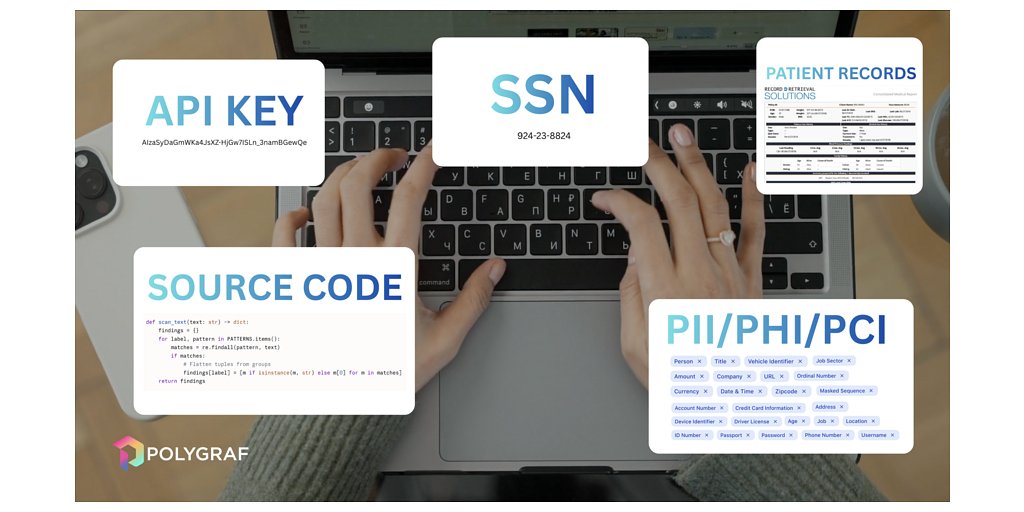
Polygraf AI Launches Desktop Guardian to Stop Data Leaks in Real Time
AUSTIN, TX – March 18, 2026 – As enterprises race to integrate artificial intelligence into their daily operations, a new silent risk has emerged: the inadvertent leakage of sensitive data through the very tools designed to boost productivity. Addressing this challenge head-on, Austin-based Polygraf AI has launched its Desktop Overlay, a novel security tool that acts as a real-time behavioral control plane, providing continuous data protection directly on the user's screen.
The new product is designed to function as a personal compliance assistant, preemptively warning employees about sensitive data exposure as they type in emails, chat messages, or AI prompts. Unlike traditional security measures that react after a breach, Polygraf's solution aims to prevent data from ever leaving the device, marking a significant shift from reactive auditing to proactive, in-the-moment guidance.
A New Paradigm for Data Protection at the Edge
At the heart of the Desktop Overlay is a suite of proprietary, task-specific Small Language Models (SLMs) that run directly on the user's computer—a concept known as edge computing. This is a stark departure from the cloud-based Large Language Models (LLMs) that power many popular AI tools, which often require data to be sent to external servers for processing.
Polygraf AI's SLMs are engineered for efficiency, requiring minimal system resources—as little as a 1.3 GHz CPU and 8GB of RAM, while consuming a mere 40-120MB of memory. This lightweight footprint allows the Overlay to operate seamlessly across all desktop applications without impacting performance. As a user types, the system scans text and identifies potentially sensitive information within 100 milliseconds.
The user receives immediate visual feedback through an intuitive color-coding system. Confidential information, such as an internal employee ID or private contact details, is highlighted in yellow. More critical data, like Social Security numbers, protected health information (PHI), or software API keys, is flagged with a red highlight. This instant alert system empowers the user to self-correct before hitting "send" or "submit."
Crucially, the company asserts that the Desktop Overlay requires no complex integration. By running entirely within the customer's own infrastructure, it provides organizations with complete control and visibility over its operation. This premise-agnostic design enhances security by eliminating external API exposure and ensuring no sensitive data is transmitted for analysis, a critical feature for air-gapped and highly secure environments. This localized processing model inherently limits the attack surface, making large-scale data breaches more difficult compared to centralized cloud architectures.
Navigating the Compliance Maze in Regulated Industries
For organizations in highly regulated sectors such as finance, healthcare, and government, the promise of AI is often tempered by the stringent demands of regulatory compliance. The unintentional sharing of a single piece of sensitive data can lead to severe financial penalties, reputational damage, and legal action.
Polygraf AI's Desktop Overlay is built to address these specific concerns. The company has aligned its technology with a host of major regulatory frameworks, including HIPAA for healthcare, GDPR for European data privacy, and the NIST Risk Management Framework (NIST-RMF) often used in government agencies. The firm itself is SOC 2 Type II certified, demonstrating its commitment to maintaining robust security and confidentiality controls.
The tool's edge computing architecture is a natural fit for the principles of "privacy-by-design." By processing data locally, it helps organizations adhere to data residency and minimization requirements stipulated by laws like GDPR. Since the full content is analyzed on the endpoint, only essential metadata or alerts need to be transmitted to a central security dashboard, drastically reducing the data footprint and potential for exposure. This allows organizations to maintain an auditable trail of compliance activities without compromising the underlying sensitive information.
Turning Employees into the First Line of Defense
While technology and compliance frameworks are essential, cybersecurity experts consistently point to human error as a leading cause of data breaches. Traditional approaches often rely on disruptive blocking mechanisms that frustrate employees or annual training sessions whose lessons are quickly forgotten.
Polygraf AI is pioneering a different approach by framing its Desktop Overlay as an "always-on security coach." Instead of simply blocking actions, the tool provides continuous, contextual education. As employees see the real-time highlighting appear across their various applications—from email and chat to internal systems and public AI tools—they develop a practical, hands-on understanding of what their organization considers sensitive data.
The results from pilot programs are compelling. According to the company, customers saw up to a 72% decline in triggers from their existing Data Loss Prevention (DLP) systems within just four weeks of adopting the Overlay. This suggests that the continuous feedback loop is effective in changing user behavior and fostering a durable culture of security awareness. By empowering employees to become active participants in data protection, organizations can strengthen their security posture from the inside out, reducing accidental exposure while maintaining productivity.
Addressing the AI Adoption Crisis
The launch of the Desktop Overlay arrives at a critical juncture for the enterprise AI market. Industry analysts have warned of a looming crisis of abandoned AI projects. A report from Gartner predicts that by 2027, 40% of agentic AI projects will be canceled due to a combination of high costs, unclear value, and, most notably, inadequate controls. Many organizations are finding that while piloting AI is easy, deploying it safely and responsibly at scale is a monumental challenge.
Polygraf AI's solution directly targets this "inadequate controls" gap. By embedding governance into the user's natural workflow, the company provides a practical mechanism for managing AI-related risks at the execution layer.
“Enterprises must transition from passive auditing to active runtime enforcement that spans the entire AI lifecycle,” said Togrul Tahirov, Head of AI at Polygraf, in the company's announcement. “We’ve engineered our AI usage control architecture to operationalize risk management directly at the execution layer, filling the critical oversight gaps that legacy security stacks frequently overlook. Our Desktop Overlay builds compliance into daily workflows, reducing legal risk and turning accountability into a driver of growth.”
Having expanded its footprint across the defense, financial, insurance, and healthcare sectors, Polygraf AI is positioning itself as a critical enabler for safe AI adoption. The company plans to showcase the Desktop Overlay and its broader AI security platform at the upcoming RSAC Conference, offering attendees a firsthand look at how real-time, user-centric controls can help organizations navigate the future of work securely.