
- 100 million daily users engaged through the Green Game Jam initiative.
- June 2nd to June 9th, 2026: Campaign duration for Solitaire Grand Harvest supporting coral reef restoration.
- Dots.eco partnership: Ensures transparent execution of environmental projects.
Experts would likely conclude that gamified conservation initiatives like Solitaire Grand Harvest represent a strategic convergence of corporate social responsibility, digital engagement, and environmental action, though they caution against superficial participation and emphasize the need for transparency and measurable impact.
Pixels for the Planet: The Billion-Dollar Bet on Gamified Conservation
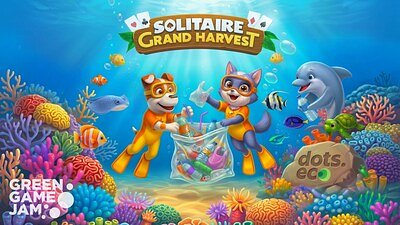
HERZLIYA, Israel – June 02, 2026 – This week, millions of mobile gamers are doing more than just passing the time; they are actively participating in the restoration of the world's endangered coral reefs. The vehicle for this unlikely activism is Solitaire Grand Harvest, a popular free-to-play game from industry giant Playtika. From June 2nd to June 9th, players’ in-game achievements will translate directly into support for real-world marine conservation projects. This initiative, however, is not an isolated act of corporate goodwill but a calculated move at the forefront of a powerful and disruptive trend: the gamification of environmentalism, where corporate strategy, technology, and sustainability converge.
The New Mechanics of Impact
The campaign is part of the Green Game Jam, an annual challenge organized by the UN-facilitated Playing for the Planet Alliance. Now in its seventh year, the initiative harnesses the immense reach of the video game industry—engaging an average of 100 million daily users—to foster environmental action. For its part, Solitaire Grand Harvest has integrated special challenges and collectible event items. As players progress, they not only unlock personal rewards but also contribute to a collective fund supporting on-the-ground conservation.
This is where the model moves beyond simple awareness-raising. The crucial link between digital action and physical impact is managed by Dots.eco, a platform specializing in vetting and executing environmental projects. The partnership ensures that player engagement translates into tangible support for organizations like Coral Guardian and Biorock Indonesia, which are leading restoration efforts in threatened marine ecosystems across Kenya, Indonesia, Mozambique, and Spain. This transparent pipeline is designed to build trust and demonstrate verifiable results, a critical component in an age of consumer skepticism.
“What we wanted to show is that gaming can create a genuine real-world impact and that players can make a difference,” said Roi Glazer, GM at Solitaire Grand Harvest. “Giving our community a way to contribute to coral reef restoration through something they already love doing is exactly the kind of purpose-driven experience we want to build.”
Beyond Altruism: A Strategic Corporate Play
While the environmental benefits are clear, Playtika’s participation is also a shrewd business decision. In the hyper-competitive mobile gaming market, where user acquisition and retention are paramount, purpose-driven content has emerged as a powerful differentiator. This is not the company’s first foray into “eco-gaming.” Its ESG reports detail a consistent “Gamifying Green” strategy, with other studios under its umbrella, like Wooga, being perennial participants in the Green Game Jam, previously funding the planting of hundreds of thousands of trees and donating six-figure sums to protect endangered species.
This sustained commitment suggests that integrating social impact is a core pillar of its long-term strategy. Such initiatives foster deeper player loyalty, enhance brand reputation, and attract a growing demographic of consumers who expect corporations to take a stand on global issues. In an industry where major players like Sony and Microsoft are also members of the Playing for the Planet Alliance, robust and authentic ESG programs are becoming table stakes. “In today's market, ESG is no longer a 'nice to have,' it's a core metric for brand health and long-term valuation,” one industry analyst noted. By embedding impact directly into the gameplay loop, companies can drive engagement while polishing their corporate image.
The Promise and Peril of 'Eco-Gaming'
The rise of gamified environmentalism represents a paradigm shift in conservation outreach. Traditional methods often struggle to capture the attention of a digitally native audience. By meeting people where they are—on their smartphones—these initiatives can educate and mobilize millions on complex issues like coral bleaching in a format that is interactive, rewarding, and accessible. The sheer scale is unprecedented; the Green Game Jam reaches a global audience that most environmental NGOs can only dream of.
However, this approach is not without its critics and potential pitfalls. The most significant risk is that of “greenwashing,” where a company’s environmental claims are more performative than substantive. Another concern is the potential for superficial engagement, or “clicktivism,” where players feel a sense of accomplishment without developing a deeper, lasting commitment to the cause. “The challenge is converting in-game actions into lasting real-world awareness and behavioral change, not just a fleeting sense of accomplishment,” an expert on digital engagement explained. To be effective, the gamified experience must be backed by transparency and measurable outcomes. The involvement of third-party validators like Dots.eco and the UN’s oversight are critical structures designed to ensure authenticity and hold participants accountable for their promises.
Redefining Philanthropy for a Digital Generation
Ultimately, initiatives like the Solitaire Grand Harvest event are redefining the very concept of philanthropy. They are shifting the model from one of periodic, large-scale donations by a few to one of continuous, micro-level contributions by the many. This democratization of impact empowers individuals who may lack the financial resources for traditional charity but can contribute through their time and digital engagement. It cultivates a sense of collective ownership over global challenges and integrates social good into the fabric of daily entertainment.
As this trend matures, it signals a future where the lines between entertainment, commerce, and social responsibility continue to blur. The most successful ventures will be those that seamlessly weave purpose into their products, creating a powerful new ecosystem where a simple tap on a screen can ripple outwards to create tangible, positive change in the physical world.