
- 1,800 acres set aside for recreational use by property owners.
- First home sites officially sold as of June 18, 2026.
- No legally binding conservation easements publicly confirmed for preserved lands.
Experts would likely conclude that while the Lazenby Preserve presents an innovative model for eco-development, its long-term success hinges on transparent environmental safeguards and equitable community integration.
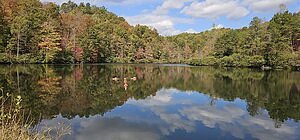
Kentucky's New Preserve: An Oil Exec's Pivot to Eco-Development
LEECO, KY – June 18, 2026 – An ambitious new chapter is being written in the rolling hills of Eastern Kentucky. The Lazenby Preserve, a master-planned community, has officially broken ground with the sale of its first home sites. Positioned minutes from the iconic Red River Gorge, the project's announcement paints a compelling picture: a solution to the growing demand for nature-based living that, in its own words, “prioritizes preservation and long-term land stewardship.”
The development taps directly into the zeitgeist of a market hungry for space, scenery, and a connection to the outdoors. It promises private home sites nestled within a community where a staggering 1,800 acres are to be set aside for recreational use by property owners. On the surface, it’s a developer’s dream and a conservationist’s compromise—a model for how human habitation can “align with the natural environment rather than compete with it.”
Yet, as with any major disruption to a landscape, the promises of a press release are merely the opening bid. For a region as ecologically sensitive and culturally significant as the Gorge, the true measure of success lies not in the vision, but in the execution. The Lazenby Preserve is more than a real estate venture; it is a high-stakes test case for the future of rural development, pitting market forces against environmental stewardship. And at the center of it all is a leader whose background makes this project a fascinating, and critical, one to watch.
A Vision of Preservation Meets Practical Questions
The blueprint for Lazenby Preserve is undeniably attractive. The plan eschews high-density development in favor of open space, trails, and lakes. Property options are tiered, from smaller lots intended for “low-impact builds” to future gated sections with larger, more private parcels. The inclusion of designated RV and tent camping areas, kept separate from residential zones, suggests a thoughtful approach to accommodating different types of nature seekers.
The core of the environmental promise rests on the 1,800 acres “set aside” for recreation. This is where the grounded analysis must begin. The term “set aside” is a marketing-friendly phrase, not a legal one. The critical, unanswered question is how this preservation will be guaranteed in perpetuity. Will these lands be protected by legally binding conservation easements, which would restrict future development regardless of ownership? Who will manage these lands, and what are the long-term plans for habitat restoration or fire mitigation?
As of the launch, detailed environmental impact assessments and the legal framework for this preserved land are not publicly available. For a project whose unique selling proposition is its harmony with nature, these details are not trivial—they are the entire foundation of its credibility. Without them, the 1,800 acres remain an asset for property owners, not necessarily a protected ecosystem for the public good. It raises the question of whether this is a preservation project with homes attached, or a housing project with a very large, private park.
The Leadership Test: From Oil Fields to Green Fields
Every major project is a reflection of its leader. The visionary behind the preserve is Virginia “Gigi” Lazenby, a figure whose name carries significant weight in Kentucky, but in a vastly different industry. Lazenby is the founder, CEO, and sole shareholder of Bretagne LLC, an oil and gas production company she built from the ground up since 1988. Her career is a testament to formidable business acumen and operational expertise.
Her resume is a who’s who of energy sector leadership: former Chairman of the Independent Petroleum Association of America, a board member of the American Petroleum Institute, and President of the National Stripper Well Association. She has managed complex field operations, navigated federal and state regulations, and testified before Congress. This is not a person who enters a venture lightly.
However, this is precisely what makes the Lazenby Preserve such a compelling case study in cross-industry innovation. The skills required to successfully run an oil and gas operation—managing land rights, logistics, and resource extraction—are not the same as those required for ecological stewardship and sustainable community building. The leap from hydrocarbon production to habitat preservation is significant.
“It’s a different mindset entirely,” noted one land-use consultant who has worked on similar projects. “One is about maximizing yield from the ground, the other is about protecting the systems that function above it. It’s not an impossible jump, but it requires a fundamental shift in corporate culture and a team built with deep ecological expertise.” Lazenby’s business success is undeniable, but her team’s ability to execute on a vision so far removed from her core professional experience will be the project's defining challenge.
The Local Ledger: Economic Boom or Community Strain?
For Lee County and the surrounding communities, the arrival of a development of this scale is a double-edged sword. The promise of economic revitalization is potent. The project will create construction jobs in the short term and potentially long-term positions in property management, hospitality, and recreation. The influx of new, likely affluent, residents and visitors could boost local businesses and significantly increase the county's tax base, funding schools, roads, and emergency services.
But these benefits come with well-known risks. The Red River Gorge region already struggles with the pressures of its own popularity. Local infrastructure is often strained during peak tourist season. A sudden influx of new households will further tax water, sewer, and road systems. Housing affordability is another major concern. As high-end properties are developed, local property values and taxes are likely to rise, potentially pricing out long-term residents and fundamentally altering the character of the community.
Lazenby Preserve is not just building homes; it is introducing a new socio-economic dynamic into a rural Appalachian county. The question for local leaders and residents is whether the anticipated economic gains will be distributed equitably and whether the development will integrate with the existing community or become an isolated, exclusive enclave. The project’s success will depend as much on its relationship with its neighbors as on its appeal to buyers.
The development's plan to create a range of experiences, including future gated sections with custom homes, speaks to a sophisticated market segmentation strategy. It also highlights the central tension in the modern “return to nature” movement. While the vision is one of connection and simplicity, the price of entry can be steep, creating exclusive retreats that wall off a piece of nature for a select few. As Lazenby Preserve takes shape, it will serve as a powerful indicator of whether the growing demand for outdoor living will lead to more inclusive models of community or simply replicate existing patterns of economic disparity in America’s most beautiful landscapes. With the first lots now on the market, the true test for Lazenby Preserve begins: proving that its execution can be as compelling as its vision.