
- 100% Responsibly Selected Coffee: All green coffee roasted in Julius Meinl's core production plants in Vienna and Vicenza now adheres to the Coffee Sustainability Reference Code (Coffee SR Code).
- $1.7 Billion Market: The global sustainable coffee market is projected to reach $1.7 billion by 2032.
- 65% Willing to Pay Premium: Over 65% of coffee drinkers are willing to pay more for responsibly sourced products.
Experts would likely conclude that Julius Meinl's commitment to 100% 'Responsibly Selected' coffee, verified by the Global Coffee Platform and Enveritas, sets a new benchmark for ethical sourcing in the industry, addressing both consumer demand and regulatory requirements.
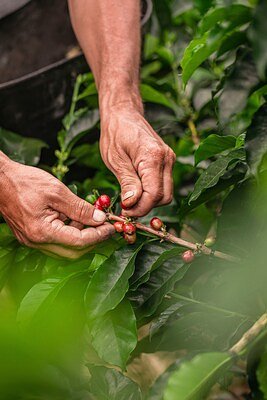
Julius Meinl's Sustainable Brew: A New Standard for Global Coffee?
VIENNA – February 23, 2026 – Julius Meinl, the venerable Vienna-based coffee roaster with over 160 years of history, announced today a landmark achievement: 100% of the green coffee roasted in its core production plants is now 'Responsibly Selected.' While sustainability claims have become common in the food and beverage industry, this move by the iconic brand represents a significant, structured effort to redefine what it means to be a responsible player in the global coffee market, a sector grappling with complex environmental, social, and economic challenges.
The company has confirmed that all coffee passing through its roasteries in Vienna, Austria, and Vicenza, Italy, now adheres to a rigorous, externally defined set of criteria. This milestone is not an overnight success but the culmination of years of investment and partnership-building across a notoriously opaque supply chain, setting a new potential benchmark for competitors and signaling a deeper commitment to ethical sourcing that goes beyond the label.
Decoding 'Responsibly Selected'
For the average coffee drinker, the term 'Responsibly Selected' might sound like another marketing buzzword. However, Julius Meinl has anchored its definition to a recognized international standard: the Coffee Sustainability Reference Code (Coffee SR Code) developed by the Global Coffee Platform (GCP).
The GCP is a multi-stakeholder organization that brings together farmers, roasters, traders, and NGOs to create a common language for sustainability in the coffee sector. Its SR Code establishes a baseline for responsible practices, built on three fundamental pillars:
- Economic: Focusing on good farm management, improving agricultural knowledge, and strengthening the long-term viability of farmers' businesses.
- Social: Upholding human rights by ensuring safe and fair working conditions, protecting children, and making positive contributions to local communities.
- Environmental: Safeguarding natural ecosystems through biodiversity protection, responsible water use, preventing pollution, and implementing climate-resilient practices.
Crucially, the GCP framework includes an 'Equivalence Mechanism.' This system recognizes existing, reputable third-party certifications like Fairtrade as meeting the SR Code's criteria. This approach avoids creating a confusing new standard, instead fostering alignment and reducing the administrative burden on farmers who may already be certified under another scheme. It shifts the focus from comparing programs to driving tangible improvements on the ground.
Verification Beyond the Label
To ensure its commitment is more than just a paper-based promise, Julius Meinl has partnered with Enveritas, a non-profit organization dedicated to bringing greater transparency to the coffee supply chain. Enveritas provides the verification that underpins the 'Responsibly Selected' claim, employing a sophisticated methodology that combines technology with fieldwork.
Moving beyond traditional audit models, Enveritas uses satellite imagery and machine learning to identify farm locations and assess risks like deforestation. This data guides on-the-ground efforts, where surveyors visit randomly selected farms—many of whom are smallholders not affiliated with formal cooperatives—to conduct detailed assessments. This verification is provided at no cost to the farmers, removing a significant barrier that often prevents small producers from participating in sustainability programs.
Enveritas doesn't issue a simple pass-or-fail grade. Instead, it aggregates data to create detailed scorecards that identify systemic risks and challenges within a specific region. This information allows Julius Meinl and its suppliers to understand the real-world conditions in their supply chains and collaborate on targeted improvement programs.
"Reaching 100 % Responsibly Selected Coffee in our own roasteries marks an important step in our sustainability journey," said Nicolas Charmillot, the company's Director of Green Coffee Sourcing, in the official announcement. "Through our Responsibly Selected Coffee Initiative, we give coffee lovers confidence that every bean roasted in Vienna and Vicenza is sourced with respect for people, communities, and the environment."
The Strategic Brew: Sustainability as Market Advantage
While rooted in ethics, Julius Meinl's strategy is also a savvy business move in a rapidly evolving market. Consumer demand for ethically produced goods is no longer a niche concern. The global sustainable coffee market is projected to reach $1.7 billion by 2032, with studies showing that over 65% of coffee drinkers are willing to pay a premium for products they believe are sourced responsibly.
This trend is particularly strong among younger consumers, who increasingly scrutinize brand behavior and supply chain transparency. By embedding a verifiable sustainability standard into its core operations, Julius Meinl is positioning itself to capture this growing market segment and differentiate itself from competitors like Lavazza, Illy, and Starbucks, all of whom are pursuing their own large-scale sustainability initiatives.
Furthermore, the regulatory landscape is shifting. The forthcoming EU Deforestation Regulation (EUDR), set to take effect in 2025, will require companies to provide verifiable proof that their products are not linked to deforestation. The deep supply chain visibility required by the 'Responsibly Selected' program, supported by Enveritas's data, puts Julius Meinl ahead of the curve in meeting these new legal requirements.
Navigating the Grounds of Reality
Despite the positive steps, the path to a truly sustainable coffee industry is fraught with challenges. The term 'greenwashing' has made consumers skeptical of corporate claims, and the sheer number of different labels and certifications can be confusing. By tying its claims to the GCP's sector-wide code and independent verification, Julius Meinl aims to provide the clarity and credibility needed to build trust.
Another critical issue is the economic well-being of the farmers themselves. Certification programs have sometimes been criticized for imposing high costs and administrative burdens on the very producers they are meant to help. The model used by Enveritas, which offers verification free of charge to farmers, directly addresses this concern and helps include the small, independent farmers who form the backbone of the industry.
Looking ahead, Julius Meinl has set its next target: ensuring that all externally produced, Julius Meinl-branded coffee products also meet the 'Responsibly Selected' standard by the end of 2028. This extension of the program will test the scalability of its model and its ability to influence a wider network of partners. This ongoing commitment reflects the understanding that sustainability is not a final destination but a continuous process of improvement, essential for securing the future of coffee for generations to come.