
- 85% of U.S. avocados come from Mexico, making the industry's sustainability critical.
- 30-40% of recent deforestation in Michoacán is linked to avocado orchards.
- 5,500+ administrative procedures opened for illegal land-use changes (2015-2022), but only <2,000 sanctions issued.
Experts view the Zero Deforestation Agreement as a necessary but challenging step toward sustainability, with its success hinging on robust enforcement and equitable support for small-scale farmers.
Mexico's Avocado Pact: A Green Revolution or Market-Driven Promise?
MEXICO CITY, MEXICO – April 17, 2026 – In a move aimed at securing the future of its most lucrative agricultural export, Mexico’s avocado industry has formalized a landmark agreement with government environmental agencies to halt deforestation linked to the globally popular fruit. The pact, signed by the Association of Avocado Producers and Exporting Packers of Mexico (APEAM), the Ministry of Environment and Natural Resources (SEMARNAT), and the Federal Attorney for Environmental Protection (PROFEPA), establishes a framework intended to guarantee that avocados bound for export markets are not grown on illegally cleared forest land.
This “Zero Deforestation Agreement” creates a voluntary self-regulation system designed to strengthen traceability and verify compliance with a federal mandate from October 2025 that prohibits agricultural exports from deforested areas. For an industry that supplies over 85% of the avocados consumed in the United States, the stakes could not be higher. The pact is being hailed by industry leaders as a crucial step in their sustainability journey.
“The agreement marks an important day for the industry and for the country,” said APEAM President Raúl Martínez Pulido during the signing. “Export avocado production to the United States only has a future if it is compatible with protecting our forests.” He framed the deal as “the natural evolution of a model built over nearly three decades on clear rules and shared responsibility.”
However, behind the official pronouncements lies a complex reality of environmental degradation, fierce market pressures, and a long history of enforcement challenges that will test the limits of this new accord.
A Pact Forged by Market Pressure
The agreement is as much a product of international diplomacy as it is of domestic environmental policy. With consumers and regulators in key markets like the United States and the European Union demanding deforestation-free supply chains, the Mexican avocado industry faced a growing reputational and regulatory risk. This pact is a direct response to that pressure, designed to provide assurances that Mexico’s “green gold” is not coming at the expense of its vital pine and oak forests.
Under the new framework, APEAM will act as a coordinating body, overseeing a work plan that covers the entire supply chain, from orchards to export logistics. The plan includes mechanisms to identify orchards with potential environmental risks, support producers in meeting legal requirements, and mandate remediation or compensation when violations occur.
Environment Secretary Alicia Bárcena Ibarra highlighted the closer coordination between government and industry, stating the agreement will help meet environmental obligations while advancing trade. The framework, she noted, will translate environmental requirements into “verifiable and measurable actions.”
This emphasis on verification is critical for maintaining access to premium markets. The agreement is explicitly designed to reduce regulatory risk and support the continued flow of avocados to the U.S., a trade relationship of immense economic importance. As Martínez Pulido stated, “There is no competitiveness without legality, and no sustainable trade without environmental responsibility.”
Can History Be Overcome? Enforcement in Question
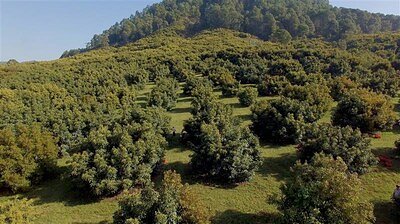
While the agreement sets ambitious goals, its success hinges on the effectiveness of its enforcement—a significant hurdle given Mexico’s past performance. The state of Michoacán, the heartland of avocado production, has seen its forests decimated by the crop's relentless expansion. Studies have attributed 30-40% of recent deforestation in the region to the growth of avocado orchards, with estimates suggesting tens of thousands of acres were illegally cleared between 2014 and 2023.
PROFEPA, the nation’s environmental police, is the agency tasked with stopping this. However, it has long been hampered by a limited budget and a small force of inspectors responsible for monitoring vast territories. Between 2015 and early 2022, the agency opened over 5,500 administrative procedures for illegal land-use changes but issued sanctions in fewer than 2,000 of those cases. Critics point to this gap, as well as reports of corruption and violence against environmental defenders, as evidence of systemic weakness.
Reports from organizations like Climate Rights International have revealed that U.S.-export certified orchards have often been established on illegally deforested land, a practice the new agreement is designed to stop. The pact keeps full oversight and enforcement authority with SEMARNAT and PROFEPA, but whether the new “voluntary self-regulation” by the industry will bolster or bypass these historically strained agencies remains a critical question. Previous state-level initiatives, such as the “Guardian Forestal” satellite monitoring program, have attempted to tackle the issue, but illegal clearing has persisted.
The Price of Compliance
The operational realities of implementing a fully traceable, deforestation-free supply chain present another major challenge, particularly for the thousands of small-scale farmers who form the backbone of the industry. The costs associated with new monitoring technologies, certification processes, and potential remediation efforts could be substantial.
While APEAM has committed to supporting producers in meeting legal requirements, concerns are rising that the increased financial and bureaucratic burden could disproportionately affect smallholders. Without robust support programs, these farmers could struggle to comply, potentially facing exclusion from the lucrative export market. This raises the risk of further market consolidation, where only large, well-capitalized operations can afford the price of sustainability, leaving smaller producers behind.
The agreement’s framework promises to help producers, but the specific details of financial and technical assistance that will be made available to ensure an equitable transition have not yet been fully detailed. The economic viability for all producers, not just the largest exporters, will be a key determinant of the pact's long-term success.
Beyond the Treeline: Water and Biodiversity
The environmental toll of avocado production extends far beyond deforestation. The crop is notoriously thirsty, with a mature orchard consuming nearly twice as much water as the dense forests it often replaces. This intense water demand has led to widespread reports of illegal water extraction and has contributed to severe water shortages for local communities in Michoacán.
The heavy use of pesticides and fertilizers also poses a threat, contaminating soil and water sources and impacting biodiversity. The forests of Michoacán are a critical habitat for countless species, including the iconic Monarch butterfly, whose wintering grounds have been encroached upon by avocado expansion.
The Zero Deforestation Agreement, as presented, focuses squarely on preventing forest clearing. While this is a crucial first step, it is less clear how the framework will address the intertwined issues of water scarcity and chemical pollution. By committing to identify orchards with “potential environmental risk,” the pact opens the door to a more holistic approach, but the primary focus remains on land use. Addressing the full environmental footprint of the avocado industry will require an even broader commitment from both industry and government in the years to come.