
- Rs. 1 Crore, 1 Lakh: The substantial fund awarded to each laureate organization.
- 147 to 60 per 1,000: The dramatic reduction in infant mortality rate achieved by Tribal Health Initiative (THI) in a decade.
- 12,000 villages: The number of villages transformed by the Foundation for Ecological Security (FES) through sustainable development initiatives.
Experts would likely conclude that grassroots organizations like THI and FES exemplify the transformative power of community-led initiatives, proving that sustainable development and healthcare improvements are achievable through deep engagement and empowerment of marginalized communities.
India's Quiet Changemakers: A Samman for Grassroots Heroes
MUMBAI, India – May 06, 2026 – In a nation of over a billion people, the most profound changes often begin far from the glare of headlines, driven by the quiet, relentless work of individuals and organizations dedicated to community service. Last week, these unsung heroes were brought into the spotlight at the Yashraj Bharati Samman 2026, a ceremony dedicated to celebrating the spirit of service and compassion that strengthens India from the ground up.
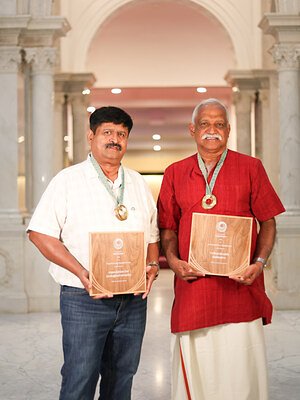
The event, held at Mumbai's prestigious Jamshed Bhabha Theatre on May 3, was not merely an awards night but a "Gratitude Ceremony." It conferred significant honors, including a medallion, a citation, and a substantial fund of Rs. 1 Crore, 1 Lakh, upon two exceptional organizations. The presence of dignitaries such as Uttar Pradesh Governor Smt. Anandiben Patel and Nobel Laureate Professor Abhijit V. Banerjee underscored the growing recognition of grassroots innovation as a critical driver of national development.
A Tribute to Selfless Service
Established in 2021 by the Mumbai-based Yashraj Research Foundation, the Yashraj Bharati Samman was conceived to do more than just award; its purpose is to show profound respect for those working tirelessly to uplift India's most marginalized communities. The foundation aims to identify and amplify the stories of those who create lasting impact without seeking recognition.
"The Yashraj Bharati Samman is a tribute to individuals and institutions who work selflessly at the grassroots, often without recognition, yet create lasting impact on communities," said Dinesh Kumar Jain, Chair of the Advisory Board and Managing Director at Yashraj Biotechnology Ltd. "Through this platform, we aim to acknowledge their commitment, amplify their stories and inspire a wider movement of purpose-driven action."
This philosophy is reflected in the rigorous selection process, which combines quantitative and qualitative assessments by an independent Grand Jury to find laureates whose work exemplifies resilience, compassion, and community-led change.
From a Mud Hut to a Healthcare Revolution
This year's award for 'Innovation in Healthcare' was presented to the Tribal Health Initiative (THI), an organization whose story is a testament to the power of deep community engagement. Founded in 1993 by Dr. Regi George and Dr. Lalitha Regi, THI began its journey in a simple mud-and-thatch hut in the remote Sittilingi Valley of Tamil Nadu.
At the time, the region's tribal communities faced a dire healthcare crisis. Access to medical care was virtually non-existent, and the infant mortality rate stood at a staggering 147 per 1,000 live births. By embedding themselves within the community and building trust, the founders of THI began to turn the tide. Within a decade, their efforts had helped slash the infant mortality rate to 60 per 1,000 and, remarkably, eliminated maternal deaths in the area they served.
Today, what started in a hut has grown into a 35-bed hospital that serves nearly one lakh people annually. Critically, over 80% of its staff are from local tribal communities, ensuring that care is not only accessible but also culturally sensitive and empowering. Recognizing that true health extends beyond the clinic, THI adopted a holistic model. It expanded into organic farming through the Sittilingi Organic Farmers Association, fostered women's entrepreneurship, and initiated ecological restoration projects. These initiatives have not only improved nutrition and household incomes but also reduced distress migration, creating a resilient and self-sustaining community. THI's influence has even reached the policy level, contributing to the inclusion of millets in the Public Distribution System, making it a powerful model for community-driven healthcare.
Restoring Commons, Rebuilding Lives
The second laureate, the Foundation for Ecological Security (FES), was honored in the 'Transforming People's Lives' category for its monumental work in sustainable development. For over two decades, FES has championed the restoration of India's ecological commons—the shared forests, pasturelands, and water bodies that are vital to the dignity and sustenance of over 350 million rural Indians.
Headquartered in Anand, Gujarat, and founded in 2001, FES operates on the principle that empowering communities to govern their own natural resources is the key to both ecological health and livelihood security. Through its flagship 'Promise of Commons' initiative, FES has driven transformative change across more than 12,000 villages. The organization works with communities to restore degraded lands, secure Community Forest Rights, and establish robust local governance systems.
The impact of this work is tangible. By restoring water bodies and forests, FES helps secure access to clean water, fodder for livestock, and fuel, while simultaneously strengthening local economies and reducing vulnerability to climate change. Its success has led to significant partnerships with government bodies, including the Ministry of Jal Shakti’s Atal Bhujal Yojana and Odisha’s Mo Jungle Jameen Yojana. These collaborations demonstrate the scalability of FES's model and its potential to inform national strategies for sustainable and equitable development.
The Power of a Samman: More Than Just an Award
In a landscape where grassroots organizations perpetually struggle for resources and recognition, an award like the Yashraj Bharati Samman is more than just a celebratory moment. The Rs. 1 Crore, 1 Lakh fund provides a critical injection of capital that is often transformative. Unlike project-based grants, which come with restrictive conditions, such a substantial, unrestricted fund empowers organizations like THI and FES to invest in core infrastructure, scale their most successful programs, or innovate new solutions to long-standing challenges.
The financial component places the Samman among the most significant philanthropic awards for grassroots work in India. While prestigious awards like the Ramon Magsaysay Award offer immense recognition, the substantial funding from Yashraj provides the practical means for laureates to amplify their impact on the ground. This support is vital for organizations navigating challenges that range from complex regulatory environments to the constant pressure of fundraising.
Beyond the funds, the visibility and validation that come with the Samman are invaluable. By placing these quiet changemakers on a national stage alongside Nobel laureates and state governors, the award helps attract further support, inspire other social entrepreneurs, and shift the public narrative to value the slow, patient, and deeply impactful work happening at the heart of India’s communities. The evening in Mumbai was a powerful reminder that while progress may be driven by quiet effort, acknowledging that effort is essential for building a more compassionate and inclusive society.