
- $50 billion: Projected market value of the dvLED display market by the early 2030s.
- 600 nits: Brightness of the LE-C1 Series, designed for high ambient light environments.
- 135-inch and 162-inch: Initial display sizes offered, including a 4K version.
Experts would likely conclude that Epson's strategic pivot into the dvLED market is a calculated response to shifting industry dynamics, leveraging its brand equity and COB technology to compete with established players in a rapidly growing sector.
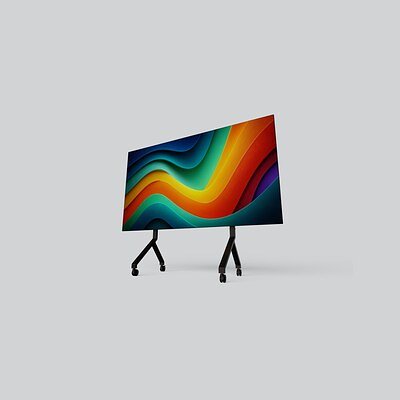
Epson's Strategic Pivot: Projector Titan Enters the dvLED Display Arena
LOS ALAMITOS, CA – June 03, 2026 – In a move that signals a significant strategic realignment, Epson, a brand synonymous with projection technology for over two decades, has officially entered the burgeoning direct view LED (dvLED) market. The company today announced its first all-in-one dvLED line, the LE-C1 Series, for the U.S. and Latin American markets. This is not merely a product line extension; it is a calculated pivot from a market leader navigating a rapidly transforming industry, challenging established players like Samsung, LG, and Planar on their home turf.
A Calculated Pivot in a Shifting Market
For years, Epson has dominated the commercial display landscape through its vast portfolio of projectors. However, the mechanics of the market are changing. Industry data reveals a stark contrast: while the global front projector market has seen sharp declines in recent quarters, the dvLED display market is on a steep upward trajectory, with some forecasts projecting a market value exceeding $50 billion by the early 2030s. Epson's entry is a direct response to this undeniable shift.
This strategic diversification is about capturing new growth and future-proofing the company's position as a comprehensive visual solutions provider. The press release hints at a larger strategy of creating cohesive, "single-brand display ecosystems." By adding dvLEDs to its arsenal, Epson can now service a client's entire display needs, from a projector in a small conference room to a massive, high-impact dvLED wall in a corporate lobby or auditorium. This one-stop-shop approach simplifies procurement, integration, and support for large organizations, creating a powerful competitive moat.
"Expanding our commercial display portfolio with dvLED allows us to support visual display needs for virtually any indoor application," said Ramzi Shakra, senior product manager at Epson America. He noted that customers have already expressed excitement, "underscoring their confidence in our deep industry expertise and a trusted service experience." This confidence is what Epson is banking on as it leverages its decades of brand equity and its extensive service and support network to gain a foothold in this new territory.
Beyond the Pixels: The COB and Simplicity Advantage
The LE-C1 Series is not just another entry into a crowded field; it is built on a technological foundation designed to address key pain points in the market. The displays are powered by advanced Chip-on-Board (COB) technology, a significant differentiator from the more conventional Surface Mounted Device (SMD) technology used in many competing products.
In COB manufacturing, bare LED chips are bonded directly onto the circuit board and then encapsulated in a protective resin. This process yields tangible benefits that Epson is heavily promoting. Firstly, it creates a far more durable and robust surface, resistant to the physical impacts, dust, and moisture common in high-traffic commercial environments. Secondly, it allows for more efficient heat dissipation, leading to lower energy consumption and a cooler operating surface—a critical factor for longevity and total cost of ownership. Finally, the uniform encapsulation and tighter pixel packing inherent to COB can produce deeper blacks and a higher contrast ratio, resulting in a more vivid and lifelike image, even in brightly lit spaces. The LE-C1 Series boasts 600 nits of brightness to tackle such high ambient light environments.
Perhaps most telling of Epson's strategy is the decision to make the LE-C1 Series "operating system free." In an era where smart TVs and displays come loaded with complex software, this is a deliberate move toward simplicity and security. By eliminating a proprietary OS, Epson minimizes potential software vulnerabilities, reduces maintenance requirements, and creates a "set-it-and-forget-it" solution that appeals directly to IT managers wary of managing yet another complex device on their network. The design features a slide-out control box for easy service access, reinforcing the focus on streamlined, long-term operation.
Redefining the Visual Canvas in Business and Education
With its initial offerings—including 135-inch and 162-inch Full HD models, alongside a 135-inch 4K version for close-range viewing—Epson is targeting core applications in the corporate, retail, and institutional sectors. These large-format, seamless displays are designed to transform lobbies, auditoriums, and boardrooms into immersive visual experiences.
However, a key part of the go-to-market strategy lies in the education sector. The company is extending its Brighter Futures® program to include the new dvLED line, offering special pricing and dedicated support for schools. This is a savvy move, as educational institutions are increasingly investing in high-impact display technology for lecture halls, common areas, and digital signage. The durability and low maintenance promised by the COB-based, OS-free design are particularly compelling for budget-conscious school districts and universities that require robust, long-lasting technology solutions.
Navigating a Crowded Field
Epson's path forward is not without challenges. The dvLED market is intensely competitive, with titans like Samsung and LG leveraging their MicroLED technologies like 'The Wall' and 'Magnit,' and specialized leaders like Planar and Leyard holding significant market share. These competitors have a multi-year head start in product development and market penetration.
Epson's strategy appears to be one of differentiation through reliability, service, and targeted technology. By focusing on the tangible benefits of COB technology and the pragmatic appeal of an OS-free design, the company is targeting a segment of the market that prioritizes durability and simplicity over having the absolute latest, and often most complex, features. Combined with its powerful brand recognition and established channel partnerships, Epson is making a formidable bid for relevance in the next generation of commercial displays.
The new LE-C1 Series will make its public debut at the InfoComm trade show in Las Vegas later this month, providing the industry with its first in-person look at the technology that marks the beginning of a new chapter for the visual display giant.