
- 37% of dealership service work can be performed by mobile technicians (Curbee & Mordor Intelligence 2025).
- 72% of U.S. vehicle owners prefer at-home or at-work automotive repair (2024 study).
- 92% of inactive customers accepted mobile service appointments (Curbee data).
Experts view this initiative as a strategic industry shift that addresses service capacity challenges while meeting growing consumer demand for convenience and time-saving solutions.
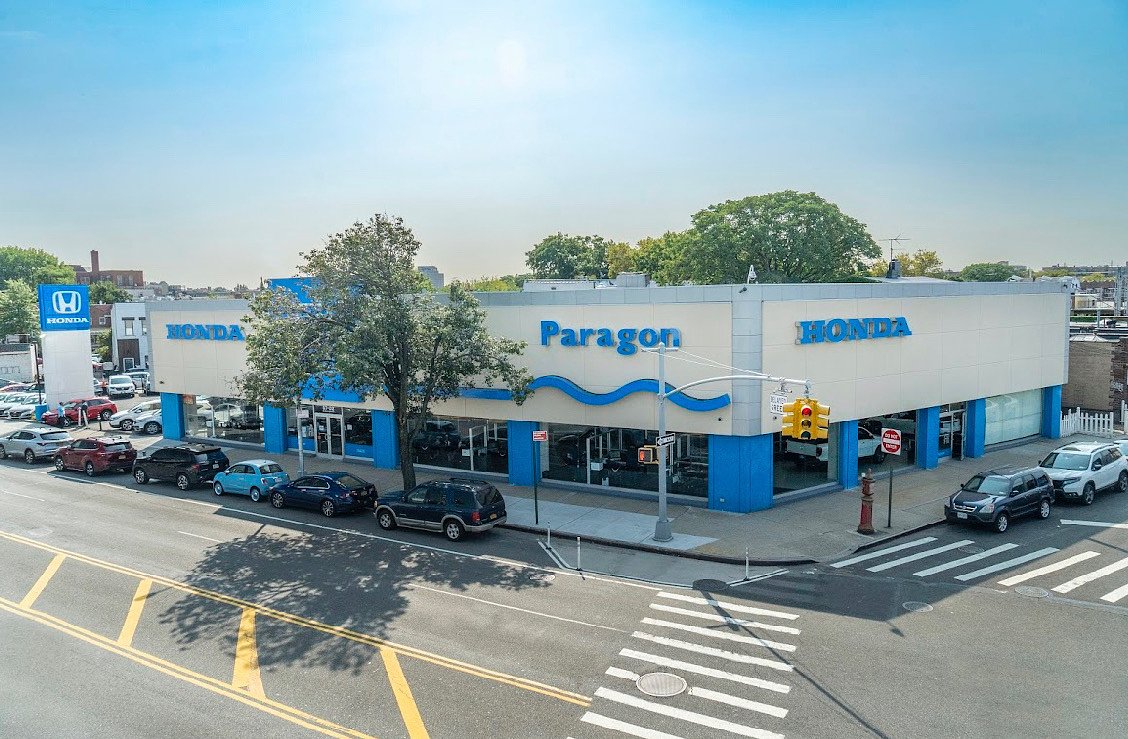
Driveway Revolution: Top Honda Dealer Brings Car Service to Your Door
QUEENS, NY – May 28, 2026 – By Frank Reed
The familiar routine of dropping off a car for service—the drive to the dealership, the wait for a shuttle, the hours spent in a waiting room—may soon become a relic of the past for many Tri-State area drivers. In a landmark move signaling a broader industry shift, the nation's top Honda dealership operation has announced it will bring certified maintenance and repair services directly to its customers' driveways.
Paragon Honda, Paragon Acura, and White Plains Honda, a group renowned for its high sales volume and innovative practices, revealed a strategic partnership with Curbee, a technology company specializing in mobile automotive service. The collaboration makes the group the first Honda and Acura retailer in the United States to deploy Curbee's sophisticated mobile service platform, effectively putting a significant portion of its service department on wheels.
This initiative moves beyond a simple convenience perk; it represents a fundamental rethinking of the dealership service model. Instead of waiting for customers to come to them, Paragon and White Plains will now dispatch dealership-certified technicians to perform a wide range of services at a customer's home or office. The move is a direct response to evolving consumer expectations and a strategic solution to the operational challenges facing modern dealerships.
“We’re not interested in defending the old service model,” said Brian Benstock, Vice President and General Manager for the dealership group. “Customers expect convenience, speed, and flexibility, and we intend to lead the industry in delivering it.”
A Strategic Solution to an Industry-Wide Problem
While the concept of a mobile mechanic is not new, the scale and integration of this partnership are unprecedented for a major dealership group. The decision is rooted in a compelling business case that addresses two of the most significant challenges in automotive retail: service capacity and customer retention.
Dealership service bays are a finite resource. As the number of vehicles on the road increases and owners keep their cars longer, service departments face growing demand that often outstrips their physical capacity. The traditional solution—costly and time-consuming facility expansion—is becoming less viable. Mobile service offers an elegant alternative.
According to Curbee, approximately 37% of the work that currently flows through dealership service bays can be performed by a mobile technician. This figure is supported by independent industry analysis, with a 2025 Mordor Intelligence report noting that routine maintenance accounts for nearly 37% of the mobile repair market. These services include oil changes, tire rotations, brake services, battery replacements, and minor repairs—tasks that don't require a vehicle lift or heavy-duty shop equipment.
“Thirty-seven percent of the work coming through a dealership service drive today can be performed directly in the customer’s driveway,” Benstock explained. “Mobile service is not just a convenience play, it is a capacity strategy. We can move the right jobs out of the service lane, open our bays for more complex work, and deliver the kind of experience today’s owners expect.”
This strategy also directly combats the intense competition from nearly 300,000 independent repair shops across the country. By meeting customers where they are, dealerships can eliminate the 16 opportunities the average driver has to choose an independent shop over the dealership, as highlighted in a Curbee report.
The Technology Powering the Shift
Executing a mobile service operation at scale requires more than just a fleet of vans and a team of technicians. It demands a robust technological backbone to manage logistics, scheduling, parts inventory, and customer communication. This is where Curbee's M.A.R.S. (Mobile and Remote Service) platform comes in.
Developed by a team that includes former Tesla executives who pioneered that brand's successful mobile service program, the platform is purpose-built for franchised dealerships. It uses AI-powered scheduling to optimize routes, accounting for job type, technician skills, and even live traffic to maximize productivity. Crucially, the platform offers seamless integration with the dealership’s existing management system (DMS), ensuring that the mobile operation is not a siloed experiment but a fully connected extension of the business.
“The Paragon and White Plains brands understand that mobile service is not just a feature, it is a fundamental extension of the customer relationship,” said Amit Chandarana, CEO of Curbee. “We’re proud to be the platform that makes them mobile."
Automated communications keep customers informed at every step, providing the kind of transparent, modern experience consumers have come to expect from other on-demand services. This level of integration and automation is what separates a professional, scalable mobile program from a simple ad-hoc offering.
Redefining Customer Expectations
While the operational benefits for the dealership are clear, the ultimate winner in this shift is the customer. Research consistently shows a strong and growing consumer appetite for at-home services. A 2024 study revealed that over 72% of U.S. vehicle owners preferred at-home or at-work automotive repair when pricing was comparable to traditional shops. Furthermore, data from CDK Global shows that 40% of customers are willing to pay extra for the convenience of mobile service.
This demand is driven by a desire to reclaim valuable time. The ability to have a car serviced during a work meeting or while managing household tasks transforms a multi-hour chore into a seamless background event. Customer satisfaction scores reflect this, with mobile service customers consistently reporting higher satisfaction than those using traditional dealership services.
Perhaps the most compelling evidence of the model's power lies in its ability to win back lost customers. For dealerships, retaining service customers is critical for long-term loyalty. Curbee's data shows that when offered a mobile appointment, 92% of customers who had not visited the dealership for service in over 18 months accepted. This demonstrates mobile service's potential not only to retain current customers but also to re-engage a previously lost, and highly valuable, segment of the market.
As the Paragon group, a perennial award winner known for its “Future Is Frictionless” retail philosophy, rolls out its new mobile fleet, the entire industry will be watching. This partnership is more than a press release; it is a calculated bet that the future of automotive service is not in a better waiting room, but in the customer's own driveway.