
- 8,540 product entries in the 2025 MEI Awards, up from 7,913 in 2023, reflecting China's growing innovation confidence.
- VOYAGER-UR600 underwater robot operates at depths exceeding 400 meters for up to 3 hours on a single charge.
- AI-powered AR Smart Glasses enable remote demos and factory showcasing, solving global business friction.
Experts agree that China's tech ascent, as demonstrated by the MEI Awards, signals a strategic shift from low-cost manufacturing to high-tech innovation, reshaping global industrial competition.
China's Tech Ascent: MEI Awards Signal a New Era of Innovation
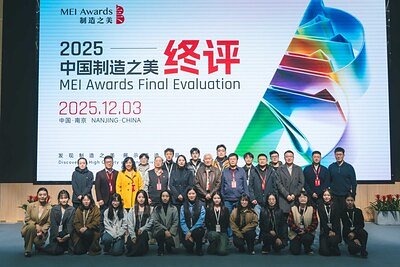
NANJING, China – December 15, 2025 – As the final judging session for the Manufacturing Excellence & Innovation (MEI) Awards 2025 concluded here in Nanjing, the record-breaking 8,540 product entries told a story that extends far beyond the event itself. Hosted by the B2B sourcing giant Made-in-China.com, the annual awards have become a crucial barometer for a profound transformation underway in the world’s manufacturing capital. The sheer volume and, more importantly, the nature of the entries signal that the 'Made-in-China' label is being aggressively redefined—away from the stereotype of low-cost mass production and towards a new identity rooted in high-tech engineering, brand-driven innovation, and strategic market value.
For global buyers, investors, and competitors, the event offers a curated glimpse into the future of industrial technology and a clear indication of a strategic pivot that has been years in the making. This is no longer just about China's capacity to produce; it's about its growing capability to innovate and lead.
A New Benchmark for 'Made-in-China'
The MEI Awards, now in their 15th year, have charted a steady course of increasing participation, growing from 7,913 entries in 2023 to over 8,500 this year. This consistent growth reflects a rising confidence among Chinese manufacturers to compete not just on price, but on design, functionality, and ingenuity. The platform gives them a stage to prove their R&D prowess to a global audience.
The credibility of this stage is bolstered by a rigorous, multi-round evaluation process. A diverse panel of judges—comprising university academics, international procurement experts, and industrial designers—scrutinizes products against a demanding set of criteria: innovation, craftsmanship, user experience, market value, and sustainability. This process is designed to filter for products that are not only novel but also commercially viable and built to last.
Leading the panel is Professor Liu Guanzhong of Tsinghua University, a leading scholar in Chinese industrial design. His involvement underscores the academic and technical rigor underpinning the awards. The goal is to separate genuine breakthroughs from incremental improvements, providing a reliable signal of quality and innovation to the international market. The 'MEI' label, awarded to winning products, is intended to function as a seal of approval, a shortcut for global procurement managers navigating the vast and often opaque landscape of international sourcing.
From Blueprints to Breakthroughs: The Products Redefining Markets
The abstract trend of innovation becomes tangible when examining the products that captured the judges' attention. Two examples from this year's awards highlight the breadth and depth of China's evolving capabilities, spanning from heavy industrial hardware to sophisticated enterprise solutions.
The VOYAGER-UR600 Underwater Exploration Robot drew praise for its immense practical value. This remotely operated vehicle (ROV) is engineered to perform complex tasks at depths exceeding 400 meters, operating for up to three hours on a single charge. As head judge Liu Guanzhong noted, “many underwater and deep-sea operations urgently need equipment like this—capable of working safely across different depths while replacing high-risk manual tasks.” The UR600 is not a conceptual prototype; it's a market-ready solution for deep-sea resource exploration, marine mapping, and industrial inspections, directly addressing the high costs and extreme dangers associated with human deep-sea diving.
At the other end of the spectrum are the AI-powered AR Smart Glasses developed by Shanghai Sotech Technology Co., Ltd. These glasses represent a leap forward in how businesses can interact with global partners. Verónica Larrauri Abad, a judge and experienced buyer from Mexico, highlighted their immediate commercial appeal. “This product provides an innovative solution for remote demos and factory showcasing,” she said. “It is practical, immersive, and cost-effective—very attractive for international buyers looking to enhance product communication and post-sale support.” In a world where supply chains are global and travel can be restrictive, such technology allows a German engineer to guide a repair in Brazil or a Chinese sales team to conduct an immersive factory tour for a client in North America, all without leaving the office. It's a prime example of technology solving real-world business friction.
Vetting Innovation: De-risking the Global Supply Chain
For decades, the primary challenge for international businesses sourcing from China was navigating a landscape of variable quality and verifying supplier claims. The MEI Awards program, alongside the broader ecosystem of its parent company, Made-in-China.com, is a direct response to this market need. It functions as a large-scale, third-party vetting mechanism.
By the time a product receives an MEI award, it has been validated by experts for its engineering quality, commercial potential, and manufacturing standards. This significantly de-risks the procurement process. For a supply chain manager in the United States or a small business owner in Europe, the MEI label serves as a trusted filter, reducing the time and capital spent on initial supplier qualification and due diligence. It provides a curated pool of proven innovators who have demonstrated a commitment to quality control and international fulfillment.
This curation extends beyond the awards themselves. Winning companies gain priority access to MIC's global sourcing events, online showcases, and industry-specific matchmaking sessions. This ecosystem is designed to foster long-term partnerships, moving the relationship beyond a simple transactional exchange to one based on trust and mutual growth. It’s a strategic effort to build confidence and demonstrate that Chinese partners can deliver the differentiated, high-value products required to compete in today's markets.
The Strategic Pivot: Policy Meets Commercial Reality
The innovation on display at the MEI Awards is not happening in a vacuum. It is the commercial manifestation of a long-term national strategy, most famously encapsulated in the 'Made in China 2025' initiative and more recently in the push for 'New Quality Productive Forces.' These policies have channeled significant investment and focus toward upgrading China's industrial base, prioritizing ten high-tech sectors including robotics, information technology, and new materials.
The goal has been to transition the economy from being the 'world's factory'—dependent on OEM contracts for foreign brands—to a technology-intensive powerhouse that creates its own intellectual property and builds its own global brands. The products and companies celebrated by the MEI Awards demonstrate that this policy is bearing fruit. The shift from OEM to brand-driven innovation is well underway.
This evolution carries significant implications for the global market. It presents new opportunities for collaboration with highly capable technology partners. However, it also introduces new competitive pressures across a range of industries that were once dominated by Western and other Asian economies. As Chinese suppliers continue to climb the value chain, global purchasers can expect more sophisticated and differentiated products, but they must also adapt to a landscape where their suppliers may also be their competitors. The innovations showcased in Nanjing are not just improving Chinese manufacturing; they are actively reshaping the standards and dynamics of global industrial competition.