
- 27% food insecurity rate in Fairfax County, affecting over a quarter-million residents.
- 8,300 meals distributed to 400 families at the Fifth Annual Resource Rally.
- 22% surge in food prices in the D.C. metro area since 2020, outpacing income growth.
Experts would likely conclude that this collaborative model effectively addresses hidden hunger in affluent suburbs by combining corporate resources, non-profit expertise, and grassroots outreach, offering a scalable solution to a growing crisis.
Beyond the Facade: How Collaboration Fights Hidden Hunger in Affluent NoVA
HERNDON, VA – June 18, 2026
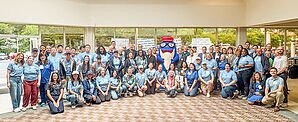
On a warm June morning in a quiet church parking lot, a different kind of traffic jam unfolded. It wasn’t commuters heading toward the tech hubs of the Dulles Corridor, but a steady stream of cars, each representing a family grappling with a hidden struggle. Here, on the campus of Floris United Methodist Church, a powerful, multi-layered response to a growing crisis was in full motion. Volunteers in bright t-shirts moved with practiced efficiency, loading trunks with boxes of food, hygiene essentials, and household goods. This was the Fifth Annual Resource Rally, a tangible manifestation of a strategy to combat a problem many assume doesn’t exist here: widespread food insecurity in the heart of affluent Northern Virginia.
For an hour or two, this parking lot became the intersection of corporate power, non-profit logistics, and grassroots compassion. The event, a collaboration between Reston-based StarKist, the national non-profit Feed the Children, and local organizations Cornerstones and Floris UMC, provided 400 families with kits designed to offer immediate relief—totaling over 8,300 meals. But beneath the surface of this well-organized relief effort lies a more complex story about the changing nature of need in America’s suburbs and a replicable model for how communities can fight back.
The Anatomy of a Crisis in America's Suburbs
Northern Virginia often projects an image of prosperity, with its high concentration of federal jobs and booming tech sector. Yet, this image obscures a harsh reality. According to recent data, food insecurity in the region is not only persistent but growing at an alarming rate. A 2024 report found that the prevalence of food insecurity in Fairfax County was a staggering 27%, affecting over a quarter-million residents. Even more startling is the demographic shift: the sharpest increase was seen among middle-income households earning between $100,000 and $150,000 a year, a group not typically associated with needing food assistance.
The drivers are a potent mix of national trends with a uniquely local impact. Food prices in the D.C. metro area have surged over 22% since 2020, while average household incomes have only risen by 6%. This gap has decimated the purchasing power of families already stretched thin by some of the nation's highest housing costs. Compounding the issue are reductions in federal SNAP benefits and the ever-present instability of a local economy heavily reliant on federal employment, where layoffs and spending cuts have a direct and immediate impact on family budgets.
“Food insecurity along the Dulles Corridor continues to rise,” said Shannon Steene, CEO of Cornerstones, a local non-profit at the forefront of the issue. “Federal layoffs, inflation, and rising costs for groceries, gas, and transportation are leading more families to turn to neighborhood pantries and feeding programs for support.” His organization sees food insecurity as a leading indicator of broader family struggles, a first sign that a household is tipping into crisis. The rally, therefore, is more than charity; it’s a critical intervention.
A Blueprint for Collaborative Impact
Addressing a problem of this scale and complexity cannot be done by any single entity. The Resource Rally serves as a powerful case study in strategic collaboration, demonstrating how different organizations can leverage their unique strengths to create an impact greater than the sum of their parts. It’s a model of tangible difference.
StarKist, headquartered just miles away in Reston, provides the corporate engine. The company not only contributes its protein-rich products but also mobilizes its workforce, with over 30 employee volunteers on site. “StarKist is proudly headquartered in Reston Town Center, and we are committed to taking action that helps strengthen communities,” said Michael Merritt Jr., the company’s Vice President of Marketing & Innovation. His statement underscores a philosophy of local responsibility, transforming corporate citizenship from a vague ideal into direct action.
Feed the Children brings national scale and logistical expertise. The organization specializes in sourcing and assembling the comprehensive family kits—25-pound boxes of food and 15-pound boxes of hygiene essentials—that form the backbone of the distribution. “For families facing hunger and hardship, every moment matters — and every meal matters,” explained Emily Callahan, president and CEO of Feed the Children. “Together with StarKist and community partners like Cornerstones, we can put food and essential resources directly into the hands of the families who need them most.”
This is where the local partners become indispensable. Cornerstones, with its decades of experience serving Fairfax and Loudoun counties, provides the crucial last-mile connection. They understand the community’s specific needs and have the trust and infrastructure to ensure the resources reach the families who are often hardest to find. Floris United Methodist Church acts as the community anchor, offering its physical space and a welcoming, trusted environment that removes any stigma for families seeking help. Together, these four organizations create a seamless pipeline from national supply chains to a local family’s kitchen table.
Sustaining the Momentum: From One-Day Event to Enduring Strategy
While the immediate impact of 8,300 meals is significant, the true innovation lies in the long-term, systemic approach to corporate giving. StarKist’s involvement is not a one-off photo opportunity but part of a deep-rooted, multi-faceted strategy that has evolved over decades. The company’s commitment to hunger relief reportedly dates back to its efforts to supply protein during World War I, creating a century-long narrative of social responsibility.
This history informs its current initiatives. The Resource Rally is integrated into a larger campaign with Feed the Children called “Put Child Hunger to Bed™.” Running through the summer, this initiative cleverly engages consumers in the mission. For every tuna pouch purchased, StarKist donates a pouch, up to 100,000. It also matches consumer donations dollar-for-dollar, up to $100,000. This creates a virtuous cycle, turning a routine grocery purchase into an act of community support and empowering customers to double their impact.
This sustained approach is backed by impressive numbers. Over the past 15 years, the food giant has donated more than 1.2 million pounds of product, valued at nearly $4.9 million, alongside an additional $985,000 in monetary support. The company has participated in over 20 such rallies nationwide, demonstrating a repeatable and scalable model for community engagement. By embedding philanthropy into its marketing, consumer engagement, and employee volunteer programs, the company has built a comprehensive ecosystem of giving that goes far beyond a simple check. It is this strategic depth that provides a sustainable framework for tackling a chronic issue like hunger, ensuring that the support continues long after the volunteers have gone home.