
- 2.7 to 2.9 million orphans in South Africa, representing 14% of all children in the country.
- 62% of South African children experience multidimensional poverty (2024 UNICEF report).
- $15/month campaign aims to transform Mandela Day into sustained annual support.
Experts agree that while symbolic gestures like Mandela Day's 67 minutes raise awareness, sustained financial support is critical to addressing South Africa's child protection crisis and systemic failures.
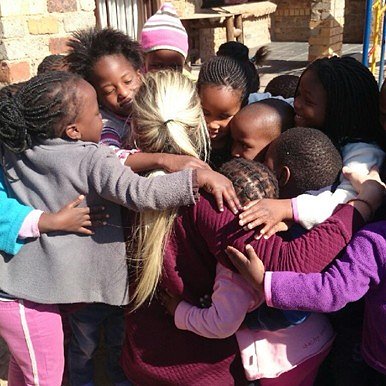
Beyond 67 Minutes: A New Model for Mandela Day's Global Impact
JOHANNESBURG, South Africa – May 26, 2026 – In a move to transform a global day of service into a year of sustained action, The Maletsatsi Foundation has launched its Virtual Volunteer Campaign: Mandela Day Edition. The initiative challenges the traditional 67-minute model of service associated with Nelson Mandela International Day, asking global citizens to instead commit $15 a month for a year to support South Africa's most vulnerable children.
This campaign arrives as the country grapples with a child protection crisis of staggering proportions, one that statistics struggle to fully convey. The foundation’s innovative approach seeks to convert symbolic gestures into the consistent, reliable support required to address a deep-seated systemic failure.
South Africa’s Silent Crisis
Behind the campaign is a grim reality. South Africa is home to an estimated 2.7 to 2.9 million orphans, a figure representing roughly 14% of all children in the country. The systems designed to protect them are buckling under the strain. Of these millions, fewer than 400,000 are in any form of formal foster placement. Meanwhile, the path to a permanent family through adoption has narrowed significantly, with national adoption numbers plummeting by over 50% between 2004 and 2014, and falling a further 30% by 2020.
State support, a lifeline for many, is also proving insufficient. At the end of 2024, the Foster Child Grant lapsed for nearly a third of all recipients, an unprecedented failure in the social safety net. Even the widely distributed Child Support Grant, which reached over 13 million children in 2021, falls significantly below the food poverty line, leaving families unable to provide a basic nutritious diet.
These figures are symptoms of a deeper issue. A 2024 UNICEF Situation Analysis report revealed that a staggering 62% of South African children experience multidimensional poverty. The need is not just for intervention, but for a new model of support that can provide the stability that the current infrastructure cannot guarantee.
Reimagining Mandela Day: From Gesture to Sustained Action
Nelson Mandela International Day, observed annually on July 18, was established by the United Nations in 2009. Its founding principle, encapsulated in the “67 minutes” campaign, urged individuals to dedicate time—one minute for each year of Mandela's public service—to community work. While powerful in its symbolism, the model has faced criticism over the years for promoting short-term, often superficial, acts of charity rather than fostering long-term solutions.
In response, the Nelson Mandela Foundation itself has encouraged a shift in thinking with the slogan, “Make Every Day A Mandela Day.” The Maletsatsi Foundation’s campaign is a direct and structured answer to that call.
“Mandela Day asks us to give 67 minutes,” says Tiffini Hein, Founder and Chair of The Maletsatsi Foundation, in a statement. “We are asking people to let those 67 minutes change how they think about the other 364 days. The children in our care do not need a gesture once a year. They need the world to decide, in a sustained and deliberate way, that they matter. $15 a month is that decision made real.”
By reframing the 67 minutes as the time it takes to sign up for a recurring donation, the campaign bridges the gap between intention and sustained impact, directly addressing the core criticism of one-off volunteerism.
The Mechanics of Impact: Virtual Volunteering and Corporate Partnership
The Virtual Volunteer model is built on a simple premise with a powerful financial logic. The campaign invites individuals, particularly in the United States, United Kingdom, Australia, and New Zealand, to commit $15 per month. The foundation frames this contribution as funding a full day of structured, consistent care within its family-based environment. While the organization’s own projections show the full cost of residential care is significantly higher—approximately R6,500 (around $350) per child per month—the recurring donation model provides a predictable and stable revenue stream. This financial predictability is crucial for non-profits, allowing for long-term planning and the consistent delivery of services.
Monthly giving programs are a proven strategy for non-profit sustainability. Donors who give monthly have retention rates as high as 90% and give, on average, 42% more per year than one-time donors. This creates a reliable financial backbone for organizations addressing chronic social issues.
Furthermore, the campaign actively courts corporate participation by encouraging companies to match employee sign-ups dollar-for-dollar. This approach taps into a significant and growing trend in corporate social responsibility. In 2024, corporations contributed over $44 billion to non-profits, with matching gift programs becoming a cornerstone of employee engagement. With an estimated $4-7 billion in available matching funds going unclaimed annually in the U.S. alone, the potential for the campaign to scale its impact through corporate partnerships is immense.
A Family, Not an Institution
The funds raised through the campaign support a model of care that intentionally stands in opposition to institutionalization. The Maletsatsi Foundation operates three residential homes that provide transitional care for children removed from their homes due to abuse, neglect, or abandonment. The focus is on creating a family-centered environment that prioritizes emotional attachment, stability, and individual attention during a child’s most vulnerable period.
This work is supported by several community-facing sub-programmes. Zonke Izingane aims to create awareness and provide support for first-time mothers in crisis, addressing one of the root causes of child abandonment. Archie’s Archives, another initiative, promotes literacy and connection through reading. These programs reflect a holistic approach that addresses both the immediate crisis of a child in need and the systemic drivers that create such crises.
By asking the world to become “Virtual Volunteers,” The Maletsatsi Foundation is not just asking for money. It is asking for a sustained, collective decision that the future of South Africa's children is a shared global responsibility, one that extends far beyond a single day of service.