
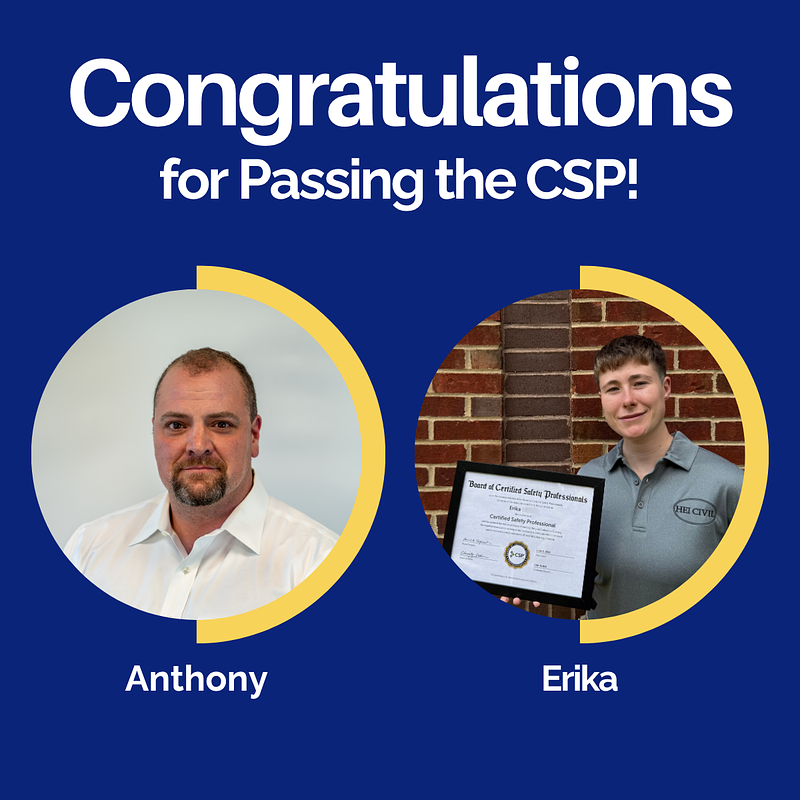
- 2 CSP® Certifications Earned: HEI Civil's VP of Safety and Carolinas’ Safety Manager achieved the prestigious Certified Safety Professional® (CSP®) credential, a rigorous certification with a pass rate of 50-65%.
- Top 2.5% Safety Rating: HEI Civil's Texas division earned an 'outstanding' safety rating from the Federal Motor Carrier Safety Administration in 2024.
- 5.5-Hour Exam: The CSP® certification requires passing a grueling 5.5-hour, 200-question examination covering advanced safety management topics.
Experts would likely conclude that HEI Civil's investment in elite safety certifications reflects a strategic shift toward treating safety as a core economic driver and competitive advantage in high-risk industries.
Beyond Hard Hats: The New Economics of Safety in Construction
DENVER, CO – June 16, 2026 – In the world of heavy civil construction—a realm of massive machinery, deep trenches, and complex infrastructure projects—safety has always been paramount. But a recent announcement from general contractor HEI Civil suggests a significant evolution in how industry leaders view this critical function. The news that two of its key safety leaders, Vice President of Safety Anthony Joosten and Carolinas’ Safety Manager Erika Hemric, have earned the prestigious Certified Safety Professional® (CSP®) credential is more than just a corporate kudos. It’s a strategic signal that in high-risk industries, the paradigm is shifting from safety as a regulatory necessity to safety as a core economic driver and competitive advantage.
This move goes beyond the headlines of a standard press release. It prompts a deeper look into how targeted investments in human capital are reshaping the foundation of capital-intensive industries. By backing its leaders in achieving one of the most rigorous certifications in the field, HEI Civil is making a calculated bet that the most valuable asset on a modern jobsite isn’t the equipment, but the verifiable expertise of the people who run it.
The Gold Standard in a High-Risk World
To understand the weight of this development, one must first appreciate what the Certified Safety Professional credential represents. The CSP is not a weekend seminar certificate. Administered by the Board of Certified Safety Professionals (BCSP), it is globally recognized as the “gold standard” for safety practice, a benchmark of excellence that requires a formidable combination of education, experience, and examination.
Candidates must typically hold a bachelor's degree and have at least four years of professional safety experience. Most must first earn a prerequisite certification, like the Associate Safety Professional (ASP), before even attempting the CSP. The final hurdle is a grueling 5.5-hour, 200-question examination covering everything from advanced risk management and safety management systems to environmental compliance, ergonomics, and occupational health. With industry estimates placing the pass rate between 50% and 65%, it is a test designed to separate practitioners from true masters of the profession. Furthermore, certificants must recertify every five years, ensuring their knowledge remains current.
This level of rigor means a CSP is more than a safety manager; they are a strategic architect of a safe workplace. They possess the validated expertise to design and implement comprehensive safety systems, analyze data to predict and mitigate hazards, and lead an organization toward a proactive, rather than reactive, safety culture. For the individuals who achieve it, the credential is a career-defining accomplishment. As Joosten noted, his journey was a multi-year challenge spurred by a mentor. "The hard work has paid off," he shared, acknowledging the significant personal and professional commitment involved.
From Compliance to Competitive Edge
In the heavy civil construction sector, where projects are complex and hazards are inherent, the strategic value of this level of expertise cannot be overstated. For decades, the conversation around safety was often framed by compliance—meeting OSHA standards and avoiding fines. Today, leading firms recognize that this is a dangerously low bar. The true business case for elite safety leadership lies in its direct impact on operational excellence, financial performance, and market reputation.
Companies with superior safety programs, led by highly credentialed professionals, see tangible returns. A reduction in workplace incidents means fewer work stoppages, lower insurance premiums, and reduced legal liability. This creates a more stable and predictable project environment, which is invaluable for clients and investors. A strong safety record becomes a powerful differentiator in a competitive bidding process, signaling reliability and operational maturity. Clients for large-scale public and private infrastructure projects are increasingly looking beyond the lowest bid to the contractor who can best manage risk.
Moreover, a deeply embedded safety culture, championed by credible leaders, fosters higher employee morale and productivity. When workers feel that their well-being is a genuine priority, it builds trust and engagement, leading to better talent retention—a critical advantage in an industry facing skilled labor shortages.
How 'GRIT' Builds Safer Foundations
HEI Civil frames this achievement within its corporate philosophy of “GRIT”: growth, raising the bar, integrity, and teamwork. This isn’t just an acronym on a poster; it appears to be an operating principle. The company's investment in Joosten and Hemric’s certifications is a clear manifestation of “Growth” through continuous learning and “Raising the Bar” by striving for the highest industry standards.
Reflecting on her achievement, Hemric emphasized this connection. "I am very proud to have earned my CSP," she stated. "I appreciate all the support HEI Civil has given me along this path and their commitment to making continuing education and growth a priority for their team members." Her statement highlights a crucial dynamic: the alignment of individual professional ambition with corporate strategy.
This commitment is not an isolated event. It is part of a broader pattern of investment in safety and quality. In 2024, the company’s Texas division earned an “outstanding” safety rating from the Federal Motor Carrier Safety Administration, placing it in the top 2.5% of its peers nationwide. The firm also invests heavily in training, providing hundreds of hours of technical and safety education through its online learning platform and even hosting industry-wide trench safety courses. By having a VP of Safety and a regional Safety Manager who both hold the industry’s top credential, HEI Civil creates a powerful leadership tandem, ensuring that high-level strategy is translated effectively into on-the-ground practice across the organization.
This dual certification sends a powerful message throughout the company. It demonstrates that safety leadership is a valued and supported career path, and it sets a new standard of excellence that others can aspire to. In an industry built on solid foundations, HEI Civil is demonstrating that the most critical foundation is a culture of uncompromising safety and continuous improvement.