
- 18,000-square-foot digital aquarium: The size of the interactive exhibition space in Seoul's Dongdaemun Design Plaza.
- 4 languages supported: English, Chinese, Japanese, and Korean, ensuring international appeal.
- $5.6 billion projected market value: The location-based entertainment (LBE) market by 2031, a key growth area for the Baby Shark brand.
Experts view this AI-powered exhibition as a groundbreaking step in immersive children's entertainment, setting a new standard for interactive storytelling while raising important ethical considerations around child data privacy and safety.
Baby Shark's AI Leap: Inside the Future of Kids' Entertainment
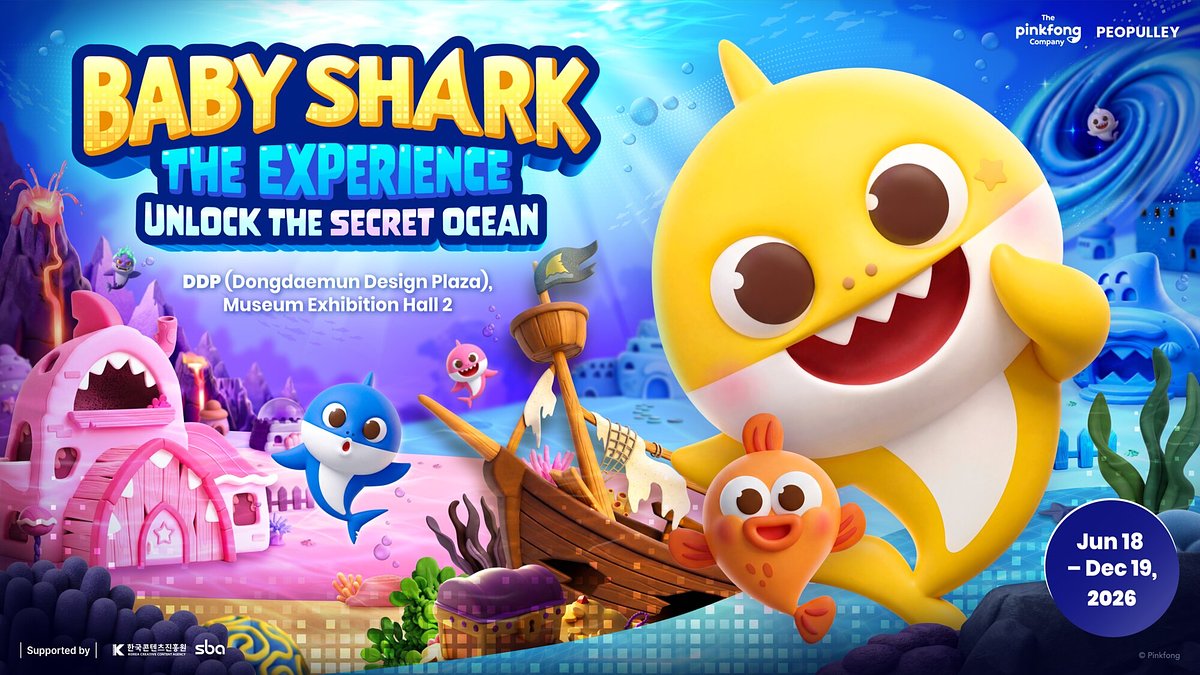
SEOUL, South Korea – April 16, 2026 – The global phenomenon that had children and parents everywhere singing “doo doo doo” is swimming into a new, technologically advanced ocean. The Pinkfong Company, the creative force behind Baby Shark, has announced “Baby Shark The Experience: Unlock the Secret Ocean,” an ambitious interactive exhibition powered by generative artificial intelligence. Set to open on June 18 at Seoul's iconic Dongdaemun Design Plaza (DDP), the experience promises to transform a beloved character into a dynamic, conversational companion.
Early-bird tickets are now on sale for the event, which invites visitors into an 18,000-square-foot digital aquarium where the line between spectator and participant dissolves. This isn't just another themed playground; it's a real-time experiment in the future of character entertainment, where AI is the engine for personalized storytelling.
A New Frontier in Immersive Interaction
At the heart of the exhibition are approximately 20 interactive zones designed to bring the underwater world of Baby Shark to life. Unlike pre-programmed animatronics or costumed characters following a script, the inhabitants of this “Secret Ocean” will leverage a sophisticated suite of AI technologies. The experience integrates large language models (LLMs), speech recognition, voice synthesis, and computer vision, allowing characters to engage in dynamic conversations and react in real time to visitors' voices, facial expressions, and movements.
Imagine a child asking Baby Shark a question and receiving a unique, context-aware answer, or seeing a character's expression change in response to their own smile. This level of personalization is what The Pinkfong Company believes will set a new standard for immersive entertainment. One of the exhibition's signature features will even allow guests to co-create their own version of the iconic song through an AI-powered music experience, adding a layer of personal creativity to the visit.
“By combining AI technology with character storytelling, this project introduces a new kind of interactive entertainment experience,” said Gemma Joo, Chief Business Officer at The Pinkfong Company, in a statement. “We hope it offers audiences of all ages a glimpse into how AI can create more immersive and emotionally engaging ways to experience beloved characters.”
Hosted at the DDP—a landmark known for its futuristic architecture and cutting-edge cultural events—the exhibition is poised to attract a global audience. With support for four languages (English, Chinese, Japanese, and Korean), the experience is built for international appeal from day one. The project has also received backing from the South Korean government's “K-Content AI Innovation Leading Project,” signaling its importance as a national showcase of cultural and technological fusion.
Beyond the Song: A Strategic Play for Brand Longevity
While the technology is futuristic, the strategy behind it is a calculated business move to ensure the Baby Shark brand remains relevant and profitable for years to come. The Pinkfong Company is effectively evolving its intellectual property monetization strategy, moving beyond the traditional revenue streams of YouTube views, merchandise, and live tours into the burgeoning market of location-based entertainment (LBE).
The LBE market is on a significant upswing, with some analysts projecting it to grow to over $5.6 billion by 2031, fueled by consumer demand for premium, in-person experiences that cannot be replicated at home. By creating a high-tech, interactive attraction, Pinkfong is tapping into this trend, offering a unique value proposition that commands higher ticket prices and deeper brand engagement.
This venture represents a strategic pivot from a digital-first content creator to a purveyor of high-end physical experiences. It demonstrates how a viral sensation can be leveraged into a durable, multi-faceted entertainment franchise. The scalability of the model is also a key consideration; if successful in Seoul, this AI-driven exhibition format could be replicated in major cities worldwide, creating a new, lucrative division for the company and a blueprint for how other major IP holders can innovate.
The AI in the Room: Engagement, Ethics, and Child Safety
The promise of AI-driven engagement is undeniably compelling, offering unprecedented levels of interaction and creativity. However, deploying technologies that capture and process children's voices and facial expressions inevitably raises important ethical questions and safety considerations that parents, educators, and regulators are just beginning to navigate.
The exhibition’s use of voice and facial recognition places it at the center of a critical conversation about data privacy for minors. In the United States, for instance, the Children's Online Privacy Protection Act (COPPA) has been updated to address the rise of AI. The new rules, effective in 2025, classify biometric data like voiceprints and facial templates as personal information, requiring verifiable parental consent for their collection and use in training algorithms. Companies are also prohibited from retaining children's data indefinitely.
Child safety advocates emphasize that while such technology can foster learning and creativity, it must be implemented with robust safeguards. Key concerns include ensuring algorithmic fairness to prevent bias, maintaining transparency about how the AI works, and guaranteeing that all interactions remain age-appropriate and safe. The challenge lies in creating an AI that feels open and responsive while operating within a strictly controlled, child-safe environment.
For parents, this new wave of AI-powered entertainment presents both an opportunity and a responsibility. Experts advise prioritizing AI tools that encourage active cognitive growth over passive consumption and stress the importance of parental oversight. This exhibition will likely serve as a high-profile case study for the industry, watched closely by competitors and child development experts alike. Its success will be measured not only by ticket sales but by its ability to provide a magical, engaging experience while responsibly managing the new ethical frontier of bringing artificial intelligence into the world of children's play.