
- 200 million views: Initial footage of the 'wiener man' reached over 200 million people within days.
- 48 teams, 6 billion viewers: The FIFA World Cup 2026™ features 48 teams and an estimated global audience of six billion.
- 3 limited-edition fragrances: AXE launched three World Cup-themed fragrances (Marshmallow Smoke, White Vetiver, Indigo Haze).
Experts would likely conclude that AXE's hot dog stunt successfully disrupted traditional World Cup marketing by leveraging mystery, shareability, and strategic ambiguity to create a cost-effective, high-impact campaign that redefined brand relevance in the attention economy.
AXE's Hot Dog Stunt: A New Playbook for World Cup Brand Dominance?
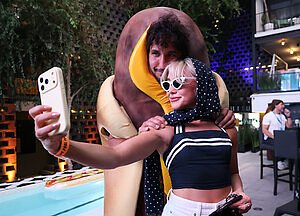
MEXICO CITY – June 18, 2026 – For two weeks, the internet was consumed by a bizarrely compelling mystery. A man in a full-body hot dog costume, accompanied by fitness influencer Cheyenne Moles, was spotted living a life of luxury across Mexico City amidst the fervor of the FIFA World Cup 2026™ opening. They dined at celebrity hotspots, left five-star hotels, and even attended the opening ceremony at Estadio Azteca. The question on every social feed was simple: Who are they?
The answer, revealed this week, is a masterclass in modern marketing. The stunt was the work of AXE, the global men's fragrance giant owned by Unilever. More than just a viral prank, the 'wiener man' saga represents a sophisticated strategic maneuver, a calculated assault on the attention economy designed to outflank competitors in the world's most-watched, and most commercially saturated, sporting event.
The Anatomy of a Calculated Viral Hit
In the hyper-competitive landscape of World Cup marketing, where brands invest billions to capture a sliver of consumer consciousness, AXE chose not to shout louder, but to whisper a compellingly absurd story. The campaign's success wasn't accidental; it was engineered. By seeding the 'mystery couple' in high-visibility locations for two weeks before the reveal, AXE created an information vacuum that the internet rushed to fill. Wild fan theories proliferated, with some Spanish-language TikTok accounts speculating that a major pop artist was in the costume, generating hundreds of thousands of shares.
This period of ambiguity allowed the story to build its own momentum, generating what marketers call 'earned media' on a massive scale. AXE claims the initial footage reached over 200 million people within days, spawning countless memes. The brand didn't just buy ad space; it created a cultural micro-moment. The strategy was to let the public build the narrative before stepping in to claim it.
"This is what winning at the World Cup looks like for us," commented Caroline Gregory, Global Brand Director for AXE/Lynx. "Fine fragrance and the World Cup are not two things you'd normally put together. Nobody expected us to show up. But we did, and we got the whole world talking with a wiener's love life." Her statement cuts to the core of the strategy: weaponizing incongruity to achieve market disruption.
Beyond the Buzz: A Play for Brand Relevance and Market Share
The stunt's true brilliance lies in its seamless integration with a broader corporate objective. It serves as the tentpole for AXE's global campaign, 'Smell Your Best When You Look Your Worst.' The message—that AXE Fine Fragrance is so effective it can make even a man in a hot dog costume irresistible—is perfectly, if absurdly, encapsulated by the viral narrative. This represents a significant evolution for the brand, moving away from its legacy 'AXE Effect' premise of guaranteed attraction toward a more contemporary message of self-expression and confidence, even in moments of peak fan absurdity.
This is not a rogue operation. The campaign is anchored by Unilever's official partnership with the FIFA World Cup 2026™, a multi-brand deal running through 2027. Sponsoring the largest World Cup in history—with 48 teams and an estimated global audience of six billion—provides the scale and legitimacy for such a bold activation. The viral buzz serves as the air cover for a massive retail offensive. AXE is rolling out three limited-edition fragrances (Marshmallow Smoke, White Vetiver, and Indigo Haze) with tournament-themed packaging across key global markets. The line from viral meme to shopping cart is direct and deliberate.
Furthermore, the brand is deepening its engagement with a coveted Gen Z audience through a TikTok campaign that rewards participation over purchase, inviting fans to create their own 'unhinged fan costume' videos. This multifaceted approach demonstrates a holistic strategy: use a viral stunt to capture mass attention, link it to a clear brand message, and then activate that attention through official channels and product sales.
The Blurred Lines of Influencer Authenticity
Central to the stunt's success was the two-week period of manufactured mystery, a strategy that walks a fine line in the world of influencer marketing. The collaboration with Cheyenne Moles was deliberately obscured to create the illusion of an organic, unfolding story. This tactic raises critical questions about transparency and consumer trust. Regulatory bodies like the FTC in the U.S. mandate clear disclosure of sponsored content, a rule the 'mystery' phase of this campaign artfully sidestepped.
While the eventual reveal provided clarity, the campaign's reliance on initial ambiguity highlights a high-stakes trade-off. The brand risked potential backlash for a perceived lack of transparency in exchange for the immense reward of authentic-seeming virality. In this case, the bet paid off, largely because the humorous and lighthearted nature of the stunt defused potential criticism. However, it underscores a growing trend where the line between authentic content and undisclosed advertising is becoming increasingly, and strategically, blurred.
Redefining the World Cup Marketing Playbook
In an arena where competitors are spending heavily on traditional sponsorships and celebrity endorsements, AXE's 'wiener man' has effectively changed the game. It demonstrates that in 2026, the most valuable currency is not just reach, but relevance and shareability. While other brands buy commercials, AXE created a story that people chose to share.
As Caroline Gregory noted, the stunt is AXE doing what it does best: "Smell your best, even when you look your 'wurst.'" This pun-laden tagline is more than a clever sign-off; it's the thesis of a campaign that has proven that a well-executed, audacious idea can generate a return on attention that far exceeds its media spend. For competitors in the personal care space and beyond, the success of the wiener that broke the internet serves as a stark new case study, proving that sometimes the most effective strategy for gaining a competitive advantage is the one no one sees coming.