
- 73% of English adults are more anxious about eye procedures than any other body part.
- 12% of those who delayed treatment experienced total sight loss.
- £25.2 billion annually is the estimated economic cost of sight loss in the UK.
Experts would likely conclude that Specsavers' strategy effectively addresses a critical public health gap by leveraging 'eye anxiety' to drive timely treatment while capitalizing on a vertically integrated business model.
The Sight-Saving Strategy: How Specsavers is Monetizing 'Eye Anxiety'
LONDON, UK – June 19, 2026 – A startling new public health crisis has been given a name: 'eye anxiety.' According to new research from optical giant Specsavers, nearly three-quarters of English adults are more anxious about procedures on their eyes than any other body part. This is not a trivial phobia. The firm’s research reveals it’s a direct contributor to preventable blindness, with one in three people diagnosed with a serious condition like glaucoma or cataracts delaying treatment out of fear. For a devastating 12% of those who delayed, the consequence was total sight loss.
In response, the company has launched a high-profile campaign featuring beloved TV personality Alison Hammond, whose own family history with glaucoma lends an air of authenticity. The stated mission is to demystify modern eye care and replace fear with facts. But beneath this commendable public health initiative lies a masterclass in corporate strategy. Specsavers isn't just raising awareness; it is defining a problem for which it has engineered the perfect, vertically integrated solution, positioning itself to capture a vast and growing market created by a struggling public health system.
Anatomy of a Market Failure
To understand the brilliance of Specsavers' move, one must first grasp the dire state of UK eye care. Ophthalmology is the single busiest outpatient specialty in the NHS, and its waiting lists are calamitous. As of late 2024, nearly 600,000 people in England were waiting for secondary eye care treatment. National targets are routinely missed, with recent data showing three in ten patients waiting more than the 18-week target to see a specialist.
This isn't just an administrative headache; it's a national tragedy unfolding in slow motion. Patient advocacy group Healthwatch England has reported that 70% of those waiting for treatment experience a deterioration in their vision, with over half seeing their ability to work or perform daily tasks impaired. The mental health toll is equally severe. Since 2019, there have been over 550 official reports of sight loss due to delayed appointments.
Into this landscape of systemic failure and patient distress, the concept of 'eye anxiety' emerges as a powerful market driver. The fear of surgery (34% of delayers) or a simple lack of understanding (21%) becomes the final barrier preventing desperate patients from seeking care. The economic cost of this inaction is staggering, with sight loss costing the UK economy an estimated £25.2 billion annually. The system is broken, patients are suffering, and the financial stakes are immense. This is the fertile ground in which Specsavers has planted its flag.
The Vertically Integrated Cure
The campaign is more than a series of advertisements; it’s the public-facing component of a deeply integrated business model. Specsavers, the ubiquitous high-street optometrist, handles the front end: detection. Through routine eye tests, its optometrists identify conditions like cataracts and glaucoma. Here, the company’s investment in professional development pays dividends. As optometry director Preet Bhara explains, “Our expert optometrists are trained to deliver comprehensive eye checks that can help to detect early signs of serious eye conditions.”
This is where the strategic genius of the 2016 investment in Newmedica becomes clear. Newmedica, an ophthalmology provider now part of the “Specsavers family,” handles the back end: treatment. When a Specsavers optometrist detects an issue, the patient can be seamlessly referred to a Newmedica clinic for specialist procedures, often funded by the NHS under patient choice rules. This creates a closed-loop system that shepherds the customer from initial concern to final resolution, all under one corporate umbrella.
This model directly addresses the primary fears identified in the research. The journey is presented as a single, reassuring continuum of care, mitigating the fear of the unknown. Ash Sharma, a Consultant Ophthalmologist at Newmedica, notes, “Part of our role is helping patients feel informed and reassured, so they feel confident seeking treatment sooner.” The patient testimonials, like that of Charles who was “petrified” about injections for AMD, underscore this message of compassionate, modern, and effective care. By controlling the entire patient pathway, the company can guarantee a standard of service and communication designed to alleviate the very anxiety it has highlighted.
Deploying Trust as a Tool
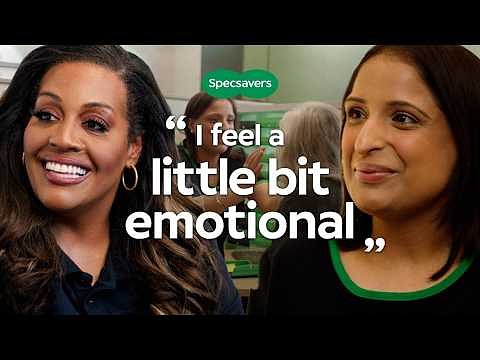
No strategy of this scale works without trust, and that is precisely the role Alison Hammond has been recruited to fill. Her involvement is not merely a celebrity endorsement; it is the strategic deployment of authenticity to overcome a specific psychological barrier. With a family history of glaucoma, her journey in the 'The Recruit' mini-series—shadowing optometrists and meeting post-op patients—feels genuine.
“Meeting people who were genuinely anxious about their eye surgery or treatment really stayed with me,” Hammond comments in the press release. “Seeing their relief, and how much their confidence came back – that was genuinely emotional.” This carefully curated narrative transforms a corporate marketing campaign into a relatable human story. Academic studies on public health have repeatedly shown that the effectiveness of such campaigns hinges on the credibility of the spokesperson. Hammond’s persona as an empathetic, down-to-earth figure makes her the ideal vehicle to deliver the message that modern eye care is nothing to fear.
The results speak for themselves. The research shows that among those who complete treatment, 60% wish they had done so sooner, and nearly 73% report improved emotional wellbeing. This is the core of the value proposition: Specsavers and Newmedica are not just restoring sight; they are alleviating anxiety and improving quality of life. By defining the problem and positioning their integrated system as the solution, they have turned a public health crisis into a powerful engine for growth, demonstrating that in the modern economy, doing good can be exceptionally good for business.