
- ₹192 crore: NCL's CSR investment in the last fiscal year. - 38,000 children screened: Over 255 life-saving heart surgeries provided free of cost in the past year. - 175,000 children screened nationally: Coal India's broader initiative enabled treatment for ~1,400 children across multiple states in two years.
Experts would likely conclude that NCL's 'Nanha Sa Dil' program exemplifies a strategic, ecosystem-based CSR model that effectively bridges critical gaps in rural healthcare access, demonstrating how corporate initiatives can drive meaningful public health outcomes.
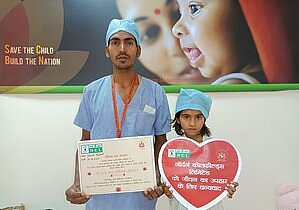
Beyond the Balance Sheet: NCL's CSR Model Transforms Rural Healthcare
SINGRAULI, INDIA – June 19, 2026 – For Santosh Prajapati, a farmer earning around ₹6,000 ($72) a month in rural Madhya Pradesh, hope had become a foreign concept. His six-year-old daughter, Pranjali, was perpetually weak, unable to keep up with other children, and frequently ill. Local clinics offered no answers. The crushing weight of her undiagnosed condition was compounded by the unspoken fear that even if a diagnosis came, the cure would be impossibly out of reach. The family had never even heard of Congenital Heart Disease (CHD), let alone imagined they could afford the specialized care it requires.
Their story is a familiar one across the vast, underserved stretches of rural India, where access to specialized healthcare is a luxury few can afford. But for the Prajapati family, the narrative shifted dramatically. A screening camp, part of an initiative called 'Nanha Sa Dil' (A Tiny Heart), arrived in their village. It was there that a team, suspecting a heart condition, referred Pranjali for further tests. An echocardiogram confirmed their fears: a hole in her heart. Despair set in, but it was quickly met by an astonishing proposition. The program, sponsored by Northern Coalfields Limited (NCL), would cover everything.
From counseling and travel to the surgery itself at a state-of-the-art hospital hundreds of kilometers away and all follow-up care, the family would pay nothing. Today, Pranjali is back in her village, healthy and active. Her story is not just a heartwarming anecdote; it is a powerful case study in a new, highly strategic model of corporate social responsibility that is quietly reshaping public health outcomes.
The Corporate Architect of Lifelines
At the heart of this initiative is Northern Coalfields Limited, a major subsidiary of the state-owned behemoth Coal India Limited (CIL). While the core business of these entities is extracting a fossil fuel, their investment in human capital is proving just as significant. 'Project Nanha Sa Dil' is not a simple philanthropic gesture but a meticulously designed CSR program that reflects a deep understanding of systemic healthcare gaps.
Under CIL's robust CSR framework—which mandates its profitable subsidiaries to invest either 2% of their average net profit or ₹2 per tonne of coal produced, whichever is higher—NCL has become a key driver of social change. In the last fiscal year alone, NCL channeled over ₹192 crore into its CSR activities. 'Nanha Sa Dil' is a flagship component of this commitment. Over the past year, the NCL-led program has conducted 534 screening camps, screened over 38,000 children, and facilitated 255 life-saving heart surgeries, all free of cost.
This is part of a larger national movement by Coal India, which has screened over 175,000 children and enabled treatment for approximately 1,400 across multiple states in two years. The scale is staggering, but the true innovation lies not in the numbers, but in the architecture of the program itself.
An Ecosystem, Not Just a Chequebook
What distinguishes 'Nanha Sa Dil' from traditional corporate charity is its construction of a complete, end-to-end ecosystem of care. Many corporate initiatives might fund a hospital wing or sponsor a set number of surgeries. NCL and its partners have gone several steps further, addressing every potential point of failure for a rural family navigating the complex healthcare system.
The journey begins with awareness and prevention. Health workers are trained to identify early signs of heart conditions. Screening camps, run in collaboration with government bodies like the Rashtriya Bal Swasthya Karyakram (RBSK), bring diagnostic capabilities directly to remote villages. For those flagged, the program doesn't just provide a referral slip; it arranges transportation and accommodation for diagnostic tests at centers like the dedicated CHD Screening Centre at NCL's own Bina Hospital.
Technology is a crucial pillar of this ecosystem. A digital platform, 'Nanhe Dil Ka Safar' (A Tiny Heart's Journey), tracks every child from the first screening to post-operative follow-up. This ensures no child is lost in the system—a common tragedy in under-resourced health networks. Furthermore, a partnership with HD Medical USA provides specialized screening devices, bringing cutting-edge technology to the front lines and improving the accuracy of early detection.
"Building a parallel, self-contained system is the only way to guarantee outcomes in these environments," notes a public health expert familiar with rural development projects. "You can't just plug one hole in the dam. You have to address awareness, access, affordability, and follow-through. This program appears to be doing just that." The partnership with Sri Sathya Sai Sanjeevani Hospitals, which performs the complex surgeries completely free of cost, completes this powerful public-private partnership model.
Bridging a National Health Divide
The impact of 'Nanha Sa Dil' must be viewed against the grim backdrop of India's rural health crisis. An estimated 240,000 children are born with congenital heart defects in the country each year. Shockingly, only about 5% receive the surgery they need, with cost and access being the primary barriers. For families in places like Singrauli, where NCL operates, a trip to a specialized urban hospital is often an insurmountable logistical and financial challenge.
By systematically dismantling these barriers, NCL's initiative serves as a powerful model for how corporations can create lasting public value that aligns with national health objectives to reduce child mortality. It demonstrates that CSR can be more than a compliance requirement or a public relations exercise; it can be a strategic tool for addressing deep-seated societal challenges. The program isn't just funding surgeries; it is building a sustainable, replicable system of prevention, diagnosis, treatment, and rehabilitation.
As India continues to strengthen its public healthcare infrastructure, initiatives like 'Nanha Sa Dil' offer a potent example of how industry, healthcare institutions, technology innovators, and government systems can collaborate. For Pranjali Prajapati and hundreds of other children, the return on this corporate investment is measured not in quarterly earnings, but in the simple, priceless rhythm of a healthy, beating heart.