
- 49% of clinicians report saving 132 hours/year (3+ work weeks) using AI tools.
- 36% of clinicians add 5 more patient appointments/week due to AI efficiency.
- 79% of healthcare professionals cite limited or inconsistent AI training in their organizations.
Experts agree AI is delivering measurable productivity and safety gains in healthcare, but widespread adoption faces critical challenges in workforce readiness, data bias, and integration complexities.
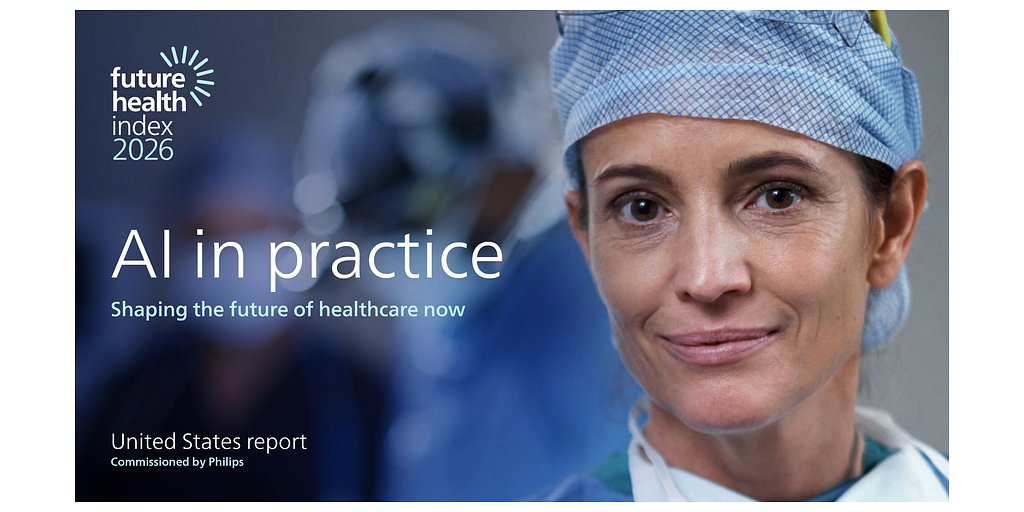
AI in the Clinic: Real Gains Meet Sobering Implementation Realities
CAMBRIDGE, MA – June 09, 2026 – The long-promised arrival of Artificial Intelligence as a transformative force in healthcare is no longer a future-tense conversation. According to a new report from health technology leader Royal Philips, AI is now actively embedded in clinical workflows across the United States, delivering measurable gains in a system buckling under immense pressure. The 2026 Future Health Index U.S. report paints a picture of a technology moving from promise to practice, offering a glimpse of what it calls an "AI dividend."
The headline figures are compelling. Based on a survey of over 2,000 healthcare professionals, the report asserts that AI is not just a background tool but a direct contributor to productivity and safety. Nearly half of clinicians (49%) reported saving an average of 132 hours per year—the equivalent of more than three work weeks—by using AI-enabled tools. Furthermore, 36% stated that this reclaimed time increased their capacity to see more patients, adding a median of five appointments per week. This isn't just about efficiency; it's about expanding access in a system plagued by clinician shortages and burnout.
The AI Dividend: Quantifying the Impact on the Front Lines
For years, the narrative around AI in medicine has been dominated by visions of robotic surgeons and infallible diagnostic engines. The reality, as detailed in the Philips report, is more grounded and, arguably, more impactful in the near term. The gains are found in the subtle optimization of daily tasks, the automation of administrative burdens, and the augmentation of clinical judgment.
The report, titled “AI in practice: Shaping the future of healthcare now,” suggests these efficiencies translate directly into better care and improved clinician well-being. More than a quarter of professionals (27%) said AI helped them identify or prevent a potential medical error at least three times in the last three months. This function as a digital safety net is one of AI's most powerful value propositions. The time saved is not just being used to churn through more tasks; clinicians report using it for higher-value work like detailed case analysis, keeping up with research, and applying greater precision to their practice.
This has led to the emergence of what the report calls a "hybrid care team," where AI acts as a partner to human clinicians. "The growth in adoption of AI over the last year has been nothing short of remarkable – and healthcare leaders are increasingly seeing an AI dividend," said Jeff DiLullo, Chief Region Leader for Philips North America, in the press release. He notes that these investments are "giving time back to clinicians and improving the patient experience." This sentiment is echoed by the 35% of clinicians who reported a better work-life balance and the 36% who noted reduced work-related stress thanks to AI integration.
Beyond the Hype: The Human Element and Readiness Hurdles
While the benefits are becoming tangible, the report wisely avoids painting a utopian picture. A critical finding, and one that resonates with the on-the-ground reality of technology implementation, is the profound gap in workforce readiness. Nearly eight in ten healthcare professionals (a staggering 79%) state that training for AI-enabled tools is limited or inconsistent within their organization. This single statistic is a massive red flag for an industry rushing toward adoption.
"The tools are promising, but we often get a two-hour webinar and are then expected to be experts," a senior radiologist at a major metropolitan hospital, who was not part of the Philips survey, shared on condition of anonymity. "The liability questions alone are enough to keep you up at night. If the algorithm misses something, or flags a false positive, where does the buck stop?"
This sentiment underscores a central tension: while a majority of clinicians are comfortable with AI as a 'partner' for diagnostic support and image analysis, over 90% insist that keeping a "human in the loop" is essential. This is not mere professional pride; it is a recognition of AI's current limitations. Algorithms are trained on historical data, and if that data contains implicit biases related to race, gender, or socioeconomic status, the AI can perpetuate and even amplify healthcare disparities. Concerns over data privacy, especially with the vast troves of patient information needed to train effective models, add another layer of complexity that must be navigated with more than just a software update.
The path from pilot to production is littered with these practical challenges. Interoperability with decades-old legacy systems, the high cost of integration, and the evolving regulatory landscape from bodies like the FDA create a difficult terrain for hospital administrators to navigate. The report’s "AI dividend" can only be fully realized if it is preceded by a significant investment in infrastructure, governance, and, most importantly, people.
The Business of Augmentation: Strategy and the Competitive Field
It is impossible to analyze this report without considering the source. Royal Philips is not a disinterested academic observer; it is a leading global health technology company with a significant portfolio of AI-driven products in diagnostic imaging, patient monitoring, and image-guided therapy. The Future Health Index, now in its ninth year, is a sophisticated piece of thought leadership that frames the industry's challenges in a way that aligns with the solutions Philips provides.
By highlighting the tangible time savings and capacity gains, the report builds a powerful business case for hospital executives to invest in the very technologies the Dutch giant sells. The finding that AI adoption is becoming "nearly universal," with 74% of clinicians increasing their use over the past year, serves as a powerful motivator for any organization feeling behind the curve. This is not a criticism but an observation of modern industrial strategy: shaping the market narrative is as important as building the product.
Philips is, of course, not alone on this field. The health AI space is a fiercely competitive arena. Siemens Healthineers and GE HealthCare are formidable rivals with their own deep-rooted expertise in medical hardware and growing AI software portfolios. Meanwhile, tech behemoths like Google, Microsoft, and a host of nimble startups are all vying for a piece of the multi-billion dollar healthcare market, approaching the problem from angles of cloud computing, data analytics, and specialized algorithms.
What this report signifies is a maturation of the market. The conversation is shifting from abstract potential to concrete ROI. The competitive differentiator is no longer just the sophistication of an algorithm, but its seamless integration into complex clinical workflows, its demonstrable impact on a hospital's bottom line, and its ability to support, not supplant, the human experts at the heart of patient care. The real test for Philips and its competitors will be in execution—helping their clients overcome the very readiness challenges that their own research so clearly identifies. The future of healthcare will not be shaped by the best AI alone, but by the organizations that best manage the human-machine partnership.