
- 10 million tests facilitated by MeasureUp's iTalentUp platform, highlighting its scale in tech hiring assessments.
- Double-digit growth reported by MeasureUp, reflecting strong market demand for skills-based hiring solutions.
- 10th year of the International e-Assessment Awards, underscoring the credibility of the recognition.
Experts would likely conclude that this award validates a broader industry shift toward skills-based hiring, signaling the decline of traditional CV-based recruitment in favor of more objective, capability-focused assessment methods.
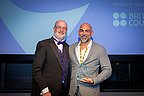
The Resume's Last Stand: An Award That Signals a New Era in Tech Hiring
MIAMI, FL – June 11, 2026 – In the relentless churn of corporate news, it’s easy to dismiss a single industry award as little more than good marketing. But every so often, a piece of news serves as a data point that confirms a tectonic shift. This week, that data point arrived from London, where the digital assessment firm MeasureUp was recognized at the prestigious International e-Assessment Awards.
On the surface, the story is straightforward: the company’s iTalentUp platform won for “Best Workplace or Talent Assessment Project.” For a nearly 30-year-old firm that has facilitated over 10 million tests, it’s another plaque for the wall. But looking past the press release reveals a far more significant story—not just about one company’s success, but about the fundamental re-architecting of the technical labor market. This award isn’t the story; it’s the validation of a story that has been unfolding for years in the server rooms and HR departments of every major corporation: the slow, painful death of the CV and the rise of a new, skills-based economic contract.
The End of an Era: Beyond the Four-Page CV
For decades, the curriculum vitae has been the foundational document of professional identity. It’s a record of where we’ve been, what degrees we’ve earned, and which corporate logos we’ve collected. Yet in the high-velocity world of technology, this model is profoundly broken. The skills required to be a competent AI engineer, cloud architect, or cybersecurity analyst can become obsolete in 24 months, not the four years it takes to earn a traditional degree. A job title at one company rarely translates directly to the capabilities needed at another. The result is a hiring process built on flawed proxies, riddled with inefficiency and bias.
This is the industrial-scale problem that firms are now desperately trying to solve. The traditional CV-based screening process is a costly, low-fidelity filter. It routinely overlooks brilliant, self-taught coders from non-traditional backgrounds while advancing candidates with polished resumes that mask a lack of real-world capability. This is the disconnect that MeasureUp’s CEO, Sam Brocal, identifies as the core of his company’s mission. “This award validates a conviction we have held for years: the future of technical hiring is skills-based, not CV-based,” Brocal stated. This isn't just a corporate soundbite; it's a diagnosis of a systemic failure in the market for talent. When assessment is built on credentials instead of capabilities, a massive amount of human potential is misallocated or ignored entirely.
Deconstructing the Machine: What Makes Skills-Based Assessment Work?
The credibility of this shift rests on the integrity of the tools replacing the old methods. The International e-Assessment Awards, now in their tenth year, are not a rubber-stamp affair. Judged by independent global panels, they attract a who's who of the assessment world, from giants like Pearson to disruptors like Duolingo. Winning here requires demonstrating genuine innovation and impact. MeasureUp’s win for iTalentUp places it squarely within this ecosystem of trust.
The platform itself represents the next generation of talent evaluation. Moving beyond simple multiple-choice theory tests, these AI-driven systems are designed to assess genuine, applicable skills. They present candidates with real-world problems, analyze their coding solutions, evaluate their problem-solving logic, and measure cognitive aptitude in a simulated work environment. This is the difference between asking a pilot to describe the theory of lift and putting them in a flight simulator to see if they can actually land the plane in a crosswind. For employers, it’s about replacing a leap of faith with verifiable data early in the hiring funnel. For candidates, it's a radical change. “Candidates get the opportunity to demonstrate what they can actually do,” Brocal noted. In a fair and rigorous system, the most capable person wins, regardless of their pedigree.
A Case Study in Strategic Growth
MeasureUp's award arrives at a moment of significant commercial momentum, and this is where the story connects to market fundamentals. The company's reported double-digit growth and strong traction in its enterprise business isn’t happening in a vacuum. It’s a direct reflection of a market hungry for solutions to its most pressing talent challenges. Corporations are no longer just buying practice tests; they are investing in strategic infrastructure to build and verify their human capital.
This is evident in the firm's broader strategy. Initiatives like the MeasureUp Alliance, an end-to-end program for certification providers, and a recent official partnership with ServiceNow University, show a company moving up the value chain. It is embedding its assessment tools into the very ecosystems where skills are being taught and certified. This integration is key. It creates a feedback loop where training is directly tied to the verifiable skills employers are demanding. As CMO Jesús Sierra explained, “Organisations no longer want certifications that measure theory alone; they need reliable evidence of the skills their workforce truly requires.” This is the core value proposition driving the firm's international expansion and a clear indicator of where this market is headed.
The New Economic Contract for Talent
Looking toward the 2026 economic landscape, this shift from credentials to skills has profound implications. It represents a move toward a more liquid and efficient market for labor. For individuals, it democratizes opportunity. A talented developer from Omaha with a portfolio of verifiable skills assessments can now compete on a more level playing field with a Stanford graduate. This empowers a new generation of talent from coding bootcamps, online courses, and self-directed learning paths to prove their worth in a standardized, objective manner.
For corporations, this is about more than just better hiring. It’s about organizational agility. In an era defined by rapid technological disruption, the ability to accurately map the skills of your current workforce, identify gaps, and hire or retrain with precision is a critical competitive advantage. Companies that can build and deploy teams based on proven capabilities will out-innovate those still relying on the static, backward-looking resume. This evolution in talent assessment is a foundational element for the next wave of industrial transformation, where the most valuable asset isn't a company's patents or its factories, but the verifiable skills of its people.