
- 1.5 million commercial miles: Aurora Driver's autonomous system has been battle-tested over this distance on public roads.
- 22 hours: Potential time for an autonomous truck to complete a cross-country trip, compared to 3 days for a human driver.
- $3 billion: Projected revenue for Volvo Autonomous Solutions' autonomous division within five years.
Experts would likely conclude that this partnership marks a significant milestone in autonomous trucking, demonstrating both technological readiness and economic viability, though regulatory and public trust challenges remain.
The Quiet Freight Revolution on I-45: Autonomy's Real Bottom Line
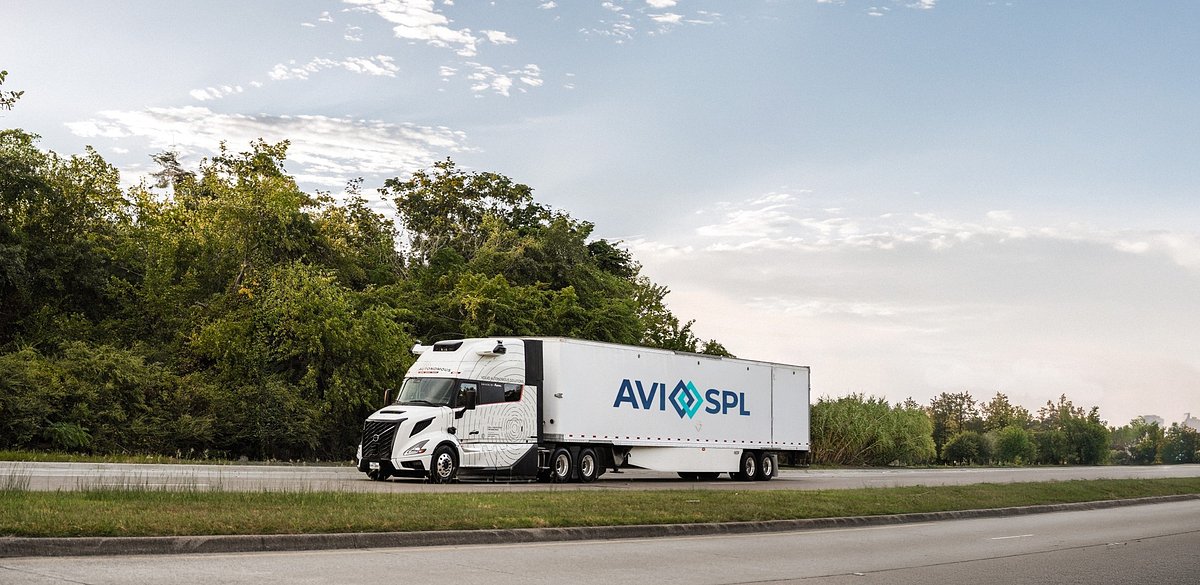
FORT WORTH, TX – June 18, 2026 – While the world watches the latest market gyrations, a more profound transformation is quietly accelerating along the 240-mile stretch of Interstate 45 between Dallas and Houston. This week, global tech solutions provider AVI-SPL and Volvo Autonomous Solutions (V.A.S.) launched commercial freight operations using the Volvo VNL Autonomous truck. These are not test runs; they are revenue-generating hauls of high-value electronics, marking a pivotal moment where autonomous trucking shifts from a futuristic concept to a commercial reality.
The announcement signifies more than just a new route. It's a calculated move by two industry leaders to rewrite the rules of logistics. By deploying trucks powered by the Aurora Driver, they are directly addressing the core vulnerabilities of the modern supply chain: crippling driver shortages, volatile fuel costs, and the relentless demand for faster, more reliable delivery. This collaboration isn't just about moving boxes from Point A to B; it's a live experiment in creating a more resilient and efficient economic backbone.
Under the Hood: The Tech Driving a Logistical Revolution
At the heart of this operation is a powerful fusion of hardware and software. The Volvo VNL Autonomous is not a standard truck retrofitted with sensors. It is, according to Volvo, the company's first production-ready autonomous truck, purpose-built from the ground up at its Virginia factory. The design philosophy centers on industrial-grade redundancy. Six critical systems—including steering, braking, computation, and power management—have built-in backups. This OEM-level integration is designed to ensure the vehicle can execute a safe maneuver or come to a controlled stop even if a primary component fails, a crucial step in building regulatory and public trust.
The truck's "mind" is the Aurora Driver, an SAE Level 4 autonomous system developed by Aurora Innovation. It’s a sophisticated platform that has been battle-tested over 1.5 million commercial miles on public roads and billions more in simulation. Its sensor suite combines high-resolution cameras and imaging radar with proprietary FirstLight lidar, which can detect objects over 400 meters away. This allows the system to perceive its environment and react with a precision that often exceeds human capability, especially in low-light conditions. Aurora's system recently achieved "Feature Complete" status, meaning it is engineered to handle a vast library of road scenarios, from navigating construction zones and debris to responding to emergency vehicles.
The most significant economic disruptor, however, is the system's immunity to the biological clock. Human drivers are constrained by federal Hours of Service (HOS) regulations, limiting them to 11 hours of driving in a 14-hour window. The Aurora Driver is not. This allows for near-continuous operation, pausing only for refueling or maintenance, effectively doubling the asset's daily utilization. A cross-country trip that takes a human driver three days could potentially be completed by an autonomous truck in just over 22 hours.
The New Freight Economy: Beyond the Driver Shortage
For years, the narrative around autonomous trucking has been anchored to solving the chronic driver shortage. While that remains a powerful catalyst, the AVI-SPL and Volvo partnership reveals a more nuanced strategy focused on value creation. AVI-SPL transports high-value, time-sensitive audio-visual equipment and manages end-of-life electronics for its recycling program. For this kind of cargo, predictability and security are paramount.
“Autonomous transportation has the potential to significantly reshape the future of logistics,” said Tim Riek, Chief Strategy Officer at AVI-SPL, in the official announcement. His statement underscores the strategic imperative: leveraging technology to build operational resilience and enhance the customer experience. By ensuring goods move faster and more reliably, AVI-SPL can tighten its supply chain, reduce inventory carrying costs, and offer superior service.
This move places the partners at the forefront of a fiercely competitive market. While early players like Embark Trucks have folded and TuSimple has faced internal turmoil, the dominant strategy emerging is deep collaboration between tech developers and established truck manufacturers. Aurora's partnerships with both Volvo and PACCAR, and Daimler Truck's work with Torc Robotics, exemplify this trend. The goal is no longer just to build a self-driving system, but to deliver a "Driver as a Service" model integrated into a production-grade vehicle.
“This collaboration shows how autonomous transport can help reduce transit times, improve service, and meet the demands of time-sensitive, high-value freight,” noted Sasko Cuklev, Head of On-Road Solutions at V.A.S. The focus on high-value corridors allows companies to prove the economic model where the benefits—speed, uptime, and enhanced security—outweigh the initial technology investment.
The Blueprint: Deconstructing the Dallas-Houston Corridor
The choice of the Dallas-Houston corridor is no accident. Texas has become a hotbed for autonomous vehicle deployment due to its favorable regulatory environment and its role as a central logistics hub. This route serves as a real-world laboratory and a blueprint for a scalable network. Initially, these operations run under "supervised autonomy," with a human safety operator on board to monitor the system and intervene if necessary. However, the roadmap is aggressive.
Volvo Autonomous Solutions has publicly stated its ambition to begin removing safety drivers from U.S. highways in the first quarter of 2027. The company projects a fleet of over 300 autonomous trucks by the end of that year, with industrial-scale deployment starting in 2028. This isn't a distant dream; it's a funded business plan, with V.A.S. projecting nearly $3 billion in revenue from its autonomous division within five years. The network is already expanding, with a new 200-mile route between Dallas and Oklahoma City recently added for freight hauls five days a week.
A key operational advantage enabling this rapid scaling is the ability to map and serve direct-to-customer endpoints. This minimizes the reliance on "drayage"—short-haul transfers from highway hubs to final destinations—which simplifies logistics and cuts down on handoffs, a common source of delays and costs. By automating the long-haul highway segment and streamlining the connection to distribution centers, the system attacks the most inefficient parts of the journey.
Navigating the Road Ahead: Regulation and Reality
Despite the technological maturity and clear economic incentives, the path to widespread adoption is not without obstacles. The primary challenge is a fragmented regulatory landscape. While Texas is permissive, a patchwork of varying state laws across the country creates complexity for interstate operations. Federal agencies like the FMCSA and NHTSA are still formulating the comprehensive rules that will govern a driverless future, and industry leaders are actively engaged in shaping these standards.
Furthermore, public perception remains a critical factor. Building trust requires an impeccable safety record and transparent communication. Aurora's move to publish its Safety Case Framework and its report of over 250,000 driverless miles with zero attributable collisions are essential steps in this process. The industry understands that a single high-profile failure could set progress back by years.
Beyond safety and regulation, the model also promises environmental benefits. The smooth, computer-controlled acceleration and braking patterns are inherently more fuel-efficient, leading to reduced emissions. For companies like AVI-SPL, this aligns with corporate sustainability goals, turning a logistical optimization into a green initiative. The economic and technological momentum behind autonomous freight is undeniable, and as these trucks begin to blend into the traffic on America's highways, they are not just carrying cargo—they are hauling the framework of a new industrial economy.