
- First successful operation of a superconducting product in space by Zenno Astronautics.
- $8 billion projected market value for satellite attitude and orbit control systems by 2032.
- Fuel-free, agile, and sustainable spacecraft mobility enabled by the Z01™ Supertorquer.
Experts would likely conclude that Zenno's successful demonstration of superconducting technology in space marks a significant breakthrough, positioning the company as a major disruptor in the satellite mobility industry with potential long-term implications for space infrastructure.
Zenno's Superconducting Leap: A New Era for Spacecraft Mobility
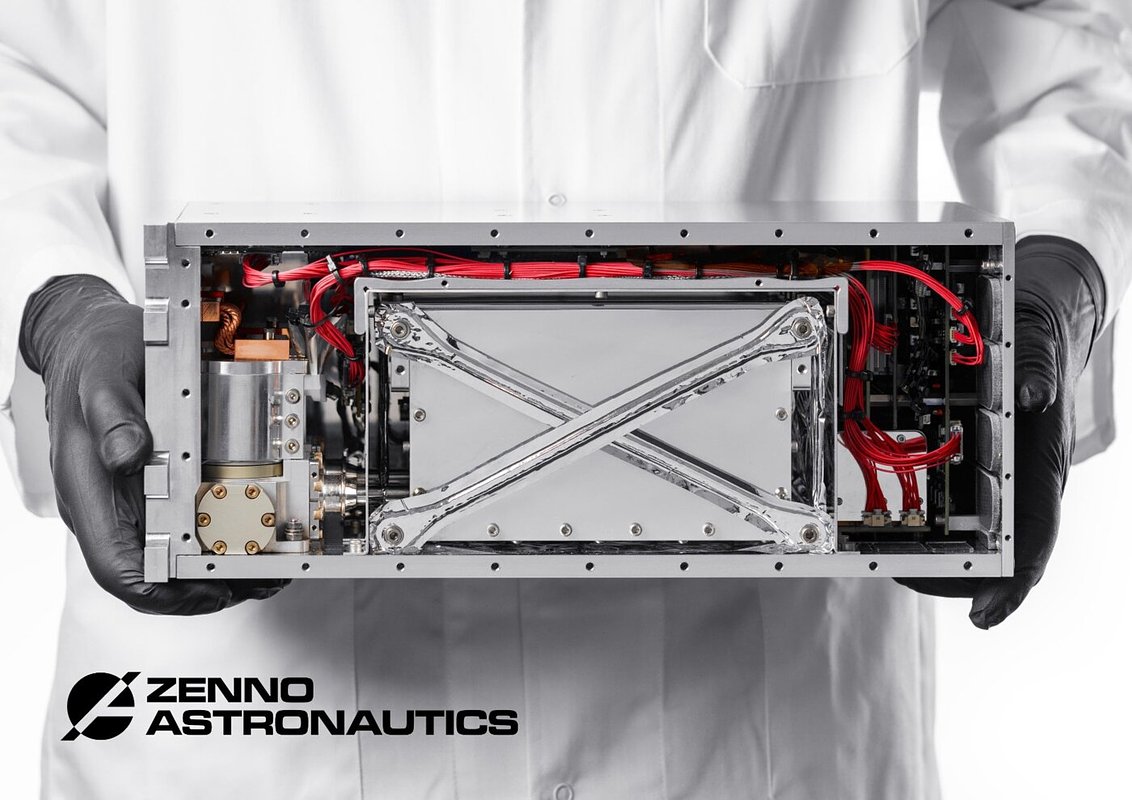
LOS ANGELES, CA – June 17, 2026 – While the world watches rockets launch, a quieter but equally profound revolution is unfolding in orbit. Zenno Astronautics, a relatively low-profile space technology firm, has confirmed the successful operation of its Z01™ Supertorquer aboard Impulse Space’s Mira satellite. This achievement makes Zenno the first company to operate a superconducting product in space, a milestone that validates a technology long considered a key enabler for the future of space infrastructure. This isn't just a successful test; it's the opening salvo in a new era of spacecraft mobility, one that promises to be fuel-free, agile, and sustainable.
The Superconducting Breakthrough
For decades, superconducting magnets have been a subject of intense research for space applications, often relegated to academic papers and advanced concept studies for things like radiation shielding or exotic propulsion. The challenge has always been translating lab-based theory into a robust, operational product that can withstand the harsh realities of space. Zenno appears to have cracked the code.
The Z01™ Supertorquer is, at its core, an advanced attitude control system. Instead of using propellant-based thrusters or heavy mechanical reaction wheels to orient a satellite, it leverages high-temperature superconductors to generate an immensely powerful magnetic field with near-zero energy loss. This artificial magnetic field interacts with the Earth's own geomagnetic field, allowing the spacecraft to precisely adjust its orientation using only electricity from its solar panels. The result is a system that is significantly smaller, lighter, and more powerful than traditional magnetorquers, offering a dramatic reduction in the critical Size, Weight, and Power (SWaP) budget that dictates so much of spacecraft design.
The primary advantage is the elimination of propellant. Fuel is the ultimate limiting factor for most satellites, defining mission lifespan and constraining maneuvers. By removing it from the equation for attitude control, the Z01™ enables satellites to operate for far longer and perform more complex, dynamic operations. While the technology requires cryogenic cooling, a significant engineering hurdle in a vacuum, Zenno states it has developed and patented a proprietary cooling system specifically for this purpose. This successful in-orbit test on the Mira satellite serves as the ultimate validation of that claim, proving the technology is no longer just a concept.
From Validation to Commercial Scale
The successful test catapults Zenno from a technology validation phase directly into a new stage of commercial growth. The market for satellite attitude and orbit control systems (AOCS) is a multi-billion dollar industry, projected to reach over $8 billion by 2032. Zenno is now positioned as a major disruptor in this space, offering a compelling alternative to established players who rely on legacy systems.
To navigate this transition, the company has made a significant strategic move, appointing Andrew Rush to its Board of Directors. Rush is a seasoned veteran of the commercial space sector, known for scaling transformative ventures. He previously served as President and COO of Redwire, guiding it through its public listing, and before that was CEO of Made In Space, a pioneer in in-orbit manufacturing. His current role as CEO of Star Catcher Industries, which is developing an energy grid for space, aligns perfectly with Zenno’s infrastructure-focused vision.
"Successfully demonstrating superconducting technology in orbit marks a turning point for Zenno as we transition from technology validation to commercial scale," said Max Arshavsky, CEO and Co-Founder of Zenno. "We're thrilled to welcome Andrew to the Board. His track record building category-defining space infrastructure companies and scaling breakthrough technologies will be invaluable as we expand our technology platform and customer base."
Rush's appointment signals a clear intent to move aggressively on commercialization and global expansion. “Zenno has achieved what very few companies ever do – taking a breakthrough technology from concept to successful operation in space,” Rush commented. “With that milestone now behind them, I’m honored to join the Board as the company enters its next phase of growth and works to scale its technology, customer base, and global presence.”
The board transition also includes the departure of Chair Peter Crabtree after four years of service. "Zenno is doing what many thought impossible by successfully taking superconducting magnet technology from the laboratory to space and proving it in orbit," Crabtree stated, reflecting on his tenure. Arshavsky thanked him for his early belief in the vision, noting, "He believed in the vision from the beginning and helped guide the company through some of its most important milestones."
Forging an Electromagnetic Future
The Supertorquer, as significant as it is, is just the first step in a much larger, more ambitious plan. Zenno’s mission is to build the “electromagnetic platform for space,” a foundational infrastructure layer that could redefine humanity's long-term operations beyond Earth.
This vision is built on a strategic roadmap extending into three key areas. The first is an expansion of satellite mobility, using the core technology to enable more advanced capabilities like autonomous formation flying and in-orbit rendezvous, crucial for future satellite servicing and assembly. The second is advanced radiation shielding. For long-duration human missions to the Moon or Mars, protecting astronauts from cosmic radiation is a primary challenge. Active shielding using powerful superconducting magnets has long been a theoretical solution, and Zenno is now positioned to make it a practical reality.
The third and most visionary pillar is future electromagnetic launch capabilities. This hints at developing systems like mass drivers or magnetic catapults that could accelerate payloads between orbits or even from a celestial body's surface without chemical rockets. This aligns with Arshavsky's stated long-term goal of building an "electromagnetic acceleration tunnel" for interplanetary transport. By creating these foundational electromagnetic systems, the company aims to build a more sustainable and commercially viable ecosystem in space, one less dependent on resources hauled up from Earth's gravity well. This successful mission is not just an endpoint for the Z01™, but the validated technological cornerstone for that entire future.