
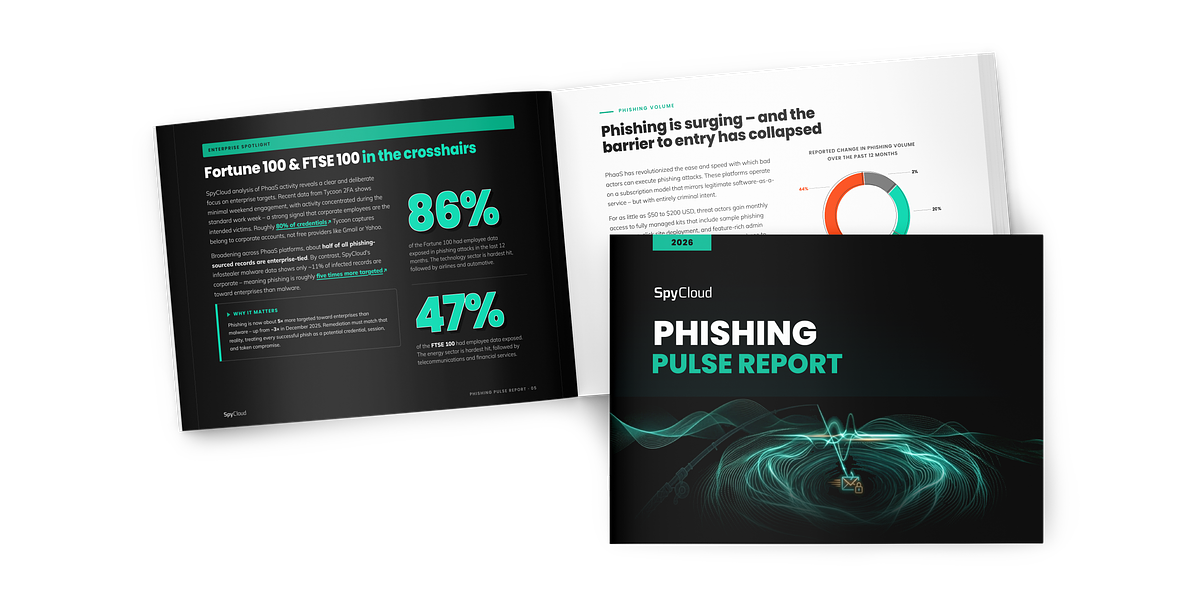
- 47% of FTSE 100 companies exposed to employee data theft via AI-powered phishing in the last year.
- 84% of security professionals report AI-generated phishing is more prevalent or harder to defend against.
- 68% of organizations take 4+ hours to identify and remediate phishing-related exposures.
Experts agree that traditional cybersecurity measures are increasingly ineffective against AI-driven phishing attacks, requiring a fundamental shift toward real-time identity and session management to mitigate post-breach risks.
The Post-Phish Reality: AI and the End of Traditional Cybersecurity
AUSTIN, TX – June 17, 2026 – For years, the corporate cybersecurity playbook has been built on a simple premise: build a strong wall and teach employees not to open the gates. That era is definitively over. A new report reveals a sobering reality: the gates are already wide open, and the enemy is walking through them with a valid key. According to the 2026 Phishing Pulse Report from identity threat protection firm SpyCloud, sophisticated phishing attacks, supercharged by artificial intelligence, have exposed employee data at nearly half (47%) of the FTSE 100 companies in the last year alone. This isn't just another incremental threat; it's a fundamental shift in the cyber conflict landscape, one that renders traditional defense and response strategies dangerously obsolete.
The findings paint a grim picture of enterprise preparedness. While 78% of organizations report a surge in phishing volume, the true crisis lies in what happens after an employee inevitably clicks a malicious link. The battle is no longer about preventing the breach, but about winning the critical hours that follow. With attackers now stealing not just passwords but the very session tokens that prove a user's authenticated access, the old mantra of "reset your password" has become a hollow and ineffective ritual.
The Industrialization of Deception
The surge in successful attacks is no accident; it’s the result of a dark innovation cycle that has industrialized cybercrime. Two forces are at play: Artificial Intelligence (AI) and Phishing-as-a-Service (PhaaS) platforms. Together, they have lowered the barrier to entry for sophisticated attacks and scaled their effectiveness to an unprecedented level. The report notes that 84% of security professionals say AI-generated phishing is either more prevalent or harder to defend against.
AI, particularly large language models, allows threat actors to craft flawless, contextually aware, and highly personalized lures at a scale previously unimaginable. Gone are the days of spotting a phishing attempt by its poor grammar or generic greeting. Today's malicious emails can perfectly mimic a CEO's tone, reference recent internal projects, and create a sense of urgency that even a well-trained employee might fall for. This automation allows attackers to move from mass-produced, low-success campaigns to highly targeted, high-impact operations with minimal effort.
Simultaneously, PhaaS platforms have democratized advanced cyber weaponry. For as little as $50, aspiring criminals can rent fully-managed phishing kits complete with convincing templates, backend infrastructure, and even technical support. SpyCloud’s research found a deliberate and alarming focus on corporate targets; approximately half of all records sourced from these PhaaS platforms are tied to enterprise identities. This makes phishing attacks roughly five times more likely to target a corporate user than a malware infection—a significant jump from just last year. Kits like Tycoon 2FA, for instance, showed that 80% of the credentials they captured belonged to corporate email accounts, underscoring the strategic pivot towards high-value enterprise targets.
A Crisis of Visibility, Not Just Prevention
“Phishing is no longer just a password-stealing exercise,” said Trevor Hilligoss, Chief Intelligence Officer at SpyCloud. “With AI-written lures, PhaaS kits, and adversary-in-the-middle (AiTM) tradecraft, attackers are increasingly walking away with authenticated access like session cookies and refresh tokens.”
This shift exposes the most critical vulnerability in modern enterprises: the gap between compromise and remediation. The report reveals a startling lack of confidence and capability. Only 38% of organizations feel very confident they can detect and respond to credential theft within 24 hours. A staggering 68% admit it takes them four hours or longer to identify and remediate a confirmed phishing-related exposure. This is a lifetime in cyber warfare, an open invitation for an attacker to establish persistence, move laterally across the network, escalate privileges, and deploy ransomware.
The problem is one of visibility. When an attack succeeds, 58% of organizations struggle to even identify what was stolen. Was it just a password, or did the attacker also grab a session cookie that bypasses multi-factor authentication (MFA)? Without this knowledge, the response is guesswork. A password reset is meaningless if the attacker already has a valid, authenticated session active on the network. This is the new front line: a race to close the window between compromise and remediation before a minor incident escalates into a catastrophic business problem.
Beyond the Firewall: The New Battle for Authenticated Access
The technical evolution of these attacks is particularly concerning. Threat actors are now routinely using Adversary-in-the-Middle (AiTM) and Device Code Phishing techniques specifically designed to neutralize MFA, long considered the gold standard of account security. An AiTM attack works by placing a proxy server between the user and the legitimate service. The user enters their credentials and completes the MFA prompt on what they believe is a trusted site, but the attacker intercepts the resulting session cookie. They don't need the password or the MFA code; they have stolen the golden ticket—the authenticated session itself.
Device Code Phishing is even more insidious. It abuses legitimate authentication workflows used by apps on browserless devices. An attacker tricks a user into entering a device code into a legitimate Microsoft or Google login page. The user authenticates with the real service, completing all MFA challenges, but in doing so, they unknowingly grant the attacker's malicious application persistent access to their account via a refresh token. As Hilligoss noted, this method “avoids a direct fight with MFA” and gives attackers a lower-effort path to long-term access.
“That gives attackers a lower-effort path to persistent access and paints a clear picture as to why defenders' response has to go beyond password changes and include token and session revocation as a standard part of the post-phishing playbook,” Hilligoss added. This is the strategic shift required: from protecting the perimeter to relentlessly monitoring and managing identity, with the ability to instantly invalidate any compromised credential, token, or session.
The FTSE 100 Wake-Up Call
That nearly half of the UK's top 100 public companies have had employee data exposed by phishing is more than a statistic; it is a stark indictment of current cybersecurity postures. These are not small businesses with limited resources, but global enterprises that form the backbone of the economy. The vulnerability of their employee data—spanning energy, telecommunications, and financial services—highlights a systemic risk.
This widespread exposure is a wake-up call for boards and C-suites. Cybersecurity can no longer be delegated to the IT department as a purely technical problem. It is a fundamental issue of corporate governance, risk management, and business continuity. When an attacker with a stolen session cookie can bypass millions of dollars in security investment, it signals a need to re-evaluate strategy from the top down. The focus must shift from purchasing more preventative tools to building a resilient organization capable of acting decisively in the critical moments after a breach occurs. The attackers are counting on the gap between compromise and remediation, and right now, it's a gap wide enough to drive a truck through.