
- 86% of Fortune 100 companies had employee data exposed through phishing attacks in the past year.
- 84% of security professionals believe AI-generated phishing attacks are becoming more prevalent or harder to defend against.
- 58% of organizations struggle to identify compromised credentials or session tokens after an attack.
Experts agree that AI-driven phishing has evolved into a highly sophisticated, scalable threat, requiring organizations to shift from prevention-focused strategies to proactive, identity-centric response frameworks to mitigate risks effectively.
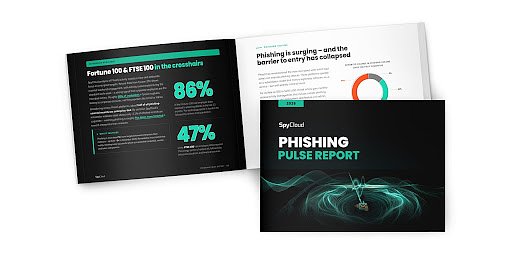
The Imposter in the Machine: AI Phishing Breaches 86% of Fortune 100
AUSTIN, TX – June 17, 2026
The digital systems underpinning modern enterprise are built on a foundation of trust—trust in our colleagues, in our software, and in the digital identities that grant us access. A startling new report suggests this foundation is cracking under the weight of a new, hyper-intelligent threat. According to the 2026 Phishing Pulse Report from identity security firm SpyCloud, a staggering 86% of Fortune 100 companies had employee data exposed through phishing attacks over the past year.
This isn't just another incremental increase in cybercrime; it marks a fundamental shift in the nature of the threat itself. Driven by artificial intelligence and the industrialization of hacking tools, phishing has evolved from a nuisance into a sophisticated, scalable assault on corporate identity. The findings paint a grim picture of enterprises losing a battle they may not even realize they are fighting, as attackers move beyond simple password theft to hijack the very essence of authenticated access.
The New Arsenal: AI and the Industrialization of Deception
The days of spotting a phishing attempt by its poor grammar and clumsy design are rapidly fading. Today's attacks are precision-engineered, often by AI, to be indistinguishable from legitimate communications. The new report found that 84% of security professionals believe these AI-generated attacks are becoming more prevalent or harder to defend against, while 78% of organizations saw an overall increase in phishing volume.
This surge is fueled by two key developments: the accessibility of AI for crafting perfect lures and the rise of Phishing-as-a-Service (PhaaS). PhaaS platforms have created a cybercrime gig economy, allowing threat actors with minimal technical skill to rent sophisticated attack infrastructure for as little as $50. These kits are specifically designed to target corporate environments. SpyCloud’s research reveals that phishing attacks are now approximately five times more likely to target enterprise users than malware infections—a significant jump from just a year ago.
“Phishing has become both more sophisticated and more scalable,” said Trevor Hilligoss, Chief Intelligence Officer at SpyCloud. “AI-generated lures, PhaaS platforms, and adversary-in-the-middle (AiTM) techniques are helping attackers capture not only usernames and passwords, but session cookies, refresh tokens, granting them authenticated access that can persist long after a password reset.” This industrialization of deception means that attackers are no longer just casting a wide net; they are deliberately targeting high-value corporate credentials with unprecedented efficiency.
Beyond the Password: The Era of the Hijacked Session
The most critical evolution in this new threat landscape is what attackers are stealing. While passwords remain a target, the real prize is the session token. Think of a session token, or cookie, as a digital keycard issued after you’ve logged in with your password and multi-factor authentication (MFA). It grants you seamless access to various applications without needing to re-authenticate constantly. For attackers, stealing this keycard is far more valuable than stealing the password alone.
Using techniques like Adversary-in-the-Middle (AiTM), attackers insert themselves into the authentication process to intercept and steal these session tokens. Once they have a valid token, they can simply replay it to gain access to a user’s accounts, completely bypassing MFA. The user’s password can be changed, but the stolen keycard still works until it expires or is explicitly revoked. The report highlights growing concern around these methods, including device code phishing, which abuses legitimate authentication workflows to achieve the same end.
“Attackers gravitate toward techniques that give them the most reliable access with the least amount of effort, and device code phishing checks both boxes,” Hilligoss added. “Rather than continuously fighting authentication controls, they can leverage legitimate workflows to obtain trusted access that often persists long after the initial compromise. This changes the response process significantly because security teams need to think beyond credential resets and focus on revoking the tokens and sessions.”
The Visibility Gap: Why Companies Are Flying Blind
Even as the threat has evolved, corporate defenses have largely failed to keep pace. The report exposes a dangerous “visibility gap” that leaves organizations vulnerable long after a phishing attack succeeds. When an employee clicks a malicious link, the security team’s clock starts ticking. Yet, a majority are losing the race.
An alarming 58% of organizations struggle to even identify which credentials or session tokens were compromised following an incident. This blindness is compounded by slow response times: 68% of security teams require four hours or longer to identify and remediate a confirmed exposure. In the world of cybercrime, four hours is an eternity, providing attackers ample time to establish persistence, move laterally across the network, escalate their privileges, and exfiltrate data or deploy ransomware.
This preparedness gap is stark, with only 38% of organizations feeling very confident they can detect and respond to credential theft within 24 hours. The problem is particularly acute in the technology, airline, and automotive industries, which the report identified as experiencing the highest levels of phishing exposure. For these sectors, a compromised identity can lead to intellectual property theft, massive operational disruption, or breaches of sensitive customer data.
Shifting the Paradigm: From Prevention to Proactive Response
The clear message from this research is that a security strategy focused solely on prevention is destined to fail. The human element, combined with the sophistication of AI-powered lures, makes it inevitable that some phishing attacks will succeed. The new imperative is to build resilience by assuming compromise and focusing on rapid, identity-centric response.
This means shifting from a reactive posture to a proactive one. Organizations need continuous visibility into what identity data has been exposed on the criminal underground, including not just passwords but the session tokens that are increasingly the primary target. According to independent security analysts, this requires a fundamental change in incident response playbooks, moving beyond simple password resets to include the immediate revocation of all compromised sessions and tokens.
“At some point, users are going to get phished,” Hilligoss concluded. “Organizations must move beyond phishing prevention-focused strategies and build response capabilities that provide continuous visibility into exposed credentials, cookies, session tokens, and other identity data.” The goal is to shrink the window of opportunity for attackers from hours or days to mere minutes. This requires integrating darknet intelligence directly into automated security workflows capable of remediating exposures at scale, ensuring that a stolen keycard is rendered useless before the imposter can even reach the door.