
- 400,000 ounces: Gold resources under initial agreements in Canada and the USA
- 800 kg CO₂ saved per ounce: Estimated emissions reduction by leaving gold in the ground
- 10% of spot price: Initial token pricing relative to gold's market value
Experts would likely view nGRND's model as an innovative but untested approach to sustainable resource finance, with its success hinging on rigorous verification standards and regulatory clarity.
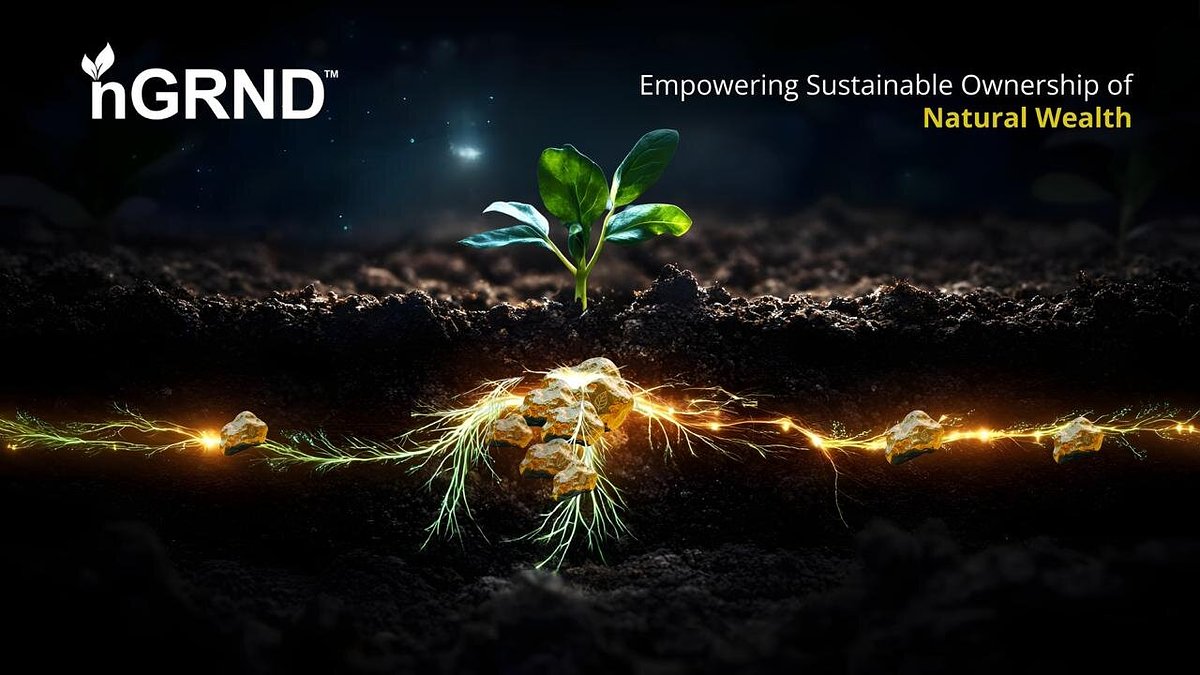
The Gold Standard Goes Green: nGRND to Tokenize In-Ground Bullion
ROAD TOWN, BVI – March 02, 2026 – A new venture is aiming to turn the centuries-old gold industry on its head by making fortunes from metal that will never see the light of day. nGRND Inc., a land management and sustainability company, today announced the launch of its innovative 'Site Programmes,' a model designed to monetize verified gold resources by keeping them securely in the ground.
The BVI-based company is targeting gold deposits that are currently not economically or environmentally viable to extract. Instead of digging, nGRND purchases a percentage of these verified resources from property owners—like exploration and development firms—and transforms them into a new class of digital asset, creating revenue without a single shovel hitting the dirt.
This 'avoided mining' approach provides non-dilutive capital to site owners, allowing them to fund further exploration or company initiatives without issuing new shares or taking on debt. For investors, it presents a novel way to gain exposure to gold, but with a climate-positive twist.
A New Model for Monetizing Stranded Assets
At the heart of nGRND's strategy are gold producers and exploration companies with known mineral resources that are effectively stranded. These deposits, located in regions including Canada, the USA, Australia, and the EU, may be locked up due to prohibitive permitting processes, geological challenges, inaccessibility, or high capital costs associated with building a mine.
Through its Site Programmes, nGRND enters into definitive agreements to purchase a portion of this in-situ gold. This provides an immediate financial lifeline to the property owners, turning a dormant geological asset into a revenue-generating one on their balance sheet. The company emphasizes that this is not a loan, royalty, or streaming agreement; there is no payback requirement, and title to the property remains with the original owner.
The model appears to be gaining traction. Less than two months into its program, nGRND reports it already has over 400,000 classified ounces of gold resources under initial agreements in Canada and the USA, with a significant pipeline of additional opportunities.
While the company states the gold is 'verified,' its success will depend on the credibility of its classification methods. The global mining industry relies on rigorous standards like Canada's NI 43-101 or the JORC code in Australia to classify resources, which require extensive data and evaluation by a qualified professional. Adapting these extraction-focused standards to a non-extractive model will be a critical component of building market trust.
Tokenizing Treasure on the Blockchain
Once nGRND acquires the rights to the in-ground gold, it partners with a licensed Virtual Asset Services Provider (VASP) in Dubai, a jurisdiction regulated by the Virtual Assets Regulatory Authority (VARA). This partner tokenizes the gold, creating the 'nGRND Gold Token,' a Real-World Asset (RWA) commodity token.
Each token represents one ounce of verified, in-ground gold. In a move designed to attract early participants, the tokens will be initially priced at 10% of the spot price of gold at the time of the Token Generation Event (TGE). This pricing strategy reflects the non-extractive nature of the asset while offering potential upside linked to both the underlying commodity and the model's other value streams.
This approach differs significantly from existing gold-backed tokens, which are typically backed by physical, extracted gold held in a vault. By tokenizing an untouched resource, nGRND is betting on a new digital asset class that combines commodity exposure with a powerful sustainability narrative.
“nGRND’s innovative and world leading model and Site Programmes create long-term dual-yield commodity value for all stakeholders in the gold industry by empowering the monetisation and fully capitalised growth of natural and sustainable wealth initiatives,” said Professor Lisa Wilson, CEO of nGRND Inc. in the company's official announcement.
The Promise of a Dual Yield
A key component of the investment thesis is what the company calls a 'dual yield' opportunity. Beyond any appreciation in the price of gold, holders of the nGRND Gold Token are entitled to receive additional distributions through a loyalty rewards program. These rewards are generated from alternative, sustainable land-use projects on the properties where the gold remains.
In partnership with specialists in the field, nGRND facilitates the development of carbon credit and other ESG programs on these sites. The revenue generated from these initiatives—such as carbon sequestration, renewable energy generation, or other socio-economic projects—is then distributed to both the site owners and the token holders. This creates a secondary revenue stream intended to reward participants for their role in preserving the environment.
The environmental claims are ambitious. The company states that every ounce of gold left in the ground saves approximately 800 kilograms of CO₂ emissions that would have resulted from mining. Extrapolating this impact, nGRND has set a goal to eliminate at least three times the total CO₂ emitted by the entire global gold supply chain by 2030 through its avoided mining activities. The credibility of these figures will hinge on transparent, third-party verification of its carbon accounting methodologies.
Navigating a New Frontier of Risk and Regulation
While the vision is compelling, nGRND's model operates at the complex intersection of international resource law, evolving digital asset regulation, and environmental finance. Its success is not without significant challenges and risks.
The regulatory landscape is a primary hurdle. The company's structure—a BVI entity, holding rights to resources in North America and elsewhere, with tokenization managed by a VASP in Dubai—requires navigating a maze of legal frameworks. The rules governing virtual assets, particularly those classified as Real-World Assets, are still being written in many parts of the world, creating potential for unforeseen compliance hurdles.
Market acceptance is another challenge. The concept of owning a token representing gold that cannot be retrieved is a novel one. Educating traditional commodity investors and the digital asset community on the value proposition of non-extractive, dual-yield assets will be crucial for generating liquidity and market depth for the token.
Finally, the entire model's integrity rests on verification. The 'verified in-ground gold' must be audited to a standard the market trusts. Likewise, the environmental impact claims and ESG revenue streams must be transparently measured and audited by credible third parties to avoid accusations of 'greenwashing.' The company's ability to build and maintain this trust will ultimately determine its position as either a fleeting novelty or a true pioneer in sustainable resource finance.