
- 2053: Türkiye's net-zero target year, criticized as insufficient by Climate Action Tracker (CAT).
- 2038: Projected year when Türkiye's emissions will stop rising under current policies.
- 2024: Year Türkiye became Europe’s largest producer of coal-fired electricity.
Experts highlight a significant credibility gap between Türkiye's ambitious zero-waste diplomacy and its domestic energy policies, questioning its ability to lead global climate action effectively.
Türkiye’s COP31 Push: Zero Waste Vision Clashes with Climate Reality
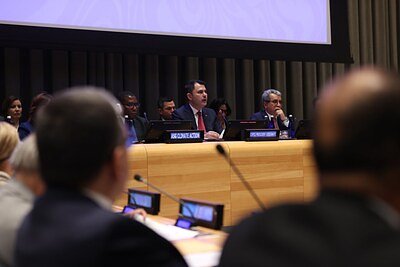
NEW YORK, NY – April 20, 2026 – As the United Nations marked the International Day of Zero Waste, a high-level Turkish delegation launched a major diplomatic effort in New York, positioning its national waste-reduction initiative as the cornerstone of its vision for the upcoming COP31 climate summit. Led by Minister of Environment, Urbanization and Climate Change Murat Kurum, the mission aimed to frame Türkiye as a new leader in global climate action, with a promise to transform the November 2026 conference in Antalya into a summit of “Dialogue, Consensus, and Action.”
However, as Ankara projects its zero-waste success onto the world stage, its ambitious diplomatic campaign is running parallel to a more complex and challenging reality at home. Scrutiny from international climate analysts reveals a significant gap between the country's green messaging and its national energy policies, raising critical questions about its credibility to lead the world toward the binding commitments it seeks to broker.
A Diplomatic Offensive on Waste
The Turkish delegation's visit to the UN headquarters was an intensive, strategically timed marathon. Minister Kurum held pivotal meetings with top officials, including UN Secretary-General António Guterres and UNEP Executive Director Inger Andersen, to align Türkiye's COP31 priorities with the global agenda. Discussions spanned energy security, climate finance, and the role of the circular economy in protecting vulnerable communities.
In his address to the UN, Minister Kurum championed the Zero Waste movement, which was initiated under the patronage of First Lady H.E. Emine Erdoğan. "We believe a cleaner, fairer, and more livable world is possible," Kurum stated. "Our Zero Waste movement is a movement of global conscience and a legacy for future generations." He called for international solidarity, framing the initiative as a model for global justice and a core component of the transition to a circular economy.
Working in tandem, Samed Ağırbaş, President of the Zero Waste Foundation and newly appointed COP31 Climate High-Level Champion, engaged with a broad spectrum of non-state actors. Consultations with leaders from the UN Global Compact, UNICEF, and UNDP sought to mobilize private sector and youth-led solutions. These efforts culminated in a roundtable at the Türkevi Center, gathering leaders from the World Bank, the Gates Foundation, and the Global Methane Hub to build a coalition for action ahead of the Antalya summit.
The Erdoğan-Led Zero Waste Legacy
At the heart of Türkiye's climate diplomacy is the Zero Waste movement, a national project that has achieved remarkable international recognition. The initiative's success is largely attributed to the sustained advocacy of First Lady Emine Erdoğan. Her efforts were instrumental in the UN General Assembly's unanimous adoption of a Turkish-sponsored resolution in 2022, which officially designated March 30 as the International Day of Zero Waste.
Mrs. Erdoğan now chairs the UN's Advisory Board on Zero Waste, a position that has lent significant institutional weight to Türkiye's agenda. Launched in 2017, the domestic Zero Waste Project has been implemented across public institutions, municipalities, and schools, reportedly leading to increased recycling rates and significant economic savings. This tangible national success story provides the foundation for the country's international platform.
"Zero waste is the bridge that connects solutions to the triple crisis of pollution, biodiversity loss, and climate change," said Samed Ağırbaş, inviting global partners to bring their solutions to COP31. The campaign skillfully leverages a specific, relatable environmental success to build a broader platform for global leadership.
A Widening Climate Credibility Gap
Despite the polished diplomatic campaign, Türkiye's broader climate policy presents a starkly different picture. Independent analysis from the Climate Action Tracker (CAT) rates the country's overall climate targets and policies as "Critically insufficient" for meeting the Paris Agreement's 1.5°C goal. While Türkiye ratified the Paris Agreement in 2021 and set a net-zero target for 2053, its updated Nationally Determined Contribution (NDC) has been criticized for lacking ambition.
Analysts point out that the country's 2030 emissions reduction target is based on an inflated business-as-usual scenario, meaning actual greenhouse gas emissions are projected to continue rising until at least 2038. To align with a 1.5°C pathway, Türkiye's emissions would need to decline immediately and sharply. This disconnect between its international posture and domestic reality is a significant hurdle.
Furthermore, the country's energy policy remains heavily reliant on fossil fuels. In 2024, Türkiye became Europe’s largest producer of coal-fired electricity, and its plans to establish itself as a regional fossil gas hub appear inconsistent with the global push for decarbonization. While Ankara has announced ambitious plans for renewable energy expansion, its continued exploitation of coal and gas casts a long shadow over its green credentials.
High Stakes for Antalya
The role of a COP host nation traditionally comes with immense pressure to lead by example. As Türkiye prepares for COP31, it will be expected to demonstrate how it plans to bridge the gap between its own policies and the global 1.5°C target. The summit will follow the first Global Stocktake, which concluded that the world is far off track, intensifying the demand for all nations to enhance their climate action plans.
Türkiye's call for "binding and implementable commitments" in Antalya is a laudable but exceptionally high bar in the world of international climate negotiations, where consensus is fragile and progress is often incremental. The success of this ambition will depend not only on skillful diplomacy but also on the host nation's own credibility. The EU's Carbon Border Adjustment Mechanism (CBAM) is already exerting economic pressure on Turkish industry to decarbonize, a process underscored by the recent launch of a pilot emissions trading system.
With the diplomatic groundwork laid in New York, the path to Antalya is now paved with both high-minded goals and hard questions. The international community will be watching to see if Türkiye can transform its celebrated zero-waste vision into a catalyst for deeper, more comprehensive climate action, both abroad and, most importantly, within its own borders. Whether it can reconcile its global ambitions with its domestic energy realities will ultimately define the legacy of its COP31 presidency.