
- Agencies leveraging specialized providers can grow 2.3 times faster and maintain higher profit margins.
- Managed services can reduce agency operational costs by 30-50% compared to hiring full-time staff.
- The digital marketing outsourcing market is projected to grow from $25.4 billion in 2024 to $75 billion by 2034.
Experts agree that managed fulfillment services offer agencies a scalable, cost-effective solution to maintain quality and flexibility while focusing on high-value strategic work.
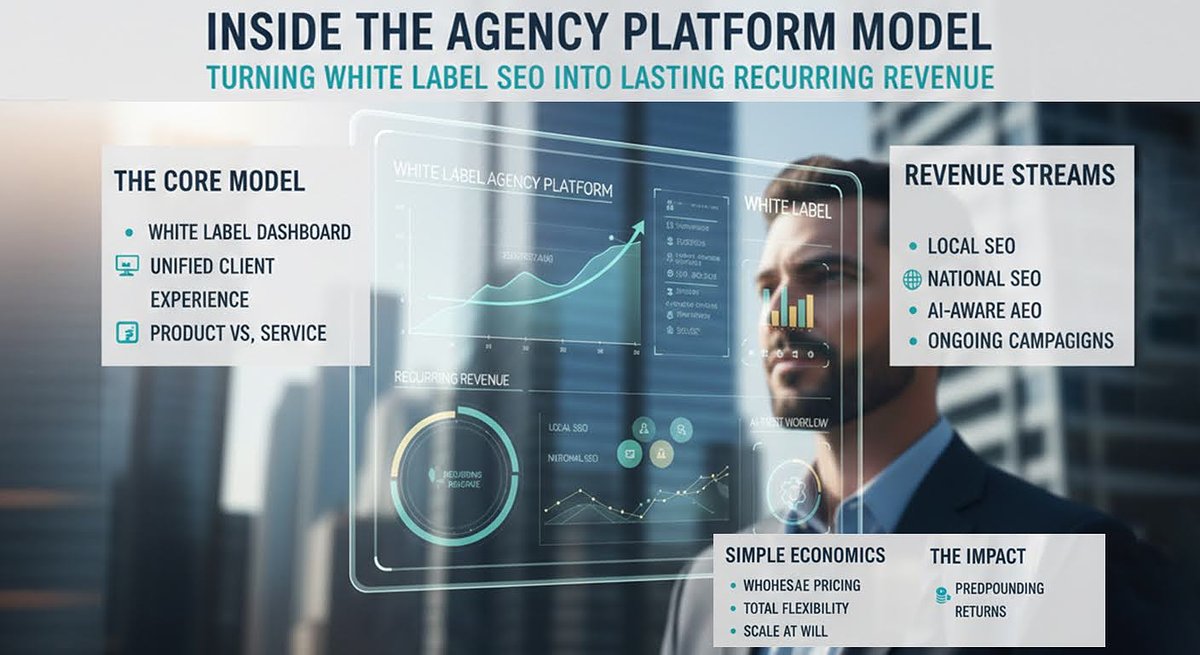
The Agile Agency: Managed Services Redefine Marketing Operations
MANHATTAN, New York – March 27, 2026 – As marketing agencies grapple with mounting client demands and shrinking timelines, a new operational model is gaining traction—one that promises scalability without the burden of a ballooning payroll. Agency Platform today announced a significant expansion of its managed fulfillment services, a move that signals a broader industry shift away from traditional hiring and disjointed outsourcing toward a more integrated, partnership-driven approach.
The company’s expanded offerings in search optimization, content production, and technical support are designed to function as a structured, white-label extension of an agency's own team. This allows agencies to delegate the complex, time-consuming work of campaign execution while retaining direct client relationships and focusing internal resources on strategy and growth.
A New Blueprint for Scalability
The core challenge for many small to mid-sized agencies is a paradox of growth: landing more clients often requires hiring more staff, which increases fixed overhead and operational complexity, thereby limiting profitability. Agency Platform positions its model as a direct solution to this dilemma, framing it not as a loose vendor arrangement but as a “managed system.”
This system is built on defined processes, shared communication standards, and transparent performance tracking. For agencies, this means offloading execution with the confidence that quality and timelines will remain consistent. “Agencies want control without the burden of building large internal teams,” a company spokesperson noted in the announcement. “Our goal is to provide structured fulfillment that aligns with how agencies operate and how clients expect results.”
This approach reflects a significant shift in agency economics. Industry analysis supports the benefits of such a model, with studies indicating that agencies leveraging specialized providers for a substantial portion of their service delivery can grow up to 2.3 times faster and maintain significantly higher profit margins. By converting a fixed cost—salaries and benefits—into a variable one, agencies gain the flexibility to scale services up or down in direct response to client needs. A second executive added that this flexibility is critical, stating, “A managed fulfillment system gives agencies flexibility while keeping delivery standards consistent across accounts.”
Beyond Outsourcing: Quality, Control, and AI Integration
For years, the term “outsourcing” has been a source of anxiety for agency owners, often associated with inconsistent output, communication breakdowns, and a lack of visibility that can jeopardize client trust. The managed fulfillment model seeks to rewrite that narrative by embedding itself within agency workflows.
Through internal dashboards, shared project timelines, and defined service-level agreements, the goal is to create a seamless operational partnership. This addresses the persistent industry problem of revision cycles and delays that plague less structured freelance or vendor relationships. While this specific service expansion is new, Agency Platform has built a reputation for its reporting systems and customer care, with existing clients on review platforms like G2 and Clutch praising its white-label dashboards and operational support.
Critically, the company is also adapting to the next wave of digital marketing: artificial intelligence. Its services now include tracking client visibility within generative AI platforms like Google’s AI Overviews, ChatGPT, and Gemini. This allows agencies to offer cutting-edge reporting on how their clients’ brands are being represented in the AI-powered search results that are rapidly becoming a primary source of information for consumers. This focus on AI not only enhances the service offering but also provides agencies with a vital tool for demonstrating value in an evolving digital landscape.
Redefining the Agency Workforce
The rise of managed fulfillment services has profound implications for the future of the agency workforce. Rather than rendering agency talent obsolete, this model is reshaping internal team structures and redefining roles. Industry trends point toward a future where agencies operate on a hybrid model: a lean, in-house team of senior strategists, client relationship managers, and creative directors who orchestrate a network of specialized external partners.
This shift allows agencies to move away from the difficult and expensive task of hiring for every niche skill set. Instead, they can focus on recruiting and retaining top-tier strategic talent responsible for driving client success and business growth. The financial benefits are substantial; research suggests agencies can reduce operational costs by 30-50% by using managed services instead of hiring full-time staff, freeing up capital to invest in core business activities.
This evolution is also happening in the context of widespread automation. A Forrester report predicts that automation will replace approximately 7.5% of U.S. agency jobs by 2030, primarily impacting process-oriented and repetitive tasks. The roles that remain—and thrive—will be those centered on creative problem-solving, strategic thinking, and sophisticated client management. Managed fulfillment platforms effectively serve as the engine for this automation, handling the execution so that internal teams can focus on higher-value work.
Navigating a Competitive Fulfillment Landscape
Agency Platform’s expansion comes as the market for digital marketing outsourcing is booming, with projections estimating it will grow from $25.4 billion in 2024 to nearly $75 billion by 2034. The company operates in a competitive field populated by a wide array of players, from specialized SEO tool providers and white-label reporting platforms to comprehensive digital service marketplaces.
However, its emphasis on being an integrated “managed system” rather than just a service reseller serves as a key differentiator. By focusing on structured workflows and deep operational partnership, the model aims to provide a level of reliability and consistency that ad-hoc vendor management often lacks. The integration of advanced AI visibility tracking further solidifies its position as a forward-thinking partner for agencies looking to stay ahead of the curve.
As client expectations continue to rise and the marketing world grows more complex, agencies that remain agile and strategically allocate their resources will be best positioned for success. The move toward managed fulfillment represents more than just a cost-saving measure; it is a fundamental rethinking of the agency model itself, transforming them from production houses into nimble, strategic hubs capable of delivering sophisticated, multi-channel results at scale.