
- Population Growth: Syracuse's population has surged by nearly 50% since 2010.
- Rental Market Pressure: Year-over-year rent growth reached 11.5% in early 2026, with only 21 active rental listings citywide.
- Economic Impact: Hill Air Force Base contributes $12.76 billion annually to the regional economy, driving steady housing demand.
Experts would likely conclude that theMADISON's strategic pricing, diverse unit offerings, and amenity-driven design position it as a critical response to Syracuse's housing crisis, while also serving as a test case for sustainable suburban development in high-growth markets.
Syracuse's Growth Test: A New Development Takes on a Red-Hot Market
SYRACUSE, UT – June 16, 2026 – Today, privately-held developer Cole West officially opened the doors to theMADISON, a significant new rental community in Syracuse, Utah. The project, comprising 165 apartments and 11 single-family homes, enters a market that is a textbook case of the pressures facing high-growth suburbs across the American West. While the press release highlights modern living and scenic surroundings, the real story is how this development fits into the complex economic and demographic puzzle of one of Utah's fastest-growing cities.
Syracuse has seen its population swell by nearly 50% since 2010, and the pace isn't slowing. This influx has put immense strain on the local housing market, creating a competitive environment where new inventory is more than just a business opportunity—it's a critical necessity. “theMADISON was designed to reflect the needs of today’s residents, offering beautiful and attainable living options in a brand-new neighborhood that embraces modern living set in natural surroundings,” said Walker Wood, Vice President of Development at Cole West. The successful execution of this vision will serve as a key test case for developers navigating the turbulent waters of Utah's housing demand.
A Market Under Pressure
To understand the significance of 176 new rental units, one must first grasp the dynamics of the Syracuse market. With a median home sale price hovering around $590,000 as of spring 2026—a more than 10% increase year-over-year—the dream of homeownership is becoming increasingly distant for many. This has funneled enormous demand into the rental sector.
The city's rental market is exceptionally tight. As of early 2026, year-over-year rent growth was a staggering 11.5%, with some reports showing as few as 21 active rental listings for the entire city. This scarcity has pushed the average monthly rent for a house toward $2,700. Against this backdrop, theMADISON’s pricing strategy appears carefully calibrated. One-bedroom apartments starting at $1,299 and two-bedrooms from $1,599 are competitive, falling in line with or below the city’s average apartment rent of approximately $1,478. Even its four-bedroom single-family rental homes, starting at $2,675, are positioned competitively against the broader market for single-family rentals.
Crucially, these prices appear attainable for the local populace. Syracuse boasts a robust median household income of over $133,000. Applying the standard 30% rule for housing costs, the median household could theoretically afford a monthly rent of over $3,300. This suggests that theMADISON is not a luxury-only play, but a calculated move to capture a wide swath of the professional and family market that powers the local economy. The initial leasing incentive of eight weeks free rent further underscores a strategy to achieve rapid occupancy in a market that, while starved for inventory, is also seeing a cautious stabilization after recent interest rate hikes.
Executing the 'Lifestyle' Blueprint
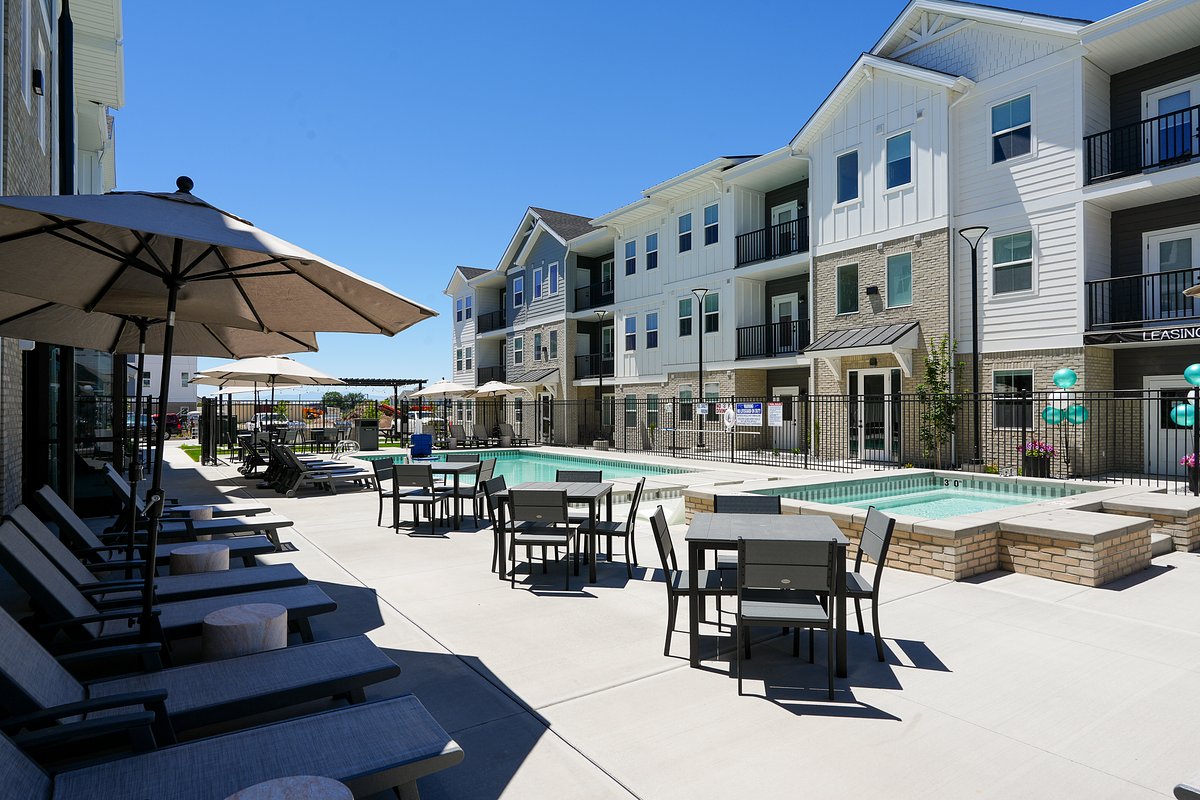
Beyond pure supply, theMADISON is a case study in the modern amenity-driven development model. The project isn't just offering roofs over heads; it's selling a packaged lifestyle. The inclusion of pickleball courts, a resort-style pool, a 24-hour fitness center, a community clubhouse, and a dog park is now standard operating procedure for Class-A properties aiming to command premium rents and build resident loyalty.
This strategy is particularly potent in a location like Syracuse. The development's proximity—just five miles from Antelope Island State Park and the Great Salt Lake—is a major draw for a demographic that values Utah’s unparalleled access to outdoor recreation. Cole West is banking on the idea that residents will pay for convenience, both in on-site amenities and in easy access to hiking, biking, and wildlife viewing. This blend of suburban comfort and rugged adventure is a powerful combination in the post-pandemic world, where the lines between work, life, and recreation have blurred.
Furthermore, the project’s inclusion of 11 single-family homes for rent taps into the burgeoning 'build-to-rent' trend. This hybrid model offers the space and privacy of a traditional suburban home without the long-term financial commitment of a mortgage, appealing to relocating professionals, young families not yet ready to buy, and those who prefer a more flexible, asset-light lifestyle. It is a sophisticated response to a market where the starter home is an endangered species.
Fueling the Economic Engine
The most critical context for theMADISON's launch is its role as workforce housing for one of Northern Utah's primary economic drivers: Hill Air Force Base (HAFB). Located a short commute away, HAFB is a behemoth, contributing an estimated $12.76 billion to the regional economy in 2024 and supporting over 26,000 military and civilian personnel. The base is not static; a $1.24 billion expansion of its aircraft maintenance facilities is underway, promising to add more high-skilled jobs through 2032.
This constant influx of personnel creates a resilient and ever-present demand for housing that is less susceptible to broader economic cycles. For developers, it represents a stable, non-discretionary buyer and renter pool. By offering a diverse range of unit types—from one-bedroom apartments for single personnel to four-bedroom homes for families—theMADISON is strategically positioned to serve this vital community. Its proximity to the Freeport Center, another major employment hub, and key transportation arteries like I-15 and the future West Davis Corridor, further solidifies its role in the region's economic infrastructure.
A Philosophy in Practice
Cole West's corporate mantra is “We Build Community,” a philosophy that can often ring hollow in the high-stakes world of real estate development. However, an analysis of the firm's track record and the design of theMADISON suggests a genuine attempt at execution. The developer maintains a strong reputation, with positive customer and employee reviews highlighting quality craftsmanship and a professional culture. Public records show a notable absence of the large-scale community opposition or legal battles that can plague major projects.
At theMADISON, the 'community building' ethos manifests in the physical layout. The shared amenities are designed as social hubs, intended to foster interaction among residents. The mix of apartment dwellers and single-family home renters within a single managed community creates a more diverse neighborhood fabric than a uniform block of apartments. As new residents move in, the success of this model will depend on the management's ability to cultivate a genuine sense of place. For a city like Syracuse, which is grappling with how to maintain its community character amidst explosive growth, developments that prioritize social infrastructure alongside physical infrastructure are of paramount importance. As the first tenants begin to arrive, theMADISON will become a living laboratory for how to build not just housing, but a cohesive neighborhood from the ground up.