
- 8.3-megapixel SC860AT sensor paired with the Flyingchip M1 processor for enhanced ADAS performance.
- 360° surround-view system using the 3MP SC360AT sensor to eliminate blind spots.
- Driver Monitoring System (DMS) with a 2.3MP global shutter sensor to track driver attention and drowsiness.
Experts would likely conclude that SmartSens's integrated sensor and AI processor ecosystem represents a significant step toward unified vehicle perception, though its success will depend on overcoming industry adoption barriers and certification challenges.
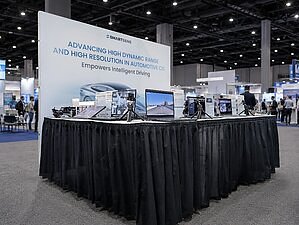
SmartSens's Vision: Intelligent Sensors Aim for Full-Vehicle Perception
DETROIT, MI – June 17, 2026 – The automotive industry's relentless march toward smarter, safer vehicles is fundamentally a story of perception. At the recent AutoSens USA 2026 conference in Detroit, imaging technology specialist SmartSens provided a compelling look into that future, unveiling a comprehensive automotive vision portfolio that aims to give vehicles a near-complete awareness of their surroundings—both inside and out. Moving beyond incremental updates, the company showcased an integrated ecosystem of advanced sensors and processing chips designed to tackle everything from advanced driver-assistance systems (ADAS) to in-cabin monitoring, signaling a strategic push to become a one-stop-shop for next-generation vehicle perception.
The live demonstrations featured a suite of automotive-grade (AT) sensors, each tailored for a specific task, from high-resolution front-view cameras to sophisticated driver and occupant monitoring systems. This holistic approach suggests a market shift away from siloed safety features and toward a unified, intelligent sensing platform that underpins the entire driving experience.
A Holistic Shield for the Modern Vehicle
For years, automotive safety innovation has focused primarily on the external environment. SmartSens’s latest offerings demonstrate a maturing strategy that gives equal weight to the vehicle's interior. The portfolio addresses four critical domains of automotive vision, creating a multi-layered safety and convenience shield.
For external awareness, the company presented two key solutions. The first is a high-performance front-view system pairing its new 8.3-megapixel SC860AT image sensor with the Flyingchip M1 vision processor. This combination is engineered to enhance ADAS performance by delivering sharper environmental perception and more accurate object detection—critical for functions like automatic emergency braking and lane-keeping assist. The second is a 360° surround-view system built on the 3MP SC360AT sensor, designed to eliminate blind spots and give drivers greater confidence during low-speed maneuvers like parking.
However, the more profound evolution is happening inside the car. Responding to emerging European safety regulations and a growing industry focus on the driver's state, SmartSens unveiled a Driver Monitoring System (DMS) solution. It features the SC233AT, a 2.3MP global shutter image sensor with an integrated Image Signal Processor (ISP). The use of a global shutter is a key technical advantage, as it captures the entire image frame at once, preventing the motion blur that can corrupt data from rapid head or eye movements. This allows the system to reliably track driver attention and drowsiness, a crucial step in mitigating risks from distracted driving.
Complementing the DMS is a new Occupant Monitoring System (OMS) platform, which uses the 5MP SC533AT sensor. This system goes beyond simple presence detection; it can monitor occupant position, posture, and even facial expressions. The platform is also designed to keep track of children, pets, or personal belongings left in the vehicle, enabling alerts that could prevent hot-car tragedies. By adding features like in-cabin photo capture, the company is also blending safety with an enhanced passenger experience.
The 'CIS + AI SoC' Strategy
Underpinning this comprehensive hardware suite is a core strategic philosophy that SmartSens calls “CIS + AI SoC”—the tight integration of the CMOS Image Sensor with an Artificial Intelligence System-on-Chip. During a keynote at the conference, Wang Xiaoyong, General Manager of SmartSens USA, outlined this approach, framing it as the future of automotive sensing. The strategy focuses on moving intelligence to the “edge,” right where the data is captured.
“Empowering Intelligent Driving: Advancing High Dynamic Range and High Resolution in Automotive CIS,” was the title of Wang’s presentation, which detailed the company’s vision. Instead of sending a massive firehose of raw pixel data from multiple cameras to a powerful, centralized computer, this model processes and analyzes information directly on or near the sensor. This architecture offers several distinct advantages. It dramatically reduces latency, as critical information like the presence of a pedestrian doesn't have to travel across the vehicle's network before being processed. It also lowers bandwidth requirements and, by using purpose-built AI accelerators, can significantly reduce power consumption—a vital consideration, especially for electric vehicles.
This integrated design, exemplified by the pairing of its new sensors with the Flyingchip M1 processing chip, allows for a more optimized and potentially more cost-effective system for Tier 1 suppliers and OEMs. According to one industry analyst, “The trend is toward smarter sensors, not just better ones. Companies that can provide a co-designed sensor and processor solution can solve major integration and performance headaches for automakers.”
The M2 Chip: A High-Stakes Bet on Autonomy
Perhaps the most forward-looking part of the announcement was the preview of the next-generation M2 automotive ISP chip from its subsidiary, Flyingchip. While details remain sparse, Wang revealed that the M2 will offer a significant performance leap, providing the vision-processing power needed for the “large-scale deployment of next-generation automated driving systems.”
This positions the M2 as SmartSens’s answer to the immense computational challenge posed by higher levels of vehicle autonomy (L2+ and above). As vehicles incorporate more high-resolution cameras for robust 360-degree perception, the ability to process that data in real-time becomes the primary bottleneck. A powerful ISP and AI accelerator like the M2 is designed to ingest and interpret multiple video streams simultaneously, performing complex tasks like object classification, semantic segmentation, and sensor fusion at the edge.
By developing this critical processing hardware in-house, SmartSens is making a strategic bet on the future of the autonomous vehicle market. It’s a move to control a key piece of the value chain and compete not just as a component supplier, but as an enabling platform provider. This places the company in a high-stakes race against established semiconductor giants and other specialized chip designers all vying to become the silicon backbone for self-driving cars.
Navigating a Crowded and Demanding Market
Despite its ambitious technology and strategy, SmartSens faces a challenging road ahead. The automotive image sensor market is fiercely competitive, with established leaders like OmniVision, onsemi, and Sony holding long-standing relationships with major automakers and Tier 1 suppliers. Breaking into this space requires more than just innovative technology; it demands a proven track record of reliability and adherence to the industry’s exacting standards.
Automotive components are subject to long and rigorous qualification cycles, often taking years to achieve a “design win” for a new vehicle platform. Furthermore, any component used in a safety-critical system, such as ADAS or DMS, must comply with stringent functional safety standards like ISO 26262, often requiring an Automotive Safety Integrity Level (ASIL) rating. While SmartSens labels its portfolio as “automotive-grade,” demonstrating and certifying this compliance for its new products will be a crucial step for market adoption.
By presenting a complete ecosystem of sensors and processors, the company is betting that the benefits of an integrated, high-performance platform will be compelling enough for automakers to navigate these hurdles. The success of its full-spectrum vision portfolio will ultimately depend on its ability to prove that its intelligent sensors can deliver a safer, more aware vehicle at a cost and reliability that the industry demands.