
- 40 years of innovation: NCMS has been driving defense technology advancements since 1986.
- 39% efficiency gain: Digital Proving Ground reduced helicopter component redesign time by 39%.
- 45-90 day execution: CTMA program accelerates project implementation from concept to execution.
Experts would likely conclude that NCMS's collaborative, hands-on approach has proven essential for bridging the gap between commercial innovation and military sustainment needs, ensuring America's technological edge in defense.
NCMS at 40: The Quiet Engine Driving America's Defense Innovation
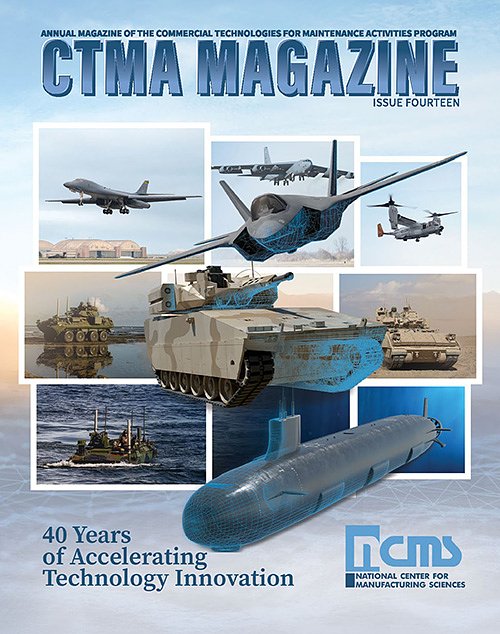
ANN ARBOR, MI – June 17, 2026 – The National Center for Manufacturing Sciences (NCMS) this week released its annual magazine, a glossy publication celebrating successful technology projects. While such announcements are common, this one marks a significant milestone: the organization’s 40th anniversary. Beneath the surface of a corporate birthday lies a much deeper story about national strategy, the quiet mechanics of innovation, and the enduring power of a model designed to bridge the chasm between commercial ingenuity and the immense sustainment needs of the U.S. military.
Founded in 1986 in the wake of the National Cooperative Research Act, NCMS was born from a national imperative to revitalize a struggling machine tool industry. Four decades later, under the leadership of President and CEO Lisa Strama, its scope has expanded dramatically. Today, it stands as a critical, cross-industry consortium dedicated to strengthening the entire US industrial base. The release of the 2026 Commercial Technologies for Maintenance Activities (CTMA) Magazine is less a celebration of a single year's achievements and more a testament to a forty-year mission of ensuring American manufacturing and, by extension, its defense apparatus, maintains a decisive technological edge.
Four Decades of Forging a Competitive Edge
To understand NCMS's impact is to understand its evolution. What began as a focused effort to bolster a specific manufacturing sector has transformed into a sprawling ecosystem of collaboration between industry, academia, and government. This isn't a think tank producing white papers; it's a hands-on facilitator, a neutral convener that gets its hands dirty in the complex process of technology transition.
Over its history, NCMS has been instrumental in navigating the so-called “valley of death,” where promising technologies often perish for lack of funding, testing, or a clear path to a real-world customer. The organization’s model is built on mitigating these risks. By creating collaborative R&D environments, it allows a diverse set of partners—from nimble tech startups to established defense primes—to share costs, leverage expertise, and validate solutions in real-world settings. This approach has proven essential for accelerating advancements in everything from advanced materials and robotics to the digital engineering platforms that now underpin modern manufacturing.
A prime example is its Digital Proving Ground, a cloud-based infrastructure that enables secure, remote collaboration on complex additive manufacturing designs. A case study with Sikorsky–Lockheed Martin demonstrated a staggering 39% reduction in the process time needed to redesign a helicopter component, showcasing the tangible efficiency gains NCMS's platforms can deliver. This is the core of its value: creating the infrastructure and trust necessary for innovation to flourish.
The CTMA Engine Room: From Concept to Combat-Ready
The most potent example of the NCMS model in action is its CTMA program. For 27 years, this partnership between NCMS and the Department of Defense has relentlessly focused on the unglamorous but utterly critical domain of military maintenance and sustainment. Ensuring a fighter jet is ready to fly or a naval vessel is seaworthy is a monumental logistics challenge, and CTMA was designed to inject cutting-edge commercial technology directly into that process.
What makes the program unique is its agility. Bypassing the often-byzantine traditional government procurement process, CTMA operates under a Cooperative Agreement that allows it to move from a project concept to execution in as little as 45 to 90 days. This speed is a game-changer for both the DoD, which gets access to solutions faster, and for commercial tech companies, which can test and prove their products without getting bogged down in years of red tape. Critically, the program structure ensures that industry partners retain their intellectual property rights, a key incentive for participation.
This year’s magazine highlights this knowledge-sharing flywheel effect. “One of the things that CTMA does well is share knowledge. The CTMA Magazine is one way we can do that,” notes Dana Sanford, the CTMA Program Officer for the Office of the Deputy Assistant Secretary of War, Materiel Readiness. “It just doesn’t stay contained within a single place or a single project; it’s spread around. And with that learning, the flywheel catches, and that’s beneficial for both DoW and for industry.” This philosophy transforms individual projects into a collective advancement of the entire industrial base.
The Next Frontier: AI, Blockchain, and On-Demand Manufacturing
The 2026 CTMA Magazine provides a window into the technologies that will define the future of defense readiness. The featured topics—AI and Machine Learning, Blockchain, and Portable Additive Manufacturing (AM) Hubs—are not merely buzzwords but practical solutions to pressing operational challenges.
AI and ML capabilities are being harnessed for predictive maintenance, shifting the paradigm from fixing broken equipment to anticipating failures before they happen. This not only increases equipment availability but also optimizes the supply chain for spare parts, reducing costs and waste. Blockchain technology offers a path to securing that supply chain, creating an immutable and transparent ledger for tracking critical components from factory to field, ensuring authenticity and combating counterfeiting.
Perhaps most transformative is the concept of expeditionary maintenance empowered by portable AM hubs. For military forces operating in remote and austere environments, the ability to 3D-print a critical spare part on-demand fundamentally changes the logistics equation. It reduces the reliance on long and vulnerable supply lines, decreases the need for vast inventories, and empowers warfighters at the tactical edge. However, the path to widespread adoption is fraught with challenges, including the rigorous process of qualifying and certifying printed parts for critical applications and ensuring the cybersecurity of the digital design files.
A Blueprint for Public-Private Success
In a landscape crowded with innovation initiatives, from the Defense Innovation Unit (DIU) to SBIR grants, NCMS and its CTMA program have carved out a unique and indispensable niche. While other programs focus on broad technology scouting or early-stage R&D, CTMA’s laser focus on maintenance and sustainment addresses a foundational component of military power. Its role as a neutral, non-profit convener with a four-decade track record fosters a level of trust and collaboration that is difficult to replicate.
By providing DCAA-compliant accounting, IP protection, and access to DoD facilities, NCMS effectively de-risks government partnership for commercial firms, particularly small and medium-sized enterprises that are often the source of disruptive innovation. The organization has built a durable framework that not only accelerates technology but also strengthens the fabric of the American industrial base, ensuring that the nation's capacity to innovate remains as formidable as its military might.