
- Four world-renowned pianists performed together in Seoul, a rare feat in classical music.
- Lim Yunchan's debut album achieved triple-platinum status in South Korea.
- Steinway concert grands are crafted from over 12,000 parts, taking a year to build.
Experts would likely conclude that this event exemplifies how artistic virtuosity, operational craftsmanship, and strategic branding converge to create lasting cultural and commercial value.
Seoul's Four-Piano Gambit: The Business of a Classical Masterpiece
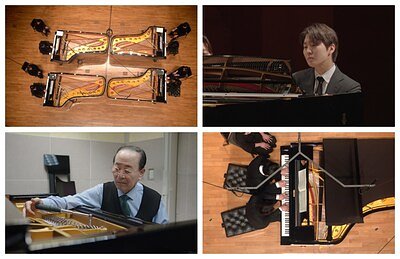
SEOUL, South Korea – June 23, 2026 – On a single stage in Seoul, a feat deemed nearly impossible in the solitary world of classical piano became a reality. Four concert grand pianos, four of the world's most celebrated young virtuosos, and a single, unified sound. This landmark event, captured in a new CNN Showtime special, offers more than a rare glimpse into a musical spectacle. It provides a masterclass in the intricate operational models and strategic branding that define the 21st-century cultural economy.
While the audience heard a stunning rearrangement of Franz Liszt's "Hexaméron," what the event truly orchestrated was a convergence of heritage craftsmanship, a new generation of superstar talent, and savvy corporate strategy. It’s a case study in how quiet operational innovations and powerful business ecosystems create lasting market value, turning a one-night performance into a global cultural moment.
The Virtuoso Economy: Branding a New Generation of Stars
The driving force behind the sold-out concert hall is a quartet of pianists who represent a paradigm shift in classical music. Lim Yunchan, Sunwoo Yekwon, Cho Seong-jin, and Kim Sunwook are not merely musicians; they are global brands, emblematic of East Asia's—and particularly South Korea's—growing dominance in a traditionally Eurocentric field. Each pianist brings a devoted following and a resume of career-defining victories that have made them, as the press release notes, the "rock stars" of their domain.
Take Lim Yunchan, who at 18 became the youngest-ever gold medalist of the Van Cliburn International Piano Competition in 2022. His performance famously moved conductor Marin Alsop to tears, and his subsequent exclusive contract with Decca Classics yielded a debut album that achieved triple-platinum status in South Korea. His accolades, including a Gramophone Award and Germany's prestigious Opus Klassik for Instrumentalist of the Year, underscore a meteoric rise built on what critics call a blend of "profound musicality and prodigious technique."
He is joined by Cho Seong-jin, the first South Korean to win the International Chopin Piano Competition in 2015. Now a Deutsche Grammophon recording artist and Artist in Residence of the Berlin Philharmonic, Cho is praised for his poetic and virtuosic style. Sunwoo Yekwon, the 2017 Van Cliburn gold medalist, and Kim Sunwook, who won the Leeds International Piano Competition at 18 and now serves as a music director and conductor, complete the powerhouse lineup. The strategic decision to bring these four titans together—a move orchestrated by Kim Sunwook as the concert's artistic director—transforms a performance into an unmissable event, leveraging their individual star power into a collective cultural phenomenon.
The Operational Symphony: Craftsmanship as a Business Model
Behind the dazzling talent lies a foundation of meticulous, almost invisible operational excellence. The CNN special rightly pulls focus to the ecosystem that makes such a night possible, starting at the historic Steinway factory in Astoria, Queens. Here, the business model is a deliberate rejection of modern mass production. Crafting a single concert grand from over 12,000 parts is a year-long endeavor, a testament to the enduring value of artisanal skill in an automated world. This commitment to handcrafted perfection is not nostalgia; it is a core business strategy that ensures each piano is a unique, high-performance instrument, justifying its premium position in the market.
This operational chain extends from the factory to the concert hall, culminating in the work of one man: 88-year-old Lee Jong-yeol, South Korea's first master tuner. His task for this concert was a career-defining challenge: to make four distinct, handcrafted instruments, each with its own character, play as one. This is not a simple matter of tuning each piano to a standard A440 pitch. It is an act of deep technical and artistic interpretation, requiring him to subtly adjust the temperament of 352 strings across four instruments to create a cohesive, harmonious entity. Lee's work represents the pinnacle of operational innovation—the quiet, human-led expertise that technology cannot replicate and upon which the success of the entire enterprise depends. It's the critical, unseen process that transforms four soloists into a symphony.
Strategic Harmony: Culture, Commerce, and Global Media
The concert's significance expands further when viewed through the lens of corporate and media strategy. The event served as a memorial to mark the 25th anniversary of the passing of Hyundai's Founding Chairman, Chung Ju‑yung. For Hyundai, this is not mere philanthropy; it is a sophisticated act of brand alignment. By sponsoring an event defined by excellence, precision, and world-class Korean talent, the corporation reinforces its own brand values on a global stage. It's a powerful investment in cultural capital that pays dividends in brand prestige and national pride.
Simultaneously, CNN's involvement highlights a crucial business model for modern media. By producing the Showtime special, the news organization moves beyond reporting into the lucrative realm of high-quality content creation. It is packaging a unique cultural event as a compelling media product for a global audience, competing directly with streaming giants for viewers' attention. The special transforms the ephemeral concert into a durable asset, leveraging the stories of the pianists, the Steinway craftsmen, and the master tuner to create a narrative that is both accessible and profound. This is a strategic play in the attention economy, using culture as the raw material to build a deeper connection with its audience.
The Seoul four-piano concert, therefore, was far more than a musical evening. It was a demonstration of a complex, modern ecosystem where artistic virtuosity is a product, operational craftsmanship is a competitive advantage, and cultural patronage is a strategic investment. The final performance of Liszt's collaborative masterpiece was a fitting metaphor for the event itself—a complex arrangement of distinct, powerful parts working in perfect, strategic harmony.