
- 28 early-career researchers under 40 recognized in Scientific American's inaugural list.
- Grant success rates have dropped from over 30% to around 20% in recent decades.
- A 2026 NBER study revealed a sharp decline in ECRs' intention to remain in the U.S.
Experts would likely conclude that while the list highlights exceptional scientific talent, it also underscores systemic challenges threatening America's leadership in innovation.
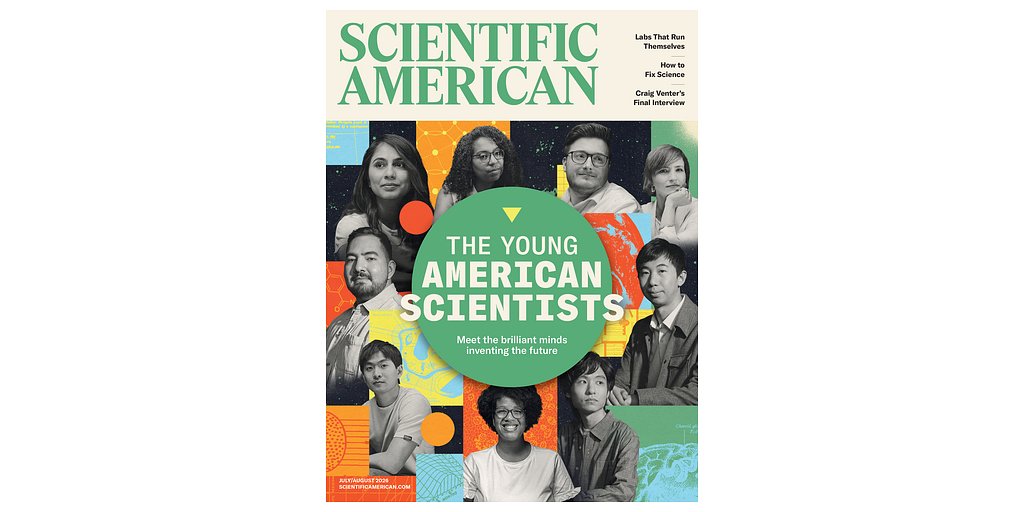
Scientific American's New List: A Celebration or a Call to Action?
NEW YORK, NY – June 16, 2026 – In a move that is both a celebration of brilliance and a subtle sounding of an alarm, Scientific American today unveiled its inaugural Young American Scientists list. The venerable 181-year-old publication, a cornerstone of science communication, has identified 28 early-career researchers (ECRs) whose work promises to redefine our future. Spanning fields from botany to artificial intelligence, these scientists, all under 40, represent the next wave of American innovation.
“With this inaugural list, we wanted to highlight the extraordinary talent and promise across the U.S. and spotlight the researchers doing remarkable work today who are poised to make the world better tomorrow,” said David Ewalt, the magazine's Editor in Chief. The list, he noted, is the product of months of global outreach and rigorous analysis. But beyond the prestige of the honor itself lies a more complex narrative about the state of American science—one that questions whether the nation is still the undisputed leader and incubator of such remarkable talent.
The New Vanguard of Innovation
The sheer ambition of the honorees’ work is staggering. Their research isn’t incremental; it’s foundational. Take Dane deQuilettes, an assistant professor at Princeton University, whose lab is designing nanoscale materials for next-generation solar energy and quantum sensing. His work on perovskites and lab-grown diamonds is not just academic—it’s the bedrock of future clean-energy companies like Optigon, Inc., where he serves as Chief Scientist.
He is joined on the list by Princeton colleague Kaiyi Jiang, an assistant professor of bioengineering who is leveraging machine learning to accelerate drug discovery. By engineering molecules and cells with AI, Jiang is tackling disease at its most fundamental level, a path that has already earned him a place on the MIT Technology Review's Innovators Under 35 list. At the University of California, Berkeley, astrochemist Jenny Bergner is pushing the “laws of chemistry to the limits” to understand the origins of planets. The list also features researchers like Tonima Annana at Wayne State University, Adam Bowman at the Salk Institute, and Christina Theodoris at the Gladstone Institutes, each pursuing breakthroughs with transformative potential.
These individuals, and the 23 others on the list, are not just cogs in the scientific machine; they are its new engine. Their work embodies the optimism at the heart of the scientific enterprise—the belief that intractable problems, from climate change to incurable diseases, can be solved with ingenuity and persistence. As Executive Editor Jeanna Bryner put it, “These scientists represent possibility and a powerful reminder of what science can achieve.”
A Lifeline in a Precarious Era
Yet, this celebration arrives at a deeply precarious moment for the very people it honors. The term “early-career researcher” often masks a reality of immense pressure, instability, and dwindling resources. For decades, the path for a young scientist in America was challenging but clear. Today, that path is fractured.
Science policy experts have long warned that a funding crisis is stifling innovation. Grant success rates have plummeted from over 30% a few decades ago to around 20% today, forcing researchers into a grueling cycle of grant writing. This hyper-competitive environment often pushes ECRs toward “safe” projects with predictable outcomes, rather than the high-risk, high-reward research that leads to true breakthroughs. The pressure is compounded by the erosion of the tenure system. The percentage of secure, tenure-track positions has steadily declined, leaving a generation of brilliant minds navigating a gig economy of short-term contracts, heavy teaching loads, and chronic job insecurity.
This environment has created what many call a “silent pandemic” of burnout and mental health crises among young scientists. In this context, initiatives like the Young American Scientists list become more than just an award; they are a vital lifeline. The visibility and validation that come with being recognized by a publication like Scientific American can be career-altering, opening doors to funding, collaborations, and the stability needed to pursue ambitious work. It is a powerful counter-signal in a system that too often leaves its most promising members feeling undervalued and unsupported.
America's Scientific Magnetism on Trial
The list also serves as a mirror, reflecting America’s long-standing role as a global magnet for scientific talent. The cohort is intentionally international, underscoring the fact that U.S. scientific leadership has always been powered by a global brain trust. For generations, the world’s brightest have flocked to American universities and labs, drawn by unparalleled resources, intellectual freedom, and opportunity. Immigrants have historically won a disproportionate share of Nobel Prizes for the U.S. and are foundational to its innovation engine.
However, that magnetic pull is weakening. The past few years have seen this tradition come under direct threat from restrictive immigration policies, including visa bans and revocations that create an environment of uncertainty and hostility. A 2026 National Bureau of Economic Research study revealed a sharp decline in the intention of ECRs to remain in the U.S., a phenomenon many now call a “brain drain.” As the U.S. erects barriers, other nations in Europe and Asia are rolling out the red carpet, actively recruiting the very talent America can no longer take for granted.
Viewed through this lens, the Young American Scientists list is a paradox. It showcases a vibrant, diverse ecosystem of talent that is the envy of the world, while simultaneously highlighting a system in jeopardy. It is a snapshot of what makes American science great, arriving at the very moment that greatness is being actively undermined by short-sighted policy and neglect. The list celebrates the fruits of a globalized talent pipeline, even as the pipeline itself begins to clog.
More Than a List: A Broader Scientific Conversation
Scientific American seems acutely aware of this tension. The list does not exist in a vacuum; it anchors a major print and digital package that confronts these issues head-on. The same issue includes features exploring the “causes and consequences of a potential ‘brain drain’ in American science,” an analysis of the AI-driven “lab of the future,” and a rare final interview with the late genomics pioneer Dr. Craig Venter.
This is not mere content packaging; it is a strategic editorial statement. By placing the celebration of its 28 honorees alongside a critical examination of the systemic challenges they face, the magazine elevates the initiative from a simple awards list to a powerful call to action. It forces a national conversation about the infrastructure of innovation. The message is clear: celebrating these scientists is meaningless if we are not prepared to invest in the ecosystem that allows them to thrive. By showcasing the brilliant minds it hopes to retain, Scientific American is implicitly asking whether the nation is still willing to make the investments necessary to keep them.