
- 99.5%+ success rate in solving a complex industrial task
- 2.54-second cycle time for wire-plugging automation
- 90% of wire harness tasks still performed manually in manufacturing
Experts would likely conclude that Sanctuary AI's hardware-agnostic approach represents a strategic breakthrough, bridging the gap between current industrial needs and future humanoid robotics by prioritizing AI intelligence over specialized hardware.
Sanctuary AI's Pivot: Why a Robot's Brain Matters More Than Its Body
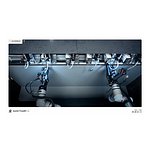
VANCOUVER, BC – June 17, 2026 – In the high-stakes world of industrial automation, the spotlight often falls on futuristic humanoid robots taking their first tentative steps. But a recent breakthrough from Vancouver's Sanctuary AI suggests the next great leap forward may not come from a new kind of body, but from a new kind of brain. The company has successfully deployed its advanced "Physical AI" onto a standard industrial robot arm, solving a notoriously difficult task for a global Tier 1 automotive supplier with staggering efficiency: a 99.5%+ success rate at a cycle time of just 2.54 seconds.
This achievement is more than a technical milestone; it represents a profound strategic pivot that could reshape the deployment of AI in the physical world. Rather than waiting for humanoid hardware to achieve mass-market viability, Sanctuary AI is decoupling its powerful AI control system from its own robotics and applying it to the millions of industrial arms already operating in factories worldwide. It's a pragmatic "brains over brawn" strategy that offers a solution to today's labor shortages, not tomorrow's, providing the clearest signal yet that the intelligence revolution on the factory floor is already underway.
Breaking the Dexterity Bottleneck
The task at the heart of this announcement sounds deceptively simple: plugging a flexible wire into a moving connector on a live automotive production line. For decades, however, this type of "contact-rich dexterity" has been the exclusive domain of human hands. Traditional automation excels at repetitive, rigid tasks—welding a specific point, moving a solid object from A to B. But introduce a flexible wire that can bend unpredictably and a target that is in constant motion, and most automated systems fail.
This single challenge is a microcosm of a much larger problem. Across manufacturing, from automotive to aerospace, the assembly of wire harnesses remains a stubbornly manual process. Industry estimates suggest that as much as 90% of these tasks are still performed by human workers, creating significant production bottlenecks and ergonomic challenges. "Manipulating a flexible wire into a moving target on a live conveyor is exactly the kind of contact-rich dexterity problem that has kept tasks like this out of reach for traditional automation,” said Olivia Norton, co-founder and CTO of Sanctuary AI.
Solving it required a fundamentally new approach. Sanctuary AI's system had to not only see the components but also, in a sense, feel and predict their behavior. The company’s Physical AI models were built from the ground up for this challenge. “Solving it required models built around performance from day one with reliability, cycle time, and safety measured against real production benchmarks,” Norton explained. By meeting the customer’s live production speed and success benchmarks, the company has provided a world-first demonstration that AI can conquer one of industrial automation's most persistent and costly hurdles.
A Strategic Shift to Hardware-Agnostic AI
While the technical feat is impressive, the strategic decision behind it is arguably more significant. For years, Sanctuary AI has been known for developing Phoenix, one of the world's most advanced general-purpose humanoid robots. The industry-wide assumption has been that true physical AI would arrive packaged in these human-like forms. Sanctuary AI has now upended that assumption.
The company is pursuing a hardware-agnostic strategy, deploying its AI platform as a software layer that can run on existing, third-party industrial robots. This move cleverly sidesteps the long and expensive road to commercializing bespoke humanoid hardware. Instead of asking customers to rip and replace their existing infrastructure, Sanctuary AI is offering an immediate upgrade path, infusing the installed base of robotic arms with unprecedented intelligence and dexterity.
"Physical AI adoption is gated by AI that meets both performance and cycle time requirements. That's what customers are seeking, and that's what we are delivering," Norton stated, cutting to the core of the market's demand for practical, effective solutions. This performance-first approach delivers immediate value to manufacturers grappling with labor constraints and the need for greater efficiency.
This pivot also positions Sanctuary AI astutely within a competitive but fragmented market. While companies like Figure AI and Agility Robotics focus on the promise of general-purpose humanoids, and others like Festo and PSYONIC advance specific components like grippers, Sanctuary is carving out a niche as the provider of the central nervous system. By creating an AI that can operate across diverse hardware, they are building a scalable platform that could become the standard intelligence layer for an entire generation of industrial machines.
Building the Brain for Tomorrow's Robots
This pragmatic focus on current-generation hardware does not mean Sanctuary AI has abandoned its long-term vision for humanoids. On the contrary, this strategy is a crucial and deliberate step toward that future. The company is explicit that its hardware-agnostic approach is "building the foundation that will support the next generation of intelligent robotic systems, including industrial humanoids."
Every task the Physical AI masters on a factory arm today generates invaluable data and refined control models. This real-world training, conducted at the speed and scale of live production, is something that cannot be replicated in a lab. The AI is learning to handle variance, unpredictability, and the complex physics of physical interaction—lessons that are directly transferable to more complex and versatile robotic forms.
The development of the Phoenix humanoid continues in parallel. The seventh-generation model, unveiled in early 2024, features significant hardware upgrades, including a greater range of motion and miniaturized hydraulics, alongside enhanced visual and tactile sensing. This advanced sensory input is critical for feeding high-fidelity data back into the AI control system, creating a virtuous cycle where better hardware enables smarter AI, and smarter AI pushes the boundaries of what the hardware can do. This dual-track strategy—deploying AI for immediate industrial value while simultaneously advancing a humanoid platform—allows Sanctuary to fund its long-term research with near-term revenue, de-risking the monumental challenge of creating artificial general intelligence.
The move effectively creates a scalable upgrade path for industry. A manufacturer can deploy Sanctuary’s AI on their existing arms today to solve a critical bottleneck. Tomorrow, as the AI becomes more capable and humanoid hardware becomes more viable, that same underlying intelligence can be ported to a general-purpose robot capable of performing a much wider array of tasks. It transforms the conversation from a one-time hardware purchase into an ongoing investment in an ever-improving intelligence platform. This approach is not just solving a single automation problem; it is fundamentally changing how factories will evolve, making intelligence, not machinery, the core asset of the modern production line.