
- AI Integration Across All 2026 TV Lineup: Samsung is embedding its Vision AI Companion (VAC) platform across all 4K-and-above models, from premium Micro RGB and OLED to mainstream Mini LED and UHD sets.
- Multi-Assistant AI Platform: VAC integrates Samsung’s Bixby alongside third-party AI assistants like Perplexity and Microsoft Copilot.
- AI Sound Controller Pro: Allows real-time adjustment of individual audio elements, such as isolating dialogue from background noise.
Experts would likely conclude that Samsung’s comprehensive AI integration across its 2026 TV lineup sets a new industry standard, forcing competitors to re-evaluate their product segmentation and raising the baseline for smart TV capabilities.
Samsung's AI Gambit: Is Your Next TV the Brain of Your Home?
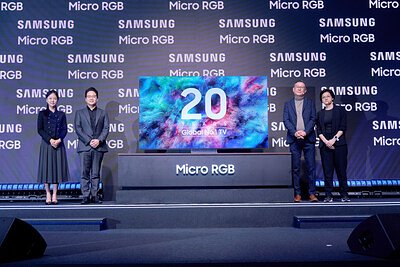
KUALA LUMPUR, Malaysia – May 21, 2026 – Samsung’s latest announcement from Malaysia is more than just a product launch; it's a declaration of strategy. By integrating artificial intelligence across its entire 2026 television lineup—from premium Micro RGB and OLED models down to mainstream Mini LED and UHD sets—the company is making a decisive bet that the TV’s future is not as a passive screen, but as the intelligent, central hub of our connected lives. This move, unveiled as the company marks its 20th year as the world's top TV brand, signals a fundamental shift in how we should think about the glowing rectangle in our living rooms.
"With Samsung Vision AI, we are transforming the TV into more than just a screen, it becomes a smart companion that delivers more personalised viewing, immersive entertainment and seamless connectivity within the home ecosystem," stated Charles Kim, President of Samsung Malaysia Electronics. The statement encapsulates a vision where the television evolves from a content consumption device to a proactive, context-aware partner.
The 'AI for All' Strategy
For years, the most advanced technology has been a hallmark of flagship devices, trickling down to more affordable models over subsequent generations. Samsung is deliberately breaking that mold. The decision to embed its new Vision AI Companion (VAC) platform across all 4K-and-above models is a strategic play at democratization. While competitors like LG and Sony have impressive AI processors of their own—such as LG’s α11 AI Processor and Sony’s Cognitive Processor XR—they are often reserved for their premium OLED and high-end LED series. Samsung’s approach aims to standardize the AI experience, making intelligent features accessible regardless of whether a consumer opts for a top-tier Micro RGB display or a more budget-conscious Mini LED set.
This “AI for all” strategy serves two purposes. First, it creates a unified user experience across the brand's ecosystem, conditioning a wider user base to expect and rely on AI-driven features. Second, it applies significant pressure on the market. When AI-powered upscaling, sound optimization, and personalization become standard on a Samsung TV, it forces competitors to re-evaluate their own product segmentation. The value proposition for mid-range TVs across the industry is instantly recalibrated. Consumers will no longer ask if a TV has AI, but how well it implements it. This move effectively raises the table stakes for the entire industry, leveraging Samsung’s market-leading volume to redefine the baseline for a modern television.
Beyond the Screen: A Vision AI Companion
The centerpiece of this new strategy is the Vision AI Companion (VAC), an ambitious platform that integrates multiple AI services, including Samsung's own Bixby alongside third-party powerhouses Perplexity and Microsoft Copilot. This multi-assistant approach suggests a move away from proprietary walled gardens toward a more functional, best-tool-for-the-job ecosystem. The goal is to transform the TV into a proactive assistant that can “help guide what to watch, what to eat and what to listen to.”
This intelligence manifests in tangible, practical features. AI Upscaling Pro promises to analyze and enhance low-resolution content in real-time, a critical function in an era of fragmented content quality from streaming services and older media. For sports fans, AI Soccer Mode analyzes gameplay to optimize motion clarity and create more immersive stadium audio. Perhaps most impressively, AI Sound Controller Pro allows users to adjust individual audio elements in real-time, such as isolating dialogue from background noise or turning down crowd noise while keeping the commentator’s voice clear. This level of granular control moves beyond simple presets into the realm of true audio personalization.
This isn't just about improving the picture and sound of what you're already watching; it's about changing the interaction model. By surfacing contextual information without interrupting content, VAC aims to make the TV an ambient computing device—a source of information and control that is always on, but never intrusive. It’s a subtle but profound shift from a device you command to a companion that anticipates.
An Ecosystem Play: Sound, Art, and Connectivity
Samsung’s 2026 lineup makes it clear that a smart TV does not operate in isolation. The new hardware is designed to be the anchor of a deeply integrated home entertainment ecosystem. The launch of the new Q-Series Soundbars, led by the flagship HW-Q990H, is a case in point. Featuring a powerful 11.1.4-channel system and a new “Sound Elevation” technology that uses AI to lift dialogue to the center of the screen, these soundbars are engineered to work in concert with the TVs. The continued collaboration with Dolby to integrate wireless Dolby Atmos further solidifies this premium audio experience, making immersive, spatial sound more seamless to achieve.
Beyond traditional home theater, the company is also expanding its lifestyle offerings. The Frame, which transforms the TV into a digital art canvas, now benefits from the same Neo QLED picture quality and AI enhancements. Meanwhile, the new Music Studio 7 and 5 speakers offer design-forward audio solutions that can be integrated into a wider soundstage using Samsung’s Q-Symphony technology. The ability to connect up to five compatible sound devices to a single TV creates a modular, scalable audio environment controlled from one central hub.
The inclusion of Google Cast and Google Photos on select models further underscores this focus on open connectivity. By allowing users to easily stream content from their phones and display personal photo memories, Samsung is acknowledging that the TV must be a flexible and integral part of a user's existing digital life, not a replacement for it.
The Market Context and Unspoken Questions
Samsung is not alone in the AI race. The competitive landscape is fierce, with every major manufacturer investing heavily in intelligent processing. However, by deploying AI comprehensively across its lineup, Samsung is leveraging its scale as the world's largest TV manufacturer to set a new market standard. The extensive launch promotions in Malaysia, which bundle flagship phones and gaming consoles with new TVs, are an aggressive tactic to accelerate adoption and solidify this new baseline in a key regional market.
Yet, as our devices become more intelligent and interconnected, critical questions about their human impact emerge. A television that integrates multiple AI assistants is one that is constantly processing information about our viewing habits, our voice commands, and potentially our daily routines. While the promise of a personalized, seamless experience is compelling, it walks hand-in-hand with concerns about data privacy and security. As these smart companions become more embedded in our homes, the industry-wide challenge will be to deliver on the promise of helpful intelligence while ensuring transparency and user control over personal data. The transition to the AI TV era is not just a technological one; it is also a social and ethical one, and its long-term success will depend on navigating both with equal care.