
- 21 artists and collectives featured in the exhibition
- Runs from February 12, 2026, to March 29, 2026
- AI-powered audio guide available in approximately 20 languages
Experts would likely conclude that 'Roppongi Crossing 2025' is a thoughtfully curated exploration of time through contemporary Japanese art, blending technological innovation with philosophical depth to reflect both local and global artistic dialogues.
Roppongi Crossing 2025: Art, Time, and Eternity at Mori Art Museum
TOKYO, JAPAN – February 12, 2026 – High above the glittering sprawl of Tokyo, on the 53rd floor of the landmark Roppongi Hills Mori Tower, the Mori Art Museum is once again taking the pulse of Japanese contemporary art. The museum’s highly anticipated triennial exhibition, "Roppongi Crossing 2025: What Passes Is Time. We Are Eternal.," has opened its doors, offering a panoramic survey of the nation's creative landscape and the subtle social currents shaping it. Running until March 29, 2026, the exhibition convenes 21 artists and collectives to meditate on the profound and multifaceted theme of 'time.'
Through a stunning variety of media—from AI-driven installations and monumental sculptures to traditional crafts and community-based projects—the exhibition grapples with a concept both universal and deeply personal. The subtitle, borrowed from a poem by the celebrated Indonesian writer Sapardi Djoko Damono, hints at the show's core philosophical inquiry: in a world of constant flux, what remains? The collection suggests that while moments pass, the memories, identities, and artistic expressions they generate achieve a form of eternity.
A Triennial Tradition: Charting Japan's Artistic Pulse
Since its inauguration in 2004, the "Roppongi Crossing" series has established itself as an essential institution in the Japanese art world. More than just an exhibition, it is a recurring, in-depth study of the nation's artistic zeitgeist. Each iteration, held every three years, serves as a critical platform for both emerging and established artists, reflecting the country's evolving social and cultural concerns.
The series has a history of being responsive to its era. The 2013 edition, "Out of Doubt," was deeply colored by the aftermath of the 2011 Great East Japan Earthquake, with many artists grappling with themes of loss, recovery, and national identity. It also marked a significant expansion by including Japanese artists living overseas, providing a crucial external perspective on Japan. More recently, the 2022 exhibition, "Coming & Going," navigated the profound societal shifts brought by the COVID-19 pandemic, exploring themes of human connection and cultural diversity in an age of isolation.
"Roppongi Crossing 2025" continues this legacy of thoughtful curation. By assembling a team that includes both Mori Art Museum curators and internationally active guest curators from Asia, the exhibition ensures a dialogue between local perspectives and global contexts. This collaborative approach enriches the show, reexamining Japanese art through a wider, more diverse lens and reinforcing the museum's commitment to positioning regional art within a broader international framework.
Time Eternal: Exploring the 2025 Theme
The heart of the 2025 exhibition lies in its ambitious and evocative exploration of time. Visitors are invited on a journey through diverse artistic interpretations, where time is a medium, a subject, and a question. The highlights are as varied as they are thought-provoking.
A standout installation is The Moon Underwater by the artist duo A.A.Murakami. This mystical, AI-controlled work generates ephemeral bubbles that drift through the space, evoking the transient beauty central to Japanese aesthetics, like falling cherry blossoms or the reflection of the moon on water. The piece masterfully blends cutting-edge technology with timeless natural imagery, creating a contemplative and almost hypnotic experience.
In stark, humorous contrast, the artist unit ZUGAKOUSAKU & KURIEITO presents Subway Exit, a shockingly mundane sight in a completely unexpected location. A hyper-realistic replica of a Tokyo subway entrance is installed in the gallery, 250 meters above the actual city streets. The piece is both a witty commentary on urban life and a disorienting intervention that plays with the viewer's sense of place and perspective, becoming an instant and impactful highlight.
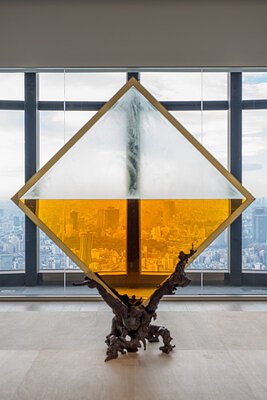
Another monumental work is Wada Reijiro’s MITTAG. This massive sculpture, constructed from glass, brass, and bronze, holds a vast quantity of brandy between two large panes of glass. Visitors can gaze through the amber liquid to see the Tokyo skyline, viewing the metropolis through a warm, distorted filter. The piece offers a unique sensory experience, transforming the familiar cityscape into something new while perhaps alluding to the slow, aging process of time itself, much like the spirit it contains.
Beyond these key works, the exhibition showcases a rich tapestry of creativity. Artists employ everything from painting and video to intricate handicrafts and community-based zines, demonstrating the breadth of contemporary Japanese practice and the myriad ways the theme of time can be dissected.
Innovation and Access: Art in the Digital Age
"Roppongi Crossing 2025" is not only a survey of artistic themes but also a showcase of the evolving relationship between art and technology. The integration of AI in A.A.Murakami's installation is a powerful example of how artists are harnessing new tools to create unprecedented experiences. But the innovation extends beyond the artworks themselves.
In a significant move toward global accessibility, the museum is piloting an AI-powered audio guide available in approximately 20 languages. This initiative dramatically lowers the language barrier, allowing a more diverse international audience to engage deeply with the concepts and contexts behind the art. This commitment aligns with the museum’s mission to foster a global dialogue and embodies its "Art + Life" philosophy, which seeks to make art relevant and accessible to all.
By embracing such technologies, the Mori Art Museum positions itself at the vanguard of museum practice. It recognizes that the future of the art experience is not just about what is on the walls, but also about how audiences connect with it. Permitting photography throughout the exhibition further encourages visitors to share their experience, extending the show's reach into the digital realm and allowing its ideas to circulate globally.
Tokyo's Global Canvas: Mori Art Museum's Vision
Ultimately, "Roppongi Crossing 2025" is a powerful affirmation of the Mori Art Museum's role as a cultural beacon. Located at the heart of a city that constantly reinvents itself, the museum provides a crucial space for reflection and a platform for Japanese artists to speak to the world. The exhibition solidifies Tokyo's standing as a vital hub in the international art scene, attracting cultural tourists and fostering cross-cultural understanding.
The inclusion of artists with roots in Japan but active overseas, alongside the international curatorial team, underscores a vision of Japanese art that is not insular but dynamic and interconnected. It presents a culture that is in constant dialogue with the world, absorbing influences and contributing its own unique voice to the global conversation.
As visitors leave the 53rd floor, they carry with them not just images of bubbles and brandy-tinted cityscapes, but a deeper appreciation for the complexities of time and the enduring power of art to capture it. "What Passes Is Time. We Are Eternal." is more than an exhibition title; it is a statement of purpose for an institution dedicated to chronicling the present for the future.