
- Price: Sleep pod sessions start at NZ$495 (~$292 USD) for a 4-hour session.
- Pods Available: Six individual lie-flat sleep pods per aircraft.
- Route: Debuting on the Auckland-New York route, an 18-hour flight.
Experts view Air New Zealand's Skynest as a groundbreaking innovation that could redefine economy-class travel, leveraging advanced retail technology to offer a premium sleep experience while addressing profitability challenges on long-haul routes.
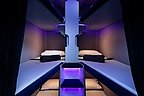
Reimagining the Skies: Air New Zealand Bets on Sleep Pods for Economy
AUCKLAND, New Zealand – June 02, 2026 – For travelers enduring the nearly 18-hour marathon flight between Auckland and New York, the prospect of true rest in an economy seat has always been a distant dream. Air New Zealand is aiming to change that. The carrier has officially launched its revolutionary Skynest, the world's first lie-flat sleep pod experience for Economy and Premium Economy passengers, a move that could fundamentally alter the economics of comfort at 35,000 feet.
This ambitious product is not just an evolution in cabin design; it represents a leap in airline retail strategy, made possible by a deep technological partnership with IBS Software. By leveraging IBS’s AI-powered iRetail platform, Air New Zealand is moving beyond selling seats and baggage to retailing a complex, time-based experience—a capability that legacy airline systems were never built to handle.
The Dawn of the Economy Sleep Pod
Set to debut later this year on its ultra-long-haul Boeing 787-9 aircraft, the Skynest offers a sanctuary previously reserved for those in premium cabins. For a price starting at NZ$495 (approximately $292 USD), passengers can book a single four-hour session in one of six individual pods. These pods are arranged in a triple-tier bunk configuration, tucked neatly between the Economy and Premium Economy cabins.
Each pod measures over two meters in length and comes equipped with fresh linen, a full-size pillow, a blanket, and a “Nestcessities” amenity kit. Privacy curtains, ambient lighting, USB charging, and dedicated ventilation complete the private cocoon. The airline has meticulously planned the logistics: sessions are scheduled outside of meal services, with cleaning and bedding changes between each use. Passengers are notified via their in-flight entertainment screen when their session is about to begin.
This isn't the airline's first foray into economy-class innovation. Its Skycouch, which transforms a row of three seats into a flexible flat space, has been popular for years. However, Skynest is different. It unbundles the concept of a bed from the passenger's seat entirely, selling sleep as a distinct ancillary product. This requires a sophisticated back-end system capable of managing a new type of inventory: time-slotted access to a physical space onboard an aircraft in motion.
The Technology Behind the Transformation
This is where IBS Software's iRetail platform becomes the critical enabler. Traditional airline reservation systems, built around the decades-old Passenger Name Record (PNR), excel at selling a seat from Point A to Point B. They can handle simple add-ons like extra legroom or a checked bag. But they lack the dynamic capability to retail and manage a product as complex as Skynest.
“Air New Zealand has consistently led the market on innovation, and working with them on Skynest was a natural fit to show what IBS Software's retailing platform is truly capable of,” said Christophe Roux, SVP and Head of Aviation Passenger Solutions at IBS Software. “Skynest is just the beginning. It demonstrates how iRetail gives airlines the freedom to bring entirely new products to market, products that legacy systems could never support.”
Built on an AI-first, cloud-native architecture in partnership with AWS, iRetail operates on a modern Offer-Order-Settle-Deliver (OOSD) model. For Skynest, Air New Zealand utilizes the platform's Product Catalogue and Stock Keeper modules. This allows the airline to define a new product category (a sleep pod session), manage its limited inventory with precision, enforce booking rules (one session per passenger), and handle the entire digital transaction seamlessly. It’s a move away from static fare filings and toward the dynamic, attribute-based selling common in modern e-commerce.
A Strategic Bet in a Turbulent Market
While Skynest is a clear win for passenger comfort, it is also a calculated strategic gamble for Air New Zealand. The Auckland-New York route is notoriously challenging, and the airline has acknowledged its unprofitability amid rising fuel costs and weakening demand. In this high-stakes environment, Skynest is more than a novelty; it’s a crucial attempt to create a new, high-margin revenue stream and powerfully differentiate its brand.
By unbundling sleep and selling it as an à la carte experience, the airline is testing a new economic model for the main cabin. It allows passengers who cannot afford a business class ticket to purchase the single most valuable commodity on a long-haul flight: restorative rest. If successful, this model could provide a vital financial cushion on ultra-long-haul routes and set a new industry precedent for ancillary revenue generation.
This product launch is a bold statement about the airline's market position, shifting its focus toward product leadership and a premium long-haul experience. It's a bet that travelers will pay for tangible innovation, even as the industry faces significant economic headwinds.
The New Race for Comfort at 35,000 Feet
Air New Zealand is at the vanguard of a broader industry trend toward enhancing the economy class experience. Qantas is introducing a “wellness zone” on its Project Sunrise flights, and other carriers like Lufthansa have experimented with “Sleeper's Row” concepts. However, Skynest's dedicated, purpose-built pods represent the most significant product innovation in this space to date.
The successful deployment of such a product relies on deep strategic alignment between the airline and its technology partners. For Air New Zealand, the relationship with IBS Software is not new. The airline has long used the company’s iCargo platform to manage its global freight business and its iLoyal system for its popular Airpoints loyalty program. This history of collaboration across core operational areas provided the foundation of trust and technical integration necessary to launch a category-defining product like Skynest.
This partnership underscores a larger shift in the industry, where digital transformation is no longer a background project but the primary driver of commercial and customer-facing innovation. As airlines compete on more than just price and network, their ability to conceive, retail, and deliver unique experiences will become their most important competitive advantage. The launch of Skynest is a clear signal that the future of air travel is not just about getting there, but about how you feel when you arrive.