
- Exhibition Location: Canada Science and Technology Museum, Ottawa, ON
- Cultural Focus: Heiltsuk Nation's ocean-going canoe traditions
- Government Support: Free admission for children and discounts for young adults via 'Canada Strong Pass'
Experts would likely conclude that the 'Sacred Journey' exhibition represents a groundbreaking fusion of Indigenous knowledge and modern museology, redefining innovation through cultural resilience and scientific collaboration.
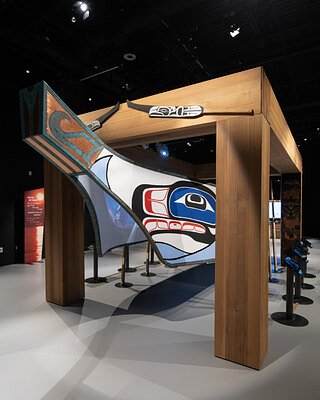
Paddling into the Future: How an Ancient Canoe is Redefining Innovation
OTTAWA, ON – June 19, 2026
In a museum dedicated to the marvels of modern science and technology, one of the most innovative exhibits this year is carved from a single cedar log. Opening this week at the Canada Science and Technology Museum, 'Sacred Journey' is more than a collection of artifacts; it is a profound statement. Led by the Heiltsuk Nation of British Columbia, this immersive exhibition centers on the ocean-going canoe, reframing it not as a relic of the past, but as a living vessel of sophisticated science, cultural resilience, and community healing. It represents a critical shift in how our national institutions define innovation, moving beyond silicon and steel to embrace the enduring wisdom embedded in Indigenous knowledge systems.
For decades, this column has sought out stories of tangible difference, where ingenuity meets human need. The 'Sacred Journey' exhibition is a masterclass in this principle. It deconstructs the canoe to reveal a complex system of engineering, environmental science, and social technology, challenging visitors to broaden their understanding of what constitutes a 'technological' achievement.
A Vessel of Knowledge
At first glance, the exhibition is a stunning visual and auditory experience, using interactive media and immersive soundscapes to transport visitors to the coastal waters of the Pacific Northwest. But beneath the surface, it is a rigorous academic lesson. 'Sacred Journey' methodically unpacks the canoe as a nexus of scientific principles. Visitors learn about the hydrodynamics of the hull, designed for stability and speed in treacherous coastal waters; the material science involved in selecting and shaping a single, massive cedar tree; and the advanced navigational techniques that relied on celestial bodies, ocean currents, and an intimate understanding of marine ecosystems.
This is not history presented under glass. It is living knowledge. The exhibition, developed by the Heiltsuk Tribal Council, positions this expertise as a vital and parallel science. By placing these traditions within the walls of a national science museum, Ingenium—the Crown corporation overseeing the institution—is making a powerful declaration. As Director General Lisa Leblanc stated, the goal is to "bring forward living knowledge systems and traditions that broaden how visitors understand science, technology, and innovation."
This broadening of perspective is a deliberate curatorial strategy. In a unique addition for its Ottawa presentation, the exhibit also features content on Anishinaabe Algonquin canoe culture, demonstrating the breadth and diversity of Indigenous innovation across the continent. It successfully argues that Indigenous knowledge is not a monolithic entity but a rich tapestry of localized, time-tested scientific practices. It’s a quiet but firm correction to centuries of colonial narratives that relegated this ingenuity to the realm of folklore.
Paddling Towards Resurgence
The most impactful innovation on display, however, may not be the canoe itself, but the process it empowers. 'Sacred Journey' is explicitly Indigenous-led, a model of co-creation that ensures authenticity and directs the narrative. The story it tells is one of profound resurgence. For the Heiltsuk Nation, the revival of ocean-going canoe journeys is a direct response to the legacy of residential schools and other colonial policies that sought to sever these cultural ties.
As Hereditary Chief Frank Brown of the Heiltsuk Nation explains, "Sacred Journey shares the story of the resurgence of Indigenous canoe traditions that have been at the heart of coastal cultures for millennia." He speaks of the "transformative experiences" youth discover by participating in tribal canoe journeys. These journeys are not mere recreational trips; they are intensive, mobile classrooms in language, environmental stewardship, and community responsibility. They are a tangible strategy for healing intergenerational trauma and fostering a new generation of proud, knowledgeable leaders.
This is where the exhibition delivers its most compelling message on tangible impact. It connects the physical object—the canoe—to a measurable social outcome: youth empowerment, cultural revitalization, and even economic development through tourism and artisanry. Chief Brown notes that "Truth & Reconciliation is built on the foundation of understanding," and this exhibition is a powerful vehicle for that understanding. It moves the conversation beyond rhetoric and into the real-world results of a community reclaiming its heritage and, in doing so, charting a course for a healthier future.
A National Invitation to Understand
Making such a vital story accessible is a challenge, but one being met with a significant federal initiative. The exhibition's summer run coincides with the return of the 'Canada Strong Pass,' a program designed to make cultural and natural sites more affordable. With free admission for children and steep discounts for young adults at over 90 museums, the pass is a key part of the visitor-experience equation.
As The Honourable Marc Miller, Minister of Canadian Identity and Culture, stated, "This summer, our government is making it more affordable for Canadians to enjoy our culture and exhibitions like Sacred Journey... I encourage everyone to get out and explore Canada this summer." This is more than a tourism slogan; it is an act of policy-driven inclusion. The pass, which proved successful in its inaugural year by boosting attendance at cultural institutions nationwide, effectively lowers the barrier to entry for one of the most important conversations happening in the country.
By subsidizing access, the government is facilitating a national opportunity for education and reflection. It ensures that families from all economic backgrounds can engage with the themes of reconciliation and Indigenous innovation presented in 'Sacred Journey.' It transforms a visit to the museum from a simple day out into an act of civic engagement, inviting Canadians to listen, learn, and appreciate the depth of the cultures that have shaped this land for millennia.
The Evolving Museum
Ultimately, 'Sacred Journey' is a story about the evolution of both a culture and an institution. For the Heiltsuk, it is a platform to share their story of resilience with the nation. For the Canada Science and Technology Museum, it marks a significant step in its own journey of transformation. By hosting an Indigenous-led exhibition that fundamentally questions and expands the definition of its core mandate—science and technology—the museum is embracing a more complex and inclusive role.
It is moving from a passive repository of artifacts to an active forum for dialogue. The collaboration with the Heiltsuk Nation provides a new model for how national institutions can and should engage with the communities whose stories they seek to tell. This is the tangible difference in action: not just displaying culture, but partnering with it, amplifying its voice, and acknowledging its authority. In this sacred journey, the vessel is not just the canoe, but the museum itself, navigating toward a more truthful and innovative future.